Contact Me By Email


What To Do When You're Stopped By Police - The ACLU & Elon James White

What To Do When You're Stopped By Police - The ACLU & Elon James White

Know Anyone Who Thinks Racial Profiling Is Exaggerated? Watch This, And Tell Me When Your Jaw Drops.


This video clearly demonstrates how racist America is as a country and how far we have to go to become a country that is civilized and actually values equal justice. We must not rest until this goal is achieved. I do not want my great grandchildren to live in a country like we have today. I wish for them to live in a country where differences of race and culture are not ignored but valued as a part of what makes America great.

Monday, December 04, 2017

Trump’s crusade against immigrants is an attack on America - The Washington Post


"THE TRUMP administration likes to justify its multi-front crusade against immigration and immigrants as a revival of the rule of law, or a recalibration of the rules to favor disadvantaged American workers. In fact, it is largely a resurrection of xenophobia that coincides with a spike, nearly 50 years in the making, in the number of foreign-born residents living in the United States.


“For decades,” Attorney General Jeff Sessions said in a speech in October, “the American people have been begging and pleading . . . for an immigration system that’s lawful and serves the national interest. Now we have a president who supports that.”


Mr. Sessions’s claims are specious. An embrace of legality is not the driving force behind the president’s decision to slash the admission of refugees to levels unseen in nearly 40 years. It is not what compelled Mr. Trump to endorse Republican legislation that would cut the annual allotment of green cards by a half-million, mainly by barring relatives of existing legal permanent residents of the United States. It is not why the Pentagon has considered ending a recruitment program that put skilled foreigners on a fast track for citizenship if they served in this country’s armed forces. And it is not why the administration favors ending the so-called diversity visa lottery program, under which immigrants are admitted from nations underrepresented in other programs.


Those programs were all legally enacted and, by and large, carried out in compliance with the law. The animating force in targeting them, as the administration is now doing, is an effort to turn back the tide of foreigners in our midst and exorcise what the president evidently sees as the demon of diversity.


The administration’s goal is not to reshape America’s immigration policy but to prune immigration itself. While Mr. Trump backs a GOP plan that would give preference to immigrants with skills rather than family connections in the United States, the effect would be not simply to shift the mix while maintaining the current level of legal immigration but to drastically reduce overall numbers of admissions.


Most Americans oppose open borders; so do we. At a moment when immigrants are at their highest share of the population in a century — they now represent more than 13 percent of residents — it is legitimate to debate the numbers and types of people we should welcome to American shores. It is fair to examine whether current levels of immigration have depressed wages for lower-income Americans in some places and sectors of the economy. It should be possible to ask “how much is too much?” without inviting accusations of bigotry.


Unfortunately, Mr. Trump has poisoned the debate on immigration so thoroughly that he has twisted the frame through which many Americans see the issue. His slurs — labeling Mexican immigrants as rapists and Muslim immigrants as terrorists — form the context from which the administration’s policies arise. They are affronts to U.S. tradition and values.


They’re also an assault on what Mr. Sessions refers to as “the national interest” and specifically the United States’ economic well-being. Legions of employers dependent on immigrant workers, especially to fill low-skilled jobs for which native-born Americans are too well educated and in short supply, will be harmed by choking off the flow of immigrant labor. With unemployment at a 16-year low and approaching levels unseen in a half-century, the Trump policies threaten to sap the economy by depriving it of the energy of striving newcomers who have fueled this nation’s ambitions since its founding.


It is within the president’s discretion to intensify efforts at deportation, though the humanitarian price — in shattered communities and families, including those whose children, born in this country, are Americans — is high. It is reasonable to take steps to tighten border security, though with illegal crossings already at a 40-year low and the Border Patrol’s staffing having already been doubled since the George W. Bush administration, a significant new investment along those lines faces the risk of diminishing returns. The administration may arguably have had a valid legal basis for ending the Obama-era program granting deportation protection for “dreamers” — undocumented immigrants who entered the country as children, often brought by their parents — though only a smallish minority of Americans believes they should be removed from this country."


Trump’s crusade against immigrants is an attack on America - The Washington Post

'We'll see the battle lines': Trump faced by Native American alliance over Bears Ears | Environment | The Guardian

The Anasazi Family Rock Formations in Bears Ears National Monument, Utah.


'We'll see the battle lines': Trump faced by Native American alliance over Bears Ears | Environment | The Guardian

Saturday, December 02, 2017

Donald Trump's Dumb Tweet


Trump Tweets He Knew Flynn Lied to FBI When He Asked Comey to ‘Let Flynn Go’


Trump Tweets He Knew Flynn Lied to FBI When He Asked Comey to ‘Let Flynn Go’

Trump confessing to obstruction is on front page of his hometown paper - Lawrence O'Donnell


Michael Flynn’s Guilty Plea Is Bad For Trump In Lots Of Ways | FiveThirtyEight


"Obstruction of justice –– Remember that former FBI Director James Comey, in the statement he released the day before he testified on Capitol Hill in the spring about the circumstances of his dismissal, described a one-on-one Oval Office conversation with Trump. The president, according to Comey, said, “I hope you can see your way clear to letting this go, to letting Flynn go. He is a good guy.” Comey interpreted this statement as asking him to end the FBI’s investigation of Flynn, which Comey refused to do.


If you believe Comey’s account, the man whom the president was concerned enough about to personally ask for him not to be investigated has now plead guilty. And if Mueller is investigating Trump for obstruction of justice, as has been reported, that case is reinforced by this plea. Trump fired Comey after the FBI director would not stop investigating someone (Flynn) who was in enough legal jeopardy to later plead guilty.


Also, the obstruction case against Trump got stronger in the hours just before the Flynn announcement. The New York Times reported on Thursday night that the president has called several GOP senators and asked them to do what they can to wind down the various Russia investigations on Capitol Hill. One of the senators that Trump reached out to is North Carolina’s Richard Burr, who is leading the Senate Intelligence Committee probe. It is not necessarily illegal for Trump to call Burr and other senators and make that request, but his behavior fits with a broader pattern of moves, like Trump’s alleged conversations with Comey, that suggest Trump is trying to stall or slow down the various investigations into his campaign’s connections with Russian officials."


Michael Flynn’s Guilty Plea Is Bad For Trump In Lots Of Ways | FiveThirtyEight

Flynn charge gives insight on Mueller investigation's progress Paul Fishman, former U.S. attorney, talks with Rachel Maddow about what the Mike Flynn guilty plea tells us about the Robert Mueller investigation, and Sally Yates' warning to the Trump administration that Flynn had been compromised.


The Rachel Maddow Show on msnbc – Latest News & Video: ""

Why did Trump ignore repeated warnings Flynn was compromised? Rachel Maddow looks at the warnings Donald Trump received about Mike Flynn and the inexplicable way Trump held Flynn in favor even after he left office.


The Rachel Maddow Show on msnbc – Latest News & Video: ""

(Via.)

Why the UN is investigating extreme poverty … in America, the world's richest nation | World news | The Guardian

"The tour, which kicked off on Friday morning, will make stops in four states as well as Washington DC and the US territory of Puerto Rico. It will focus on several of the social and economic barriers that render the American dream merely a pipe dream to millions – from homelessness in California to racial discrimination in the Deep South, cumulative neglect in Puerto Rico and the decline of industrial jobs in West Virginia.


With 41 million Americans officially in poverty according to the US Census Bureau (other estimates put that figure much higher), one aim of the UN mission will be to demonstrate that no country, however wealthy, is immune from human suffering induced by growing inequality. Nor is any nation, however powerful, beyond the reach of human rights law – a message that the US government and Donald Trump might find hard to stomach given their tendency to regard internal affairs as sacrosanct.


The UN special rapporteur on extreme poverty and human rights, Philip Alston, is a feisty Australian and New York University law professor who has a fearsome track record of holding power to account. He tore a strip off the Saudi Arabian regime for its treatment of women months before the kingdom legalized their right to drive, denounced the Brazilian government for attacking the poor through austerity, and even excoriated the UN itself for importing cholera to Haiti."


Why the UN is investigating extreme poverty … in America, the world's richest nation | World news | The Guardian

Winners and losers in the Senate GOP tax bill: A running list - The Washington Post


Losers


"...The 13 million Americans who won't have health insurance. The Senate bill isn't just a tax bill, it also includes the repeal of the individual mandate that requires all Americans to buy health insurance or else pay a penalty. This provision is not in the House bill, so it might not make it to the president's desk, but if it does, it's expected to cause a spike in health insurance premiums in the United States and 13 million Americans to drop insurance coverage in the next decade, according to the Congressional Budget Office.


The poor. The Senate bill cuts tax rates across all income levels, but 44 percent of Americans don't pay any federal income tax, so it doesn't help them. Some senators -- notably Marco Rubio (R-Fl.) and Mike Lee (R-Utah) -- pushed to give more money back to lower-income families in the form of refundable tax credits. Rubio and Lee wanted to make a lot of the Child Tax Credit refundable. But that didn't happen, meaning the poor won't get much benefit from the bill. If anything, they might lose a lot -- some won't be able to afford health insurance anymore and some are likely to lose other government benefits as Republicans look for ways to trim the federal budget in the coming months.


Puerto Rico. The island that was devastated by Hurricane Maria this fall now might lose some of the few big businesses that remain on the island if the GOP tax bill gets enacted. The reason is that Puerto Rico would no longer look so advantageous as a place to do business compared to the rest of the United States. Puerto Rico's governor is trying to push for the island to be deemed a "free trade zone," but that was not included in the legislation released before passage.


Harvard. The House and Senate bills create a new 1.4 percent tax on private college endowments worth over $500,000 per student. Only a handful of universities have such large endowments. Most are Ivy League schools like Harvard.


Maybe losers (depends on conference committee)


College students. The House bill scraps many popular deductions for college students and college grads with student loans. The House bill eliminates the popular student loan debt write off, and it forces graduate students who receive tuition waivers (sometimes as much as $20,000 or more) to count that money as income for tax purposes, even though they don't actually receive money in their pockets. It would be a big hit and many universities are saying it could heavily dissuade graduate study. The Senate bill does not make these changes.


Elderly with high medical expenses. The House bill gets rid of the deduction for huge medical expenses, which 8.8 million Americans (mostly elderly) currently use. The Senate keeps this deduction in place, setting up a major conflict to be worked out."


Winners and losers in the Senate GOP tax bill: A running list - The Washington Post

Friday, December 01, 2017

Flynn to Plead Guilty to Lying to the F.B.I. - The New York Times

"WASHINGTON — President Trump’s former national security adviser, Michael T. Flynn, will plead guilty on Friday to lying to the F.B.I. about a conversation with the Russian ambassador last December.


The plea was the latest indication that Mr. Flynn was cooperating with the special counsel’s investigation into Russia’s interference in the 2016 presidential election. Mr. Flynn was scheduled to appear in federal court in Washington at 10:30 on Friday morning."


Flynn to Plead Guilty to Lying to the F.B.I. - The New York Times

Thursday, November 30, 2017

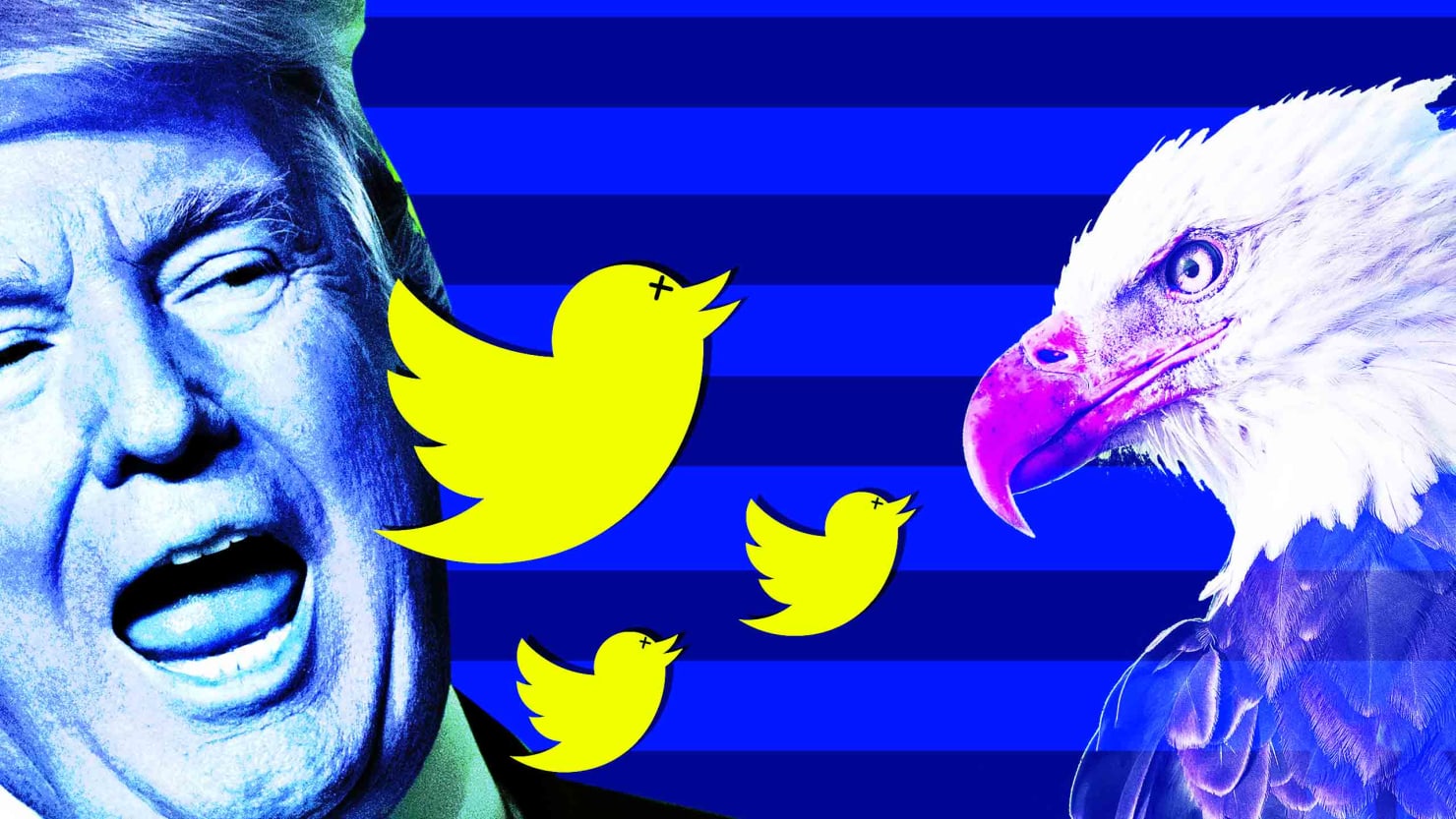
Trump shares anti-Muslim vids, picks a fight with UK PM | "Racist." "Unthinking." "Incompetent." "Offensive." "Stupid." British lawmakers have some thoughts about Trump retweeting unverified anti-Muslim videos.


Trump shares anti-Muslim vids, picks a fight with UK PM | MSNBC

President Donald Trump's Mental State An 'Enormous Present Danger' | The...

Bernie Sanders Challenges Republican Tax Lies

Oh Lord, Now the Gun Thing’s Back - The New York Times

NewImage 

"The House Judiciary Committee just voted to make it impossible for a state to always keep people convicted of violent offenses from carrying concealed weapons.

That was just a detail in a very long day and really dreadful debate about the right to bear arms. In a normal world it might be the talk of the dinner table, but really, this week hardly anyone noticed.

On the one hand you had Garrison Keillor and Matt Lauer getting canned for sexual harassment. On the other there’s the president of the United States circulating a picture of a Muslim beating up a statue of the Blessed Virgin. About which, the presidential spokeswoman said, “Whether it’s a real video, the threat is real.”

And I haven’t even gotten to the tax bill. Or North Korea. Good grief.

But still, guns. Attention must be paid. If you count every gun crime that involves four or more victims as a mass shooting, we’ve had 397 so far this year, including the ungodly tragedies in Las Vegas and the small Texas church. You’d think the National Rifle Association would go away and be quiet for a month or two. But no, its minions in the House of Representatives were busy on Wednesday getting committee approval for a bill that would make it impossible for states to impose their rules about carrying concealed weapons on people who are visiting from someplace else.
Instead, we’re supposed to respect the judgment of the state whence they came. People, do you have this kind of confidence? We are having this conversation two weeks after Wisconsin eliminated the age limit for hunting licenses. So far there are 1,800 happy Wisconsinites under the age of 10 with the right to put their little fingers on the trigger, several less than a year old.

The bill’s opponents, all Democrats, lost every argument, but you had to give them credit for spunk. They dragged the fight on for more than six hours, dividing their time between pointing out that the gun murder rate in America is 297 times higher than in Japan, and offering amendments that attempted to make it clear how crazy the whole bill is.

All of which, including ones on violent offenses and domestic abuse, were defeated. Another would have allowed states to at least enforce their own laws aimed at keeping guns out of the hands of people convicted of assaulting a police officer.
No dice. “Once the exceptions start they will have no end,” said Representative Louie Gohmert of Texas.
As you know, there is absolutely no national consensus when it comes to the right to carry a concealed weapon in public places. You have Missouri, where you can just buy a gun and put it in your pocket. You have places like California, where people are carefully screened, trained and tested before they can get a gun and permit.

The N.R.A. yearns for a federal law that would allow Missourians to tote their guns around California, no questions asked. And here it is! The bill, known to its friends as “concealed carry,” could almost certainly pass the House. Even in this miserable year it probably couldn’t make the 60-vote mark in the Senate. (Good old Senate 60-vote rule. Remember that the next time people you like better are running the place.)
However, it could mess up an actual piece of gun reform that is so simple and sensible that even this Congress might be capable of approving it. A bipartisan group of senators, including Republican John Cornyn of Texas and Democrat Chris Murphy of Connecticut, are working on a bill that would make the current deeply flawed background check system a little more efficient.

“My worry is the House tries to get cute and combines the two,” said Murphy.
The Judiciary Committee debate was long and depressing in the extreme — at one point Representative Steven King of Iowa claimed a proposal to tighten a background check loophole on gun show sales would ruin “Christmas at the Kings’.”

The Republicans argued that people need to be able to carry guns — even in states where it’s against the law — because it just makes you safer. There’s an extremely popular vision of the average citizen drawing his concealed weapon and shooting a crazed gunman. This almost never happens in the real world.

But the myth lives on. Gun fans in Congress still talk about the shooting at a baseball practice that seriously wounded one of their colleagues as if it could have been avoided, if only all the lawmakers had gone to the game armed. During the committee meeting, Chairman Bob Goodlatte of Virginia and his followers suggested giving members of Congress the automatic right to carry concealed weapons, even if their home state wouldn’t permit it. Just to be safe. “I remember where I was the day I got the news that Gabby Giffords had been shot,” mused King.
It was indeed terrible. And Giffords responded by starting a national campaign for stricter gun regulation. Some people fix problems. Some just impose them on everybody else. Depends on the year.

Oh Lord, Now the Gun Thing’s Back - The New York Times