Saturday, June 08, 2019


Thursday, June 06, 2019
Impeach Trump. But don’t necessarily try him in the Senate. - The Washington Post

A thoughtful piece far beyond Nancy Pelosi's embarrassing comments reported today in Politic which showed she was lying to the American public all winter and spring.
"Laurence H. Tribe is the University Professor of Constitutional Law at Harvard and the coauthor, most recently, of “To End a Presidency: The Power of Impeachment.”
It is possible to argue that impeaching President Trump and removing him from office before the 2020 election would be unwise, even if he did cheat his way into office, and even if he is abusing the powers of that office to enrich himself, cover up his crimes and leave our national security vulnerable to repeated foreign attacks. Those who make this argument rest their case either on the proposition that impeachment would be dangerously divisive in a nation as politically broken as ours, or on the notion that it would be undemocratic to get rid of a president whose flaws were obvious before he was elected.
Rightly or wrongly — I think rightly — much of the House Democratic caucus, at least one Republican member of that chamber (Rep. Justin Amash of Michigan) and more than a third of the nation’s voters disagree. They treat the impeachment power as a vital constitutional safeguard against a potentially dangerous and fundamentally tyrannical president and view it as a power that would be all but ripped out of the Constitution if it were deemed unavailable against even this president.
That is my view, as well.
Still, there exists concern that impeachment accomplishes nothing concrete, especially if the Senate is poised to quickly kill whatever articles of impeachment the House presents. This apprehension is built on an assumption that impeachment by the House and trial in the Senate are analogous to indictment by a grand jury and trial by a petit jury: Just as a prosecutor might hesitate to ask a grand jury to indict even an obviously guilty defendant if it appeared that no jury is likely to convict, so, it is said, the House of Representatives might properly decline to impeach even an obviously guilty president — and would be wise to do so — if it appeared the Senate was dead-set against convicting him.
But to think of the House of Representatives as akin to a prosecutor or grand jury is misguided. The Constitution’s design suggests a quite different allocation of functions: The Senate, unlike any petit (or trial) jury, is legally free to engage in politics in arriving at its verdict. And the House, unlike any grand jury, can conduct an impeachment inquiry that ends with a verdict and not just a referral to the Senate for trial — an inquiry in which the target is afforded an opportunity to participate and mount a full defense.
Take, for instance, the 1974 investigation of President Richard M. Nixon when the House gave the president the opportunity to refute the charges against him either personally or through counsel and with additional fact witnesses. (Nixon chose to appear only through his attorney, James D. St. Clair.) Following its impeachment proceedings, the House Judiciary Committee drafted particularized findings less in the nature of accusations to be assessed by the Senate — which of course never weighed in, given Nixon’s resignation — than in the nature of determinations of fact and law and verdicts of guilt to be delivered by the House itself, expressly stating that the president was indeed guilty as charged.
It seems fair to surmise, then, that an impeachment inquiry conducted with ample opportunity for the accused to defend himself before a vote by the full House would be at least substantially protected, even if not entirely bullet-proofed, against a Senate whitewash.
The House, assuming an impeachment inquiry leads to a conclusion of Trump’s guilt, could choose between presenting articles of impeachment even to a Senate pre-committed to burying them and dispensing with impeachment as such while embodying its conclusions of criminality or other grave wrongdoing in a condemnatory “Sense of the House” resolution far stronger than a mere censure. The resolution, expressly and formally proclaiming the president impeachable but declining to play the Senate’s corrupt game, is one that even a president accustomed to treating everything as a victory would be hard-pressed to characterize as a vindication. (A House resolution finding the president “impeachable” but imposing no actual legal penalty would avoid the Constitution’s ban on Bills of Attainder, despite its deliberately stigmatizing character as a “Scarlet ‘I’ ” that Trump would have to take with him into his reelection campaign.)
The point would not be to take old-school House impeachment leading to possible Senate removal off the table at the outset. Instead, the idea would be to build into the very design of this particular inquiry an offramp that would make bypassing the Senate an option while also nourishing the hope that a public fully educated about what this president did would make even a Senate beholden to this president and manifestly lacking in political courage willing to bite the bullet and remove him.
By resolving now to pursue such a path, always keeping open the possibility that its inquiry would unexpectedly lead to the president’s exoneration, the House would be doing the right thing as a constitutional matter. It would be acting consistent with its overriding obligation to establish that no president is above the law, all the while keeping an eye on the balance of political considerations without setting the dangerous precedent that there are no limits to what a corrupt president can get away with as long as he has a compliant Senate to back him. And pursuing this course would preserve for all time the tale of this uniquely troubled presidency."
Impeach Trump. But don’t necessarily try him in the Senate. - The Washington Post
Opinion | Kamala Harris Has a Brilliant Idea on Abortion

"Kamala Harris along with Elizabeth Warren are the thinking person's candidates for President.
"By Elise C. BoddieJune 6, 2019
We need more ideas like the one Senator Kamala Harris of California proposed last week to stop abortion laws from going into effect unless the federal government agrees they comply with Roe v. Wade.
This idea, known as preclearance, is widely considered the single most effective civil rights tool in American history, because it blocks bad policies before they can take root and spread harm across generations.
Ms. Harris’s proposal focuses on laws that harm women. But the concept ought to be extended to racial disadvantage. Every candidate should offer similar proposals in areas like policing, housing, education and transportation. It’s the best way to stop discrimination.
Ms. Harris modeled her idea on a section of the Voting Rights Act of 1965, which for decades allowed the Justice Department or a federal court in Washington to prevent harmful voting laws in places with chronic discrimination. Preclearance was created to combat the pernicious methods Southern states used to stop black people from voting after the 15th Amendment prohibited them from doing so outright.
It lifted a huge burden off voters who otherwise would have been stuck battling discriminatory laws in court, long after elections had passed, costing hundreds of thousands dollars (if not millions).
This changed in 2013 when a conservative majority on the Supreme Court gutted preclearance in Shelby County v. Holder. That resulted in a wave of voter suppression, including North Carolina and Texas rushing to reinstate discriminatory voter ID laws that had been blocked.
But the court also acknowledged that Congress can still legislate preclearance in places that discriminate. State legislatures have even broader authority to do so.
This idea is vital because racial discrimination morphs and mutates, sometimes to evade law, other times in spite of it, as I wrote in a 2016 law review article. That’s why we can’t rely only on courts and litigation, nor on good will and piecemeal tactics. We need bold solutions that match the scope, adaptability and intensity of racial discrimination. Preclearance does that.
Here’s how it could work in housing.
Local zoning laws play a major role in denying housing opportunity by perpetuating the enormous wealth gap between white people and black people. Rich towns often require large lot sizes for single-family homes, making them more expensive. This has the effect of keeping out black families, who didn't benefit from decades of government largesse (like subsidized mortgages) available only to whites.
Under a national system of preclearance, a federal agency like the Department of Housing and Urban Development, or a comparable state agency, would have to approve these laws before they went into effect. The town would have to show that the ordinance did not have the intent or effect of excluding people of color.
After reviewing the town’s information, the government agency would decide, within a certain amount of time, whether to object to the ordinance. (The Civil Rights Division at the Justice Department used a similar process to review thousands of proposed voting changes under the Voting Rights Act.)
To do this, agency employees would conduct interviews or solicit public testimony and comments about the purpose and likely impact of the ordinance. They could research local and regional data on race and income to identify people who would be affected, while taking into account which populations are moving into and out of the area. If the agency did not have enough information to reach a conclusion, it could ask the town for more data.
If it found that the ordinance was discriminatory, the agency would block it. Then the town would either modify it or discard it. But the ordinance would go into effect if the agency had no objections.
This idea could apply to policing, too.
Imagine a local police department with a history of discrimination adopts a new stop-and-frisk policy. Under preclearance, this policy would have to be reviewed by federal authorities, or by an independent state agency, before it could be carried out.
As a condition of approval, the agency might insist on training police officers not to use race alone in stopping people unless they match a specific description from a trustworthy source. It might also bar stops based solely on people’s presence in a high-crime area.
This process would give communities a chance to work with police departments to promote greater accountability, such as requiring officers to identify themselves with a business card during every street stop, including traffic and low-level stops (like for selling loose cigarettes). The New Jersey Institute for Social Justice, on whose board I sit, is doing this work.
Some people might object that preclearance would be too burdensome or bureaucratic and that it would undermine the autonomy of states and cities. But as state attorneys general (including Ms. Harris, a former California attorney general) who dealt with preclearance have acknowledged, its benefits far outweigh the costs. And the expertise already exists to do preclearance effectively: The administrative process that was in place before the decision in Shelby County v. Holder had been streamlined to minimize its burdens.
Of course, there is an even simpler way for states and localities to avoid costs: They can stop discriminating. Ill-conceived policies that disproportionately harm or intentionally discriminate against people of color result in lasting, often irreparable damage.
Ms. Harris, along with the drafters of the Voting Rights Act, has pointed us toward a better way. Her fellow presidential candidates should take up the challenge.
Elise C. Boddie (@eliseboddie) is a law professor at Rutgers Law School where she directs the Inclusion Project."
Opinion | Kamala Harris Has a Brilliant Idea on Abortion
Opinion | Who Cares About the Supreme Court’s ‘Legitimacy’? - The New York Times

"By Linda Greenhouse
In a rational world, the Supreme Court would hit the pause button on the pending census case to take account of new evidence that the Trump administration’s stated reason for adding a citizenship question was a fiction that masked its flagrantly partisan motive. True, the case is to be decided within weeks, to meet what the Commerce Department says is the deadline for preparing the 2020 census, but the country will live for years with the impact of the census on political redistricting and the allocation of federal money.
Unfortunately, given the presidency of Donald Trump and the partisan polarization that has all but overtaken the Supreme Court, it’s hard these days to argue from rationality. And as I suggested last month in describing how, during oral argument, the conservative justices pretended not to understand the fraud that the administration was trying to perpetrate, it’s also hard to argue from shame. Those justices who seemed unable to accept the experts’ conclusions that a citizenship question would distort the census by undercounting immigrant communities seemed beyond embarrassment. It’s highly likely that with the opinion already assigned and presumably circulating in draft , the justices will plow ahead and do what some of them set out to accomplish.
I didn’t expect to be writing again about this case, Department of Commerce v. New York, so soon, and certainly not before the court’s decision came down. Then Michael Wines broke a story in The New York Times last week about the discovery of documents that refute the administration’s claim of wanting the citizenship question to better enforce the Voting Rights Act on behalf of ethnic minorities. He reported that a consultant who had played a crucial role in the Trump administration’s decision to add the citizenship question wrote a study in 2015 concluding that adding the query would allow Republicans to draft even more extreme gerrymandered maps to stymie Democrats. Even before that disclosure, three Federal District judges overseeing separate cases on the issue had also expressed skepticism about the administration’s explanation for the question.
Still, the response of election law experts to the news seemed as definitive as anything I might have said. For example, Prof. Richard L. Hasen of the University of California at Irvine wrote on Slate that “it’s difficult to produce a greater smoking gun than explicitly saying you are hoping to help the G.O.P. by increasing white voting power.”
Professor Hasen added that “the Commerce Department’s decision to include the citizenship question is a textbook example of arbitrary and capricious action in violation of the Administrative Procedure Act.” It was on this basis that Judge Jesse M. Furman of Federal District Court in Manhattan declared the citizenship question invalid in the case now before the Supreme Court; the justices accommodated the administration’s request for speed by taking up the case directly without waiting for a Court of Appeals ruling.
What changed my mind about writing about this issue again was the administration’s response to the request by the plaintiffs, a coalition of immigrant rights groups, to Judge Furman for “sanctions or other appropriate relief” against a Justice Department official and an expert administration witness who, the newly revealed documents indicated, testified untruthfully about the origin of the citizenship question. The plaintiffs have lodged a copy of their District Court filing with the Supreme Court.
The administration’s response, a copy of which was also sent to the Supreme Court, was in most respects unsurprising. It described the new material as unauthenticated and inadmissible hearsay, and it insists that the plaintiffs’ interpretation of the citizenship question’s origin is “not only false, but legally irrelevant as both a procedural and substantive matter.”
(In a hearing Thursday, Judge Furman deferred until after the Supreme Court’s expected ruling any decision on imposing sanctions. or conducting further discovery.)
What got my attention was the anti-media theme running through the administration’s five-page filing. The Justice Department lawyers who signed the cover letter to Judge Furman complained that along with the plaintiffs’ motion for sanctions was the “near-simultaneous publication of an accompanying article in The New York Times” — as if news coverage of a public court filing cast a cloud over the propriety of the filing, rather than the documents’ revelations casting a cloud over the propriety of the administration’s litigating position. The administration lawyers complained further that the plaintiffs “appear to have spent more time coordinating with the media — the detailed Times article was posted online less than an hour after the E.C.F. filing notice — than performing the requisite investigation.” (E.C.F. stands for electronic court filing.)
In other words, what would look to an outside observer — or skeptical judge — as a conspiracy to mislead the public about the reason for asking people about their citizenship status was really a conspiracy between the plaintiffs and the media. What was this doing in a court filing? Either the administration’s witnesses lied to Judge Furman or they didn’t. Either the real reason for asking about citizenship was to help minority communities or to hurt them. What did the reporting have to do with it?
Official Washington’s fixation on the media is, of course, familiar to anyone who breathes these days. But the administration’s filing resonated with something else I’ve been noticing lately — a meme in conservative media that there is a concerted effort on the liberal side of the ideological street, media and elsewhere, to invoke concern about the Supreme Court’s “legitimacy” as a tool for prying Chief Justice John Roberts away from his conservative soul mates on the court.
“There’s a wooing going on,” David French warned in National Review in March under the headline “The Temptation of John Roberts.” His focus was not the census case but abortion and the Mueller report. “According to this construct,” Mr. French wrote, “it’s Roberts the ideologue who would vote to restrict abortion rights. It’s Roberts the conservative who would back the Trump administration. But a chief justice who cared about the institution of the Supreme Court? Well, he guards Roe. He checks Trump.”
In The Wall Street Journal last month, under the headline “John Roberts’s ‘Illegitimate’ Court,” the newspaper’s editorial columnist, William McGurn, wrote: “For those not fluent in modern Beltway, let us translate: It’s a threat, aimed at John Roberts. If the chief justice does not produce the desired progressive outcome, the Roberts court will find itself attacked as institutionally illegitimate.” This week, The Journal’s editorial board took aim at the new development in the census case under the headline “Census Target: John Roberts.” “Whenever you read ‘legitimacy’ in a sentence about the court, you know it’s a political missile aimed directly at Chief Justice John Roberts.”
The conservatives’ touchiness about the chief justice’s reliability is easy enough to understand. It stems from his unexpected vote in 2012 to uphold the Affordable Care Act’s individual mandate. The Washington Post columnist George Will, who had excellent access to the Supreme Court while his friend Antonin Scalia was alive, provided an early indication of trouble ahead in a column he published a month before the court issued the Obamacare decision. Mr. Will’s target in the column, headlined “Liberals Put the Squeeze to Justice Roberts,” wasn’t the media but rather Democratic politicians who were warning about damage that would befall the court if a five-member majority made up of Republican-appointed justices struck down President Barack Obama’s prime legislative accomplishment. In die-hard conservative circles, Chief Justice Roberts is still regarded as a traitor, even though it is surpassingly difficult to think of other examples of apostasy aside from his votes in the two Obamacare decisions.
Yet the steady flow of right-wing commentary mocking concerns about the Supreme Court’s legitimacy (and I readily admit to having added my voice to those concerns) leaves me with this thought: What about the other justices? Why is it assumed on the right that Chief Justice Roberts is the only conservative on the court who has its welfare in view and who worries about the loss of public confidence if the justices come to be seen as mere politicians in robes?
Maybe the question answers itself. (Speaking of election law, it was Justice Clarence Thomas who wrote in a separate opinion three years ago that he regarded the court’s “one person, one vote” jurisprudence as lacking a “sound basis.”) Justice Samuel Alito? The new justices, Neil Gorsuch and Brett Kavanaugh? Shouldn’t we assume that they care too? And if not, why not? As the clock ticks toward the 2020 census, just asking."
Opinion | Who Cares About the Supreme Court’s ‘Legitimacy’? - The New York Times
Joe Biden's past abortion record holds surprises: report. Joe Biden's past opposition to most federal funding for abortion services is more striking than previously recognized, according to an NBC News review of his Senate voting record. Reporter Heidi Przybyla discusses."
"Joe Biden's past opposition to most federal funding for abortion services is more striking than previously recognized, according to an NBC News review of his Senate voting record. Reporter Heidi Przybyla discusses."
Joe Biden's past abortion record holds surprises: report
Joe Biden's past abortion record holds surprises: report
Tuesday, June 04, 2019

Monday, June 03, 2019
Donald Trump and the Central Park Five: the racially charged rise of a demagogue | US news | The Guardian. Donald Trump called for the death penalty for these Black teenagers falsely accused of rape and after they served 15 years in jail and DNA exonerated them he said he believed they were still guilty. Given this history, it is revolting that some people hesitate to see Donald Trump impeached for his crimes. Ignorance is rampant in America.
'When They See Us' Shows a Case's Impact on U.S. Policy - The Atlantic
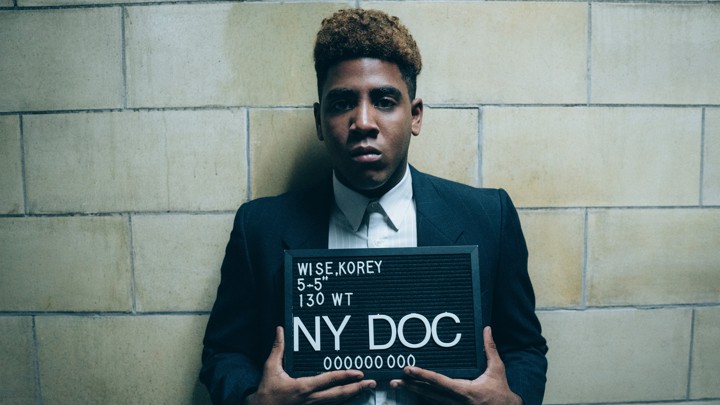
"Coverage of violent crime is a staple of American news, yet only a handful of stories capture the attention of the nation. Even fewer go on to inform the trajectory of American legal proceedings. The acclaimed filmmaker Ava DuVernay tackles one of the most significant criminal cases of the 1990s with her miniseries When They See Us, which premiered on Netflix on May 31. In four episodes, DuVernay provides the most complete account of the impact of the “Central Park Jogger” case on the lives of the defendants and their families.
On April 19, 1989, police found the body of a 28-year-old white woman in New York’s Central Park. She was covered in blood and nearly dead after a brutal sexual assault. Trisha Meili, the injured party, was not the only victim of the night’s horrific events. So, too, were Raymond Santana, Kevin Richardson, Korey Wise, Yusef Salaam, and Antron McCray—the kids, ages 14, 15, and 16, who were wrongfully convicted of her attack. Despite no DNA evidence, fingerprints, blood, or semen linking any of the black and brown boys to the crime, all five defendants grew up in prison, each one spending between six and 13 years behind bars.
When They See Us is primarily focused on the racist logic of the policing, court, and prison systems that cost the five defendants their childhood. The series also profoundly illuminates some inherent problems in American criminal justice from a range of perspectives. Viewers get an intimate glimpse of mothers, fathers, and siblings fighting for the freedom of their loved ones; law-enforcement authorities classifying these same boys as “animals”; and protesters on both sides holding signs, declaring It’s Not Open Season on Women or The Real Rapist in Court Today Is the New York Police and the D.A.
Ultimately, the hysteria surrounding the Central Park Jogger case gave rise to new language about black-youth crime, and to new laws that caused more children to stand trial as adults than at any other time in American history. When They See Us gets the audience closer to understanding why juvenile and adult prison populations exploded through the 1990s, and how the United States became home to the largest incarceration system in the world.
A courtroom scene from When They See Us
Photo by: Atsushi Nishijima / Netflix
The series begins on the morning of April 19, introducing viewers to the five teenagers as they navigated an ordinary day in their Harlem neighborhood. McCray (played by Caleel Harris), a rising Little League star, discussed the Yankees with his father (Michael K. Williams). Richardson (Asante Blackk), a trumpet player, anticipated being named first chair as he walked home from school with his older sister. Meanwhile, Santana (Marquis Rodriguez) and Wise (Jharrel Jerome) seemed primarily occupied with impressing girls, as Salaam (Ethan Herisse) avoided a bully. By nighttime, the boys had entered Central Park together, along with 25 to 35 others—some of whom began throwing rocks at cars, harassing passersby, and beating up homeless people. When the police arrived, the crowd scattered. The officers managed to catch five boys during the chase, including Richardson and Santana, who were taken to the Central Park station for questioning.
Initially, the police prepared to charge the kids with unlawful assembly and refer them to the children’s court system. But New York District Attorney Linda Fairstein (Felicity Huffman) and investigators quickly concluded that the boys instead were Meili’s attackers and built a case around them, rather than conducting a full investigation. “Every young black male who was in the park last night is a suspect in the rape of that woman who is fighting for her life,” Huffman’s Fairstein says to NYPD officers. She called for the deployment of an “army of blue up on Harlem” and encouraged police to “stop every little thug you see.”
The police, investigators, and the press dubbed the boys’ actions in the park that night “wilding.” Two days after the remaining three suspects had been arrested, the New York Post portrayed “wilding” as “packs of bloodthirsty teens from the tenements, bursting with boredom and rage, roam[ing] the streets getting kicks from an evening of ultra-violence.” Soon the term became part of the national discourse, with the newscaster Tom Brokaw describing “wilding” as “rampaging in wolf packs and attacking people just for the fun of it” on NBC Nightly News. Peter Jennings of ABC named it “terror,” plain and simple.
The concept of “wilding” and the racist assumptions behind it made it seem plausible to law-enforcement authorities and the public that black and brown boys’ mischief could easily turn into violent rape. In When They See Us, viewers hear excerpts from the New York Post columnist Pete Hamill’s April 23 account. “They were coming downtown from a world of crack, welfare, guns, knives, indifference, and ignorance,” Hamill wrote, “and driven by a collective fury, brimming with the rippling energies of youth … they had only one goal: to smash, hurt, rob, stomp, rape.” For Hamill, “wilding” was an expression of class and racial hatred. “The enemies were rich. The enemies were white.” The implication was that “wilding” would destroy affluent, white New York if young black and brown boys and men were not severely punished. DuVernay reminds her audience that Donald Trump purchased $85,000 ads in New York City newspapers that screamed “BRING BACK THE DEATH PENALTY. BRING BACK OUR POLICE!”
Read: Ava DuVernay does true crime differently in ‘When They See Us’
Five years later, the animalistic premise of “wilding” that When They See Us so vividly illuminates received academic treatment. In his definitive 1995 Weekly Standard essay, “The Coming of the Super-Predators,” John DiLulio Jr.—then a politics and public-policy professor at Princeton—predicted that immediate demographic shifts would “unleash an army of young male predatory street criminals.” These chiefly black and brown youths were, according to DiLulio, “so impulsive, so remorseless, that [they] can kill, rape, maim, without giving it a second thought.” Politicians and the media seized on the “super-predator” idea, just as they had done with “wilding.” Three months after the release of DiLulio’s article, then–first lady Hillary Clinton famously called for authorities to bring “the kinds of kids who are called ‘super-predators,’ no conscience, no empathy … to heel.”
Amid the “super-predator” frenzy, nearly every state passed laws that made it easier to punish children as young as 13 as adults and, in some cases, sentence them to life without the possibility of parole. In 1998 alone, roughly 200,000 youths were put through the adult court system, and the majority of them were black. Sixteen-year-old Korey Wise was the only Central Park Five defendant to be tried as an adult, and the fourth episode of When They See Us is mainly told from his perspective. With an exceptional performance by Jharrel Jerome—who plays Wise both as a boy and as an adult, and imbues the role with empathy—the episode exposes the horrors children experience when they are locked up with adults. In one scene, for instance, a Rikers Island guard helps two prisoners orchestrate a violent attack against Wise. The teen then chooses to enter solitary confinement for his own protection.
These practices went even further in the mid-1990s. Though Trump’s 1989 call for the execution of the Central Park Five went unfulfilled, between the release of “The Coming of the Super-Predators” in 1995 and the Supreme Court’s Roper v. Simmons decision, which outlawed the death penalty for juveniles in 2005, 62 percent of the children placed on death row across the U.S. were black or Latino.
But by the late 1990s, it became clear that DiLulio’s “super-predators” were not, in fact, coming for blood. Youth violence had declined—not drastically increased—and a number of prominent criminologists discredited DiLulio’s data. He apologized in 2001 for “any unintended consequences.” A year later, after DNA evidence linked a serial rapist and murderer named Matias Reyes to Meili’s attack, the New York Supreme Court vacated the Central Park Five’s convictions. And in 2014, the court settled a civil case with the five men for $41 million. Nonetheless, the “super-predator” myth irrevocably altered the lives of McCray, Richardson, Salaam, Santana, Wise, and tens of thousands of youths and their families, with the proliferation of misguided state and federal policies.
Super-predator may now be seen as a dirty word (and indeed came to haunt Clinton during her 2016 presidential-election bid), but the “wilding” concept that emerged during the Central Park Jogger case is alive and well. The most recent usage came almost 30 years to the day of Meili’s rape, on April 17, 2019, after a reported 500 black youths in Chicago descended on Millennium Park, allegedly stealing from and harassing tourists. The local news described their actions as “wilding.” An official blamed “soft on crime” policies, warning of more “wilding” to come. As DuVernay’s strongest work to date, When They See Us should inspire people to recognize that crime-control policies and the racist ideas behind them must change. Otherwise, the history of the Central Park Five is likely to repeat itself."
'When They See Us' Shows a Case's Impact on U.S. Policy - The Atlantic
Saturday, June 01, 2019
Opinion | Will the Legitimacy of the Supreme Court Survive the Census Case? - The New York Times

"By Joshua A. Geltzer, www.nytimes.comView OriginalMay 31st, 2019
Last year, the court overlooked the anti-Muslim animus of the travel ban and ruled for the administration. It should not be taken in again.
Mr. Geltzer is the executive director and a visiting professor of law at Georgetown University Law Center’s Institute for Constitutional Advocacy and Protection.
Demonstrators outside the Supreme Court in April protested the proposed addition of a citizenship question to the 2020 census.
Photo by: Mandel Ngan/Agence France-Presse — Getty Images
The Supreme Court is poised to decide one of its most divisive cases since litigation around the travel ban: the challenge to the Trump administration’s attempt to add a citizenship question to the 2020 census.
Even as the justices deliberate on this case, shocking new reporting offers critical support to opponents of the administration’s position. It strongly suggests that the justification from Trump administration lawyers, in their presentation before the Supreme Court, for adding a census question on citizenship was an outright falsehood, or at the least a deliberate pretext. A recently deceased Republican strategist, whose 2015 study showed that adding a citizenship question to the census would supercharge pro-Republican gerrymandering, provided the actual rationale and wrote key language that informed a Justice Department letter claiming that the citizenship question was needed to enforce the Voting Rights Act.
We have seen this drama before. Last year, the Supreme Court faced similar questions of blatant misrepresentation from the Trump administration in the case on the travel ban. The court overlooked the sketchy details in that case and decided in the administration’s favor.
In this term’s most important matter, the court should not be taken in.
During the travel ban case, I remember sitting in the courtroom astonished when the solicitor general claimed to the justices that President Trump had “made crystal-clear” that he had “no intention of imposing the Muslim ban” — a ban that, as a candidate, Mr. Trump had repeatedly promised.
In such a case, the justices look for evidence of animus against a particular group. And so establishing the connection between Mr. Trump’s pervasive anti-Muslim remarks and the ban he promulgated was a core aspect of the challengers’ argument.
Ultimately, the conservative justices in the majority voted to uphold the ban, deciding that it was a valid exercise of the president’s authority.
In the census case, which the Supreme Court will soon decide, the administration was challenged on the grounds that the addition of a citizenship question violated proper administrative procedures and would violate, by design, the constitutional guarantee of equal protection by discriminating against minority groups and immigrants, especially of certain nationalities.
In three federal lawsuits, judges have ruled against the administration’s action.
Much as I was taken aback a year ago as the travel ban case was argued, during argument day for the census case I was astonished to hear the solicitor general insist that the question’s addition was intended to facilitate enforcement of the Voting Rights Act. The facts brought out at trial made clear that this was a mere pretext for a pre-existing commitment to adding a citizenship question.
The information recently revealed from the Republican strategist confirms in dramatic fashion what the trial record already showed: The Trump administration’s actual reason for the citizenship question is entrenching Republican political power. Adding the question, according to opponents of the move, would deter many immigrants from participating in the census and thus from being counted, which would in turn help Republicans.
A letter filed on Thursday with the Supreme Court rightly says that adding the question began as an effort “to create a structural electoral advantage” for “‘Republicans and Non-Hispanic Whites.’” And a judge in the United States District Court in Manhattan, who had ruled against adding the question, set a hearing for next week to evaluate, among other implications, whether these documents mean that key witnesses lied during trial. The hearing may produce stark evidence directly relevant to the Supreme Court’s handling of the case.
On Thursday, the Justice Department said that the new information was merely “a last-ditch effort to derail the Supreme Court’s consideration of this case” and added that the 2015 study had “played no role” in the department’s request to reinstate a citizenship question.
The Justice Department also said that it will explain itself in a court filing. Perhaps there’s some explanation for why this isn’t the smoking gun it appears to be. But we already have a shooting gallery of smoking guns from the trial record demonstrating that the Trump administration’s justification was mere pretext. The new evidence has made it, at a minimum, a lot smokier.
The legitimacy of our judicial system depends on judges and justices deciding cases on the facts — the real facts, not a distortion of them offered by one party to a case.
The Supreme Court now faces a choice: How will a majority of the justices handle another attempt by the Trump administration to mislead the court? There is a sad history, dating at least as far back as the infamous Korematsu decision during World War II — a shameful decision upholding the forcible relocation and internment of Japanese-Americans — of the court reaching unfortunate decisions based on misrepresentations by the government that are later proved false.
But there’s still time for the court to get the census case right by looking past the pretext to the Trump administration’s real motivation for adding a citizenship question. For the sake of its own legitimacy, the court must do so and avoid getting snookered by Trump’s lawyers."
Opinion | Will the Legitimacy of the Supreme Court Survive the Census Case? - The New York Times
Subscribe to:
Posts (Atom)