Saturday, May 31, 2025


John Mahama Condemns Trump’s ‘White Genocide’ Claim, Attack On Ramaphosa
John Mahama Condemns Trump’s ‘White Genocide’ Claim, Attack On Ramaphosa
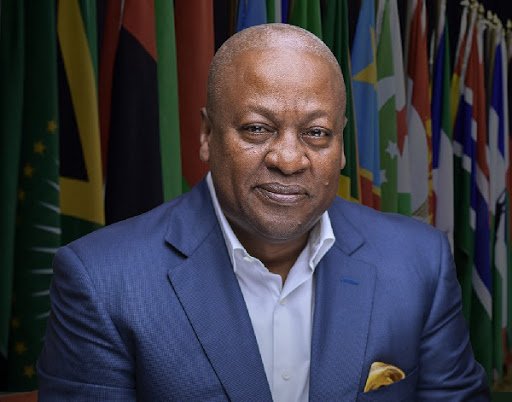
“Ghanaian President John Dramani Mahama has issued a refutation on the claims of US President Donald Trump that the White minority in South Africa are facing genocide, describing the statement as not only untrue but an insult to Africans.
President Trump had made claims of alleged persecution and genocide of White South Africans during the visit of South African President Cyril Ramaphosa to the White House on Tuesday, a comment that infuriated Mahama and elicited a bitter reaction from the Ghanaian leader.
In an article entitled “Trump’s unfounded attack on Cyril Ramaphosa was an insult to all Africans,” Mahama recalled the historic injustice that permeated the Apartheid system in South Africa, saying, “if we want to solve injustices in Africa today, we cannot forget the injustices that shaped our shared history.”
He cited the 1960 Sharpeville massacre in South Africa, which resulted in 69 deaths and more than 100 wounded, which sparked protests in Ghana, adding that the Soweto uprising in 1976, where hundreds of children, even those as young as 12, were shot dead by the Apartheid police, haunted him for years.
“Hundreds of children were killed in that Soweto protest alone. It is their blood, and the blood of their forebears, that nourishes the soil of South Africa,” he said.
Mahama insisted that the majority of Black South Africans today, even though they have suffered the historical injustice of colonisation and Apartheid atrocities, do not have any reason to exact revenge on the Whites, even with glaring evidence that the historical injustice of the dark days has not been adequately addressed.
He said, “The racial persecution of Black South Africans was rooted in a system that was enshrined in law.
It took worldwide participation through demonstrations, boycotts, divestments and sanctions to end apartheid so that all South Africans, regardless of skin colour, would be considered equal.
“Nevertheless, the effects of centuries-long oppression do not just disappear with the stroke of a pen, particularly when there has been no cogent plan of reparative justice.”
He pointed out that despite making up less than 10% of the population, white South Africans control more than 70% of the nation’s wealth. Even now, there are a few places in South Africa where only Afrikaners can own property, live, and work.
He said further that at the entrance to one such settlement, Kleinfontein, is an enormous bust of Hendrik Verwoerd, the former prime minister who is considered the architect of apartheid.
He frowned at the fact that another separatist town, Orania, teaches only Afrikaans in its schools, has its own chamber of commerce, and uses its own currency, the ora, strictly within its borders.
“It has been reported that inside the Orania Cultural History Museum, there is a bust of every apartheid-era president except FW de Klerk, who initiated reforms that led to the repeal of apartheid laws.
“Both Kleinfontein and Orania are currently in existence and boast a peaceful lifestyle. Why had the America-bound Afrikaners not sought refuge in either of those places?
“Had the Black South Africans wanted to exact revenge on Afrikaners, surely, they would have done so decades ago when the pain of their previous circumstances was still fresh in their minds. What, at this point, is there to be gained by viciously killing and persecuting people you’d long ago forgiven? He added.
Mahama quoted the UN Department of Economic and Social Affairs as saying that half of the population of South Africa is under 29, and was born after the apartheid era. They are presumably committed to building and uplifting the “rainbow nation” and have no reason to unleash a genocide against white people.“
Friday, May 30, 2025
Opinion | Elon Musk’s Legacy Is Disease, Starvation and Death - The New York Times
Elon Musk’s Legacy Is Disease, Starvation and Death

"There is an Elon Musk post on X, his social media platform, that should define his legacy. “We spent the weekend feeding USAID into the wood chipper,” he wrote on Feb. 3. He could have “gone to some great parties. Did that instead.”
Musk’s absurd scheme to save the government a trillion dollars by slashing “waste, fraud and abuse” has been a failure. The Department of Government Efficiency claims it’s saved $175 billion, but experts believe the real number is significantly lower. Meanwhile, according to the Partnership for Public Service, which studies the federal work force, DOGE’s attacks on government personnel — its firings, re-hirings, use of paid administrative leave and all the associated lack of productivity — could cost the government upward of $135 billion this fiscal year, even before the price of defending DOGE’s actions in court. Musk’s rampage through the bureaucracy may not have created any savings at all, and if it did, they were negligible.
Now, Musk’s Washington adventure is coming to an end, with the disillusioned billionaire announcing that he’s leaving government behind. “It sure is an uphill battle trying to improve things in D.C., to say the least,” he told The Washington Post.
There is one place, however, where Musk, with the help of his minions, achieved his goals. He did indeed shred the United States Agency for International Development. Though a rump operation is now operating inside the State Department, the administration says that it has terminated more than 80 percent of U.S.A.I.D. grants. Brooke Nichols, an associate professor of global health at Boston University, has estimated that these cuts have already resulted in about 300,000 deaths, most of them of children, and will most likely lead to significantly more by the end of the year. That is what Musk’s foray into politics accomplished.
White House officials deny that their decimation of U.S.A.I.D. has had fatal consequences. At a hearing in the House last week, Democrats confronted Secretary of State Marco Rubio with my colleague Nicholas Kristof’s reporting from East Africa, documenting suffering and death caused by the withdrawal of aid. Rubio insisted no such deaths have happened, but people who’ve been in the field say he’s either lying or misinformed.
Atul Gawande, an assistant administrator for global health at U.S.A.I.D. in Joe Biden’s administration, told me that during a trip to Kenya last week, he visited the national referral hospital. There’s been a major increase in the number of patients with advanced H.I.V. symptoms, a result of losing access to antiretroviral medication. At refugee camps on the border of South Sudan, food aid has been cut so severely that people are getting less than 30 percent of the calories they need. “It is not enough to survive on, and that has caused skyrocketing levels of severe malnutrition and deaths associated with it,” said Gawande.
Musk apparently did not anticipate that it would be bad P.R. for the world’s richest man to take food and medicine from the world’s poorest children. The Post reported that he hadn’t foreseen “the intensity of the blowback to his role in politics over the past year.” He’s been doing a series of interviews that Axios called an “image rehab tour.”
If there were justice in the world, Musk would never be able to repair his reputation, at least not without devoting the bulk of his fortune to easing the misery he’s engendered. Musk’s sojourn in government has revealed severe flaws in his character — a blithe, dehumanizing cruelty, and a deadly incuriosity. This should shape how he’s seen for the rest of his public life.
Musk sometimes refers to people he holds in contempt as “NPCs,” videogame speak for characters who aren’t controlled by players and thus have no agency. More than just an insult, the term, I think, reveals something about his worldview. He either doesn’t view most other people as entirely real or doesn’t see the point of treating them as such. As he told Joe Rogan this year, “The fundamental weakness of Western civilization is empathy,” referring to the emotion as a “bug” in our system.
Yet even as he prides himself on dispassionate rigor, Musk has proved remarkably uninterested in figuring out how the government that he sought to transform really works. Samantha Power, head of U.S.A.I.D. under Biden, told me she tried to speak with members of the new administration, hoping to convince them there were elements of U.S.A.I.D.’s work that they could leverage for their own agenda. But aside from one meeting with transition officials, her outreach was ignored.
Instead, Musk seemed to derive his view of the agency from conspiracy theorists on X. There, he called U.S.A.I.D. a “radical-left political psy op” and amplified a post from the right-wing provocateur Milo Yiannopoulos smearing it as “the most gigantic global terror organization in history.”
It would have been easy for Musk to take his private plane to a country like Uganda to see for himself the work U.S.A.I.D. has done providing medicine to people with H.I.V. or feeding refugees from South Sudan. Instead, he drew on the counsel of internet trolls and staffed DOGE with lackeys who were similarly ignorant. “If you heard the conversations U.S.A.I.D. staff had with the DOGE people, there is no word in any language that captures the level of obliviousness about what U.S.A.I.D. actually did,” said Power.
This kind of intellectual carelessness should make people re-evaluate their faith in Musk’s brilliance. “Being president doesn’t change who you are; it reveals who you are,” Michelle Obama has said. The same is true, apparently, of being the president’s best friend, even fleetingly.
Michelle Goldberg has been an Opinion columnist since 2017. She is the author of several books about politics, religion and women’s rights and was part of a team that won a Pulitzer Prize for public service in 2018 for reporting on workplace sexual harassment."
How Trump Denying Visas to Chinese Students Could Backfire on the US - The New York Times
Denying Visas to Chinese Students Will Backfire on America
"Protecting the borders from espionage is essential. It’s something else to deny students because they are Chinese and hope to pursue a STEM degree in the United States.

One night in 1978, President Jimmy Carter got a phone call at 3 a.m. from a top adviser who was visiting China.
“Deng Xiaoping insisted I call you now, to see if you would permit 5,000 Chinese students to come to American universities,” said the official, Frank Press.
“Tell him to send 100,000,” Mr. Carter replied.
By Christmas time that year, the first group of 52 Chinese students had arrived in the United States, just ahead of the formal establishment of U.S.-China diplomatic relations on New Year’s Day. A month later, Mr. Deng, then China’s top leader, made a historic visit to America during which he watched John Denver sing “Take Me Home, Country Roads” and was photographed wearing a cowboy hat.
It’s almost hard to believe how little contact there had been between the United States and modern China before that. The Sinologist John K. Fairbank wrote in 1971: “Since 1950 Washington has officially sent more men to the moon than it has to China.” The visits by Mr. Deng, and more important, by those first Chinese students, began a new chapter that would fundamentally change China — and the world. The United States gained access to a vast market and talent pool, while China found a model and a partner for transforming its economy.
Now that chapter has closed, after the Trump administration announced that it would begin “aggressively” revoking the visas of Chinese students on Wednesday.
For the millions of Chinese who have studied in the United States, myself included, it is a sobering and disheartening development. It marks a turning point that America, long a beacon of openness and opportunity, would start shutting its doors to Chinese who aspire for a good education and a future in a society that values freedom and human dignity.
By curbing people-to-people exchanges, President Trump is taking a decisive step toward decoupling from China. To treat Chinese students and professionals in science and technology broadly not as contributors, but as potential security risks, reflects a foreign policy driven more by insecurity and retreat than by the self-assurance of a global leader.
The reaction to the new policy inside China, reflected in the U.S. embassy’s social media accounts, was mixed. Some commenters thanked the United States for “sending China’s brightest minds back.” Others drew historical parallels, comparing the Trump administration’s isolationist turn to China’s Ming and Qing dynasties — once global powers that declined after turning inward and were ultimately defeated in foreign invasions. One commenter remarked that the policy’s narrow-mindedness would “make America small again.”
The shift also comes at a time when many young Chinese, disillusioned by political repression and economic stagnation under Xi Jinping’s leadership, are trying to flee the country to seek freedom and opportunities.
“Xi is pushing many of the best and the brightest to leave China,” said Thomas E. Kellogg, executive director of Georgetown’s Center for Asian Law and a leading scholar of legal reform in China. “The U.S. should be taking advantage of this historic brain drain, not shutting the door to many talented Chinese young people.”
The number of Chinese students in the United States dropped to about 277,000 in the 2023-24 academic year, a 25 percent decline from its peak four years earlier, according to government data. Students from China remained the second largest group of international students, after those from India. In fact, applications for post-graduation temporary employment permits rose by 12 percent in 2023-24 over the prior year, signaling more interest in working in the United States despite the challenges.
The new visa policy will leave many of these students with little choice but to leave, or at the least reconsider their future in the United States.
I interviewed a doctoral candidate in computer science at a top American university, a young man from China who first dreamed of studying in America at 17, when he began to question Chinese government propaganda. He arrived eight years ago and never seriously considering returning. But now, facing the threat of visa revocation, he said he is no longer sure if he can — or even wants to — stay.
“America doesn’t feel worth it anymore,” he said, asking me not to identify him for fear of retribution from Washington. The immigration process is fraught with anxiety, he said, and the returns no longer seem to justify the stress. He said he was exploring work visa options in Canada, Australia and western Europe, even though he has a job offer from a big tech company on the West Coast.
“The pay might be lower,” he said, “but those countries offer more personal freedom.”
His experience is in stark contrast to that of Dong Jielin, who was among the first Chinese students to come to the United States after the Cultural Revolution. When she arrived at Carnegie Mellon in 1982 on a U.S. scholarship, she knew little about the country beyond what the Chinese state media had portrayed: a capitalist society in perpetual crisis and a people living in misery.
It didn’t take long for her perception to shift. “The moment I walked into a supermarket, I could see that life here was far from miserable,” she told me in an interview. Encounters with Americans quickly dispelled other myths as well. “They were not vicious or hostile,” she said. “They were warm and kind.”
Ms. Dong went on to earn a doctoral degree in physics, build a career in finance and technology become a U.S. citizen and raise a family.
The U.S. government has good reasons to worry about national security risks from China, including espionage and intellectual property theft. The F.B.I. calls the Chinese government the most prolific sponsor of talent recruitment programs that aim to transfer scientific and technological breakthroughs to China.
It also makes sense to block people with ties to China’s military industrial complex.
But it’s something else entirely to deny visas to 18-year-old students simply because they are Chinese and hope to pursue a STEM degree in the United States.
American officials often say they aim to distinguish between the Chinese Communist Party and the Chinese people. That distinction was emphasized during Mr. Trump’s first term. It’s largely absent now.
U.S. policy now targets anyone with ties to the Chinese Communist Party. But the party has nearly 100 million members, about one in seven Chinese. And most children in China grow up as members of the Young Pioneers and Communist Youth League, school-based party organizations. It’s just the way of life in a country ruled by a Leninist party.
As one commenter put it on the U.S. embassy’s WeChat account, “How could any Chinese not be associated with the Party?”
The policy is also very likely to backfire.
Researchers found that Chinese undergraduates in American universities were more predisposed to favor liberal democracy than their peers in China. However, they said, exposure to xenophobic, anti-Chinese comments by Americans significantly decreased their belief that political reforms are desirable for China. Those who experienced discrimination were more likely to reject democratic values in favor of autocratic ones.
Chinese who have studied abroad also face growing suspicion at home. The government and some employers believe that exposure to Western values makes their fellow Chinese politically unreliable.
Dong Mingzhu, chairwoman of the appliance giant Gree Electric, said recently that her company will never hire a graduate from a foreign university. “There are spies among them,” she said.
On the Chinese internet, some people compared her to Secretary of State Marco Rubio, who announced the visa policy.
Dong Jielin, the former student who was among the first to come to the United States, said the experience had a profound impact on her life, giving her the opportunity to explore the frontiers of science and technology.
It is understandable, she said, that the government is raising screening standards for student visas. “But I believe the vast majority of those who stay in the U.S. will, over time, become loyal American citizens,” she said, just like herself.
Li Yuan writes The New New World column, which focuses on China’s growing influence on the world by examining its businesses, politics and society."
Supreme Court Allows Trump Administration to End Biden-Era Migrant Program for Now - The New York Times
Supreme Court Allows Trump Administration, for Now, to End Biden-Era Migrant Program
"The administration had asked the court to allow it to end deportation protections for more than 500,000 people facing dire humanitarian crises in their home countries.

The Supreme Court on Friday allowed the Trump administration, for now, to revoke a Biden-era humanitarian program intended to give temporary residency to more than 500,000 immigrants from countries facing war and political turmoil.
The court’s order was unsigned and provided no reasoning, which is typical when the justices rule on emergency applications. It granted a request that will allow the administration to act even as an appeals court considers the case and, potentially, the justices review it again.
The ruling comes as the White House is stepping up pressure on the Department of Homeland Security to increase the pace of deportations and could speed efforts to remove thousands of migrants living legally in the United States.
The immediate practical impact of the court’s order, Justice Ketanji Brown Jackson wrote in a dissent joined by Justice Sonia Sotomayor, will have “the devastating consequences of allowing the government to precipitously upend the lives and livelihoods of nearly half a million noncitizens while their legal claims are pending.”
The ruling, which exposes some migrants from Cuba, Nicaragua, Venezuela and Haiti to possible deportation, is the latest in a series of emergency orders by the justices in recent weeks responding to a flurry of applications asking the court to weigh in on the administration’s attempts to unwind Biden-era immigration policies.
The migrants “now face two unbearable options,” Justice Jackson wrote. On the one hand, they could choose to leave the United States and return to the dangers they had fled. On the other, she wrote, “they could remain in the United States after parole termination and risk imminent removal at the hands of government agents, along with its serious attendant consequences,” including arrest and detention.
The court’s decision to side with the Trump administration, though a temporary order at an early stage in the litigation, is a signal that a majority of the justices believe the administration is likely to prevail in the case.
Justice Jackson indicated as much in her dissent, when she wrote that the Supreme Court should have kept the lower court’s pause in place, allowing people to maintain their immigration status for now “even if the government is likely to win on the merits.” Justice Jackson added that “success takes time” and that standards to block a lower court order “require more than anticipated victory.”
Friday’s ruling focused on former President Joseph R. Biden Jr.’s expansion of a legal mechanism for immigration called humanitarian parole. It allows migrants from countries facing instability to enter the United States and quickly secure work authorization, provided they have a private sponsor to take responsibility for them.
This month, the justices let the Trump administration remove deportation protections from nearly 350,000 Venezuelan immigrants who had been allowed to remain in the United States under a program known as Temporary Protected Status.
Lawyers for the immigrants said Friday’s decision would be devastating to thousands of people who had sought protection in the United States.
“The Supreme Court has effectively greenlit deportation orders for an estimated half a million people, the largest such de-legalization in the modern era,” said Karen Tumlin, the founder and director of the Justice Action Center, an immigrant advocacy group.
Humanitarian parole and Temporary Protected Status are two different mechanisms by which migrants from troubled countries can be temporarily settled in the United States. Humanitarian parole is typically obtained by individuals who apply on a case-by-case basis, while protected status is more often extended to large groups of migrants for a period of time. Individuals can hold both statuses at the same time.

Between the two rulings, the justices have agreed that, for now, the Trump administration can proceed with plans to deport hundreds of thousands of people who had fled war-torn and unstable homelands and legally taken refuge in the United States.
The use of humanitarian parole has a decades-long history. It was used to admit nearly 200,000 Cubans during the 1960s and more than 350,000 Southeast Asians after the fall of Saigon during the Vietnam War.
The Biden administration announced a humanitarian parole program in April 2022 for Ukrainians seeking to flee after the Russian invasion.
Biden officials then introduced the program for Venezuelans in late 2022 and for Cubans, Haitians and Nicaraguans in January 2023. With a stalemate in Congress over immigration and a sharp rise in border crossings, the programs cleared the way for hundreds of thousands of immigrants from those nations to enter the country legally.
Biden officials had hoped that the programs would encourage immigrants to fly to the United States and apply for entry in an organized fashion, instead of traveling north by foot and crossing the border illegally.
When the program was adopted for Venezuelans, official ports of entry had been closed to migrants since the start of the coronavirus pandemic, which had provided additional incentive for those intent on reaching the country to take more dangerous routes and cross the border illegally.
After the administration introduced its policy, Border Patrol apprehensions at the border of migrants from those countries dropped sharply.
Republican lawmakers have pushed back sharply against the humanitarian parole programs, arguing that they allowed migration by those who would not have otherwise qualified to enter the country.
Texas and other Republican-led states filed lawsuits while Mr. Biden was in office seeking to block the parole program, arguing that it burdened them by adding costs for health care, education and law enforcement. The courts upheld the programs’ legality.
President Trump moved to end the humanitarian parole programs for people from Cuba, Nicaragua, Venezuela and Haiti on his first day back in office.
So far, the Trump administration has not tried to revoke the status of 240,000 Ukrainians who received humanitarian parole, though it has paused consideration of new applications under that program.
Lawyers for migrants have sued. They argued that the termination of the humanitarian and other immigration parole programs was “contrary to law, arbitrary and capricious.”
A federal judge in Massachusetts temporarily paused the administration’s revocation of the program in April, finding that Homeland Security Secretary Kristi Noem lacked the authority to categorically revoke parole for all 532,000 people without providing individualized, case-by-case reviews.
On May 5, a three-judge panel in the U.S. Court of Appeals for the First Circuit upheld the lower court’s temporary block on the administration, finding that Ms. Noem had not made a “strong showing” that her “categorical termination” of humanitarian parole for all migrants was likely to survive a court challenge.
In an emergency application to the Supreme Court on May 8, Solicitor General D. John Sauer argued that Ms. Noem had “broad discretion over categories of immigration determinations” and that federal immigration law permitted the secretary “to revoke that parole” whenever its purposes had been served.
By blocking the Trump administration from ending the programs, the lower court had “needlessly” upended “critical immigration policies that are carefully calibrated to deter illegal entry” and had undone “democratically approved policies that featured heavily in the November election,” Mr. Sauer argued.
Lawyers for the immigrants filed a brief with the court arguing that Ms. Noem’s decision to end the parole protections “contravened express limits on her authority” and that siding with the Trump administration would “cause an immense amount of needless human suffering” for the immigrants.
The lawyers for the immigrants added: “All of them followed the law and the rules of the U.S. government, and they are here to reunite with family and/or to escape, even temporarily, the instability, dangers and deprivations of their home countries.”
Abbie VanSickle covers the United States Supreme Court for The Times. She is a lawyer and has an extensive background in investigative reporting.
Adam Liptak covers the Supreme Court and writes Sidebar, a column on legal developments. A graduate of Yale Law School, he practiced law for 14 years before joining The Times in 2002."
On the Campaign Trail, Elon Musk Juggled Drugs and Family Drama
On the Campaign Trail, Elon Musk Juggled Drugs and Family Drama
“Elon Musk, a prominent figure in Donald Trump’s orbit, engaged in more intense drug use than previously known, including ketamine, Ecstasy, and psychedelic mushrooms. This drug use, coupled with his tumultuous family life involving multiple romantic relationships and legal battles over his children, raised concerns among those close to him. Amidst his political involvement and business endeavors, Musk’s erratic behavior and personal struggles intensified, leading to public scrutiny and legal challenges.
As Mr. Musk entered President Trump’s orbit, his private life grew increasingly tumultuous and his drug use was more intense than previously known.

As Elon Musk became one of Donald J. Trump’s closest allies last year, leading raucous rallies and donating about $275 million to help him win the presidency, he was also using drugs far more intensely than previously known, according topeople familiar with his activities.
Mr. Musk’s drug consumption went well beyond occasional use. He told people he was taking so much ketamine, a powerful anesthetic, that it was affecting his bladder, a known effect of chronic use. He took Ecstasy and psychedelic mushrooms. And he traveled with a daily medication box that held about 20 pills, including ones with the markings of the stimulant Adderall, according to a photo of the box and people who have seen it.
It is unclear whether Mr. Musk, 53, was taking drugs when he became a fixture at the White House this year and was handed the power to slash the federal bureaucracy. But he has exhibited erratic behavior, insulting cabinet members, gesturing like a Nazi and garbling his answers in a staged interview.
At the same time, Mr. Musk’s family life has grown increasingly tumultuous as he has negotiated overlapping romantic relationships and private legal battles involving his growing brood of children, according to documents and interviews.
On Wednesday evening, Mr. Musk announced that he was ending his stint with the government, after lamenting how much time he had spent on politics instead of his businesses.
Mr. Musk and his lawyer did not respond to requests for comment this week about his drug use and personal life. He has previously said he was prescribed ketamine for depression, taking it about every two weeks. And he told his biographer, “I really don’t like doing illegal drugs.”
The White House did not respond to questions about whether it had asked Mr. Musk to take drug tests. As a large government contractor, his aerospace firm, SpaceX, must maintain a drug-free work force and administers random drug tests to its employees. But Mr. Musk has received advance warning of the tests, according to people close to the process. SpaceX did not respond to questions about those warnings.
Mr. Musk, who joined the president’s inner circle after making a vast fortune on cars, satellites and rocket ships, has long been known for grandiose statements and a mercurial personality. Supporters see him as an eccentric genius whose slash-and-burn management style is key to his success.
But last year, as he jumped into the political arena, some people who knew him worried about his frequent drug use, mood swings and fixation on having more children. This account of his behavior is based on private messages obtained by The New York Times as well as interviews with more than a dozen people who have known or worked with him.
This year, some of his longtime friends have renounced him, pointing to some of his public conduct.
“Elon has pushed the boundaries of his bad behavior more and more,” said Philip Low, a neuroscientist and onetime friend of Mr. Musk’s who criticized him for his Nazi-like gesture at a rally.
And some women are challenging Mr. Musk for control of their children.
One of his former partners, Claire Boucher, the musician known as Grimes, has been fighting with Mr. Musk over their 5-year-old son, known as X. Mr. Musk is extremely attached to the boy, taking him to the Oval Office and high-profile gatherings that are broadcast around the world.
Ms. Boucher has privately complained that the appearances violate a custody settlement in which she and Mr. Musk agreed to try to keep their children out of the public eye, according to people familiar with her concerns and the provision, which has not been previously reported. She has told people that she worries about the boy’s safety, and that frequent travel and sleep deprivation are harming his health.
Another mother, the right-leaning writer Ashley St. Clair, revealed in February that she had a secret relationship with Mr. Musk and had given birth to his 14th known child. Mr. Musk offered her a large settlement to keep his paternity concealed, but she refused. He sought a gag order in New York to force Ms. St. Clair to stop speaking publicly, she said in an interview.
A Ketamine Habit
Mr. Musk has described some of his mental health issues in interviews and on social media, saying in one post that he has felt “great highs, terrible lows and unrelenting stress.” He has denounced traditional therapy and antidepressants.
He plays video games for hours on end. He struggles with binge eating, according to people familiar with his habits, and takes weight-loss medication. And he posts day and night on his social media platform, X.
Mr. Musk has a history of recreational drug use, The Wall Street Journal reported last year. Some board members at Tesla, his electric vehicle company, have worried about his use of drugs, including Ambien, a sleep medication.
In an interview in March 2024, the journalist Don Lemon pressed him on his drug use. Mr. Musk said he took only “a small amount” of ketamine, about once every two weeks, as a prescribed treatment for negative moods.
“If you’ve used too much ketamine, you can’t really get work done, and I have a lot of work,” he said.
He had actually developed a far more serious habit, The Times found.
Mr. Musk had been using ketamine often, sometimes daily, and mixing it with other drugs, according to people familiar with his consumption. The line between medical use and recreation was blurry, troubling some people close to him.
He also took Ecstasy and psychedelic mushrooms at private gatherings across the United States and in at least one other country, according to those who attended the events.
The Food and Drug Administration has formally approved the use of ketamine only as an anesthetic in medical procedures. Doctors with a special license may prescribe it for psychiatric disorders like depression. But the agency has warned about its risks, which came into sharp relief after the death of the actor Matthew Perry. The drug has psychedelic properties and can cause dissociation from reality. Chronic use can lead to addiction and problems with bladder pain and control.
By the spring of last year, Mr. Musk was ramping up criticism of President Joseph R. Biden Jr., particularly his policies on illegal immigration and diversity initiatives.
Mr. Musk was also facing federal investigations into his businesses. Regulators were looking into crashes of Tesla’s self-driving cars and allegations of racism at its factories, among other complaints.
“There are at least half a dozen initiatives of significance to take me down,” he wrote in a text message to someone close to him last May. “The Biden administration views me as the #2 threat after Trump.”
“I can’t be president, but I can help Trump defeat Biden and I will,” he added.
He publicly endorsed Mr. Trump in July.
Around that time, Mr. Musk told people that his ketamine use was causing bladder issues, according to people familiar with the conversations.
On Oct. 5, he appeared with Mr. Trump at a rally for the first time, bouncing up and down around the candidate. That evening, Mr. Musk shared his excitement with a person close to him. “I’m feeling more optimistic after tonight,” he wrote in a text message. “Tomorrow we unleash the anomaly in the matrix.”
“This is not something on the chessboard, so they will be quite surprised,” Mr. Musk added about an hour later. “‘Lasers’ from space.”
After Mr. Trump won, Mr. Musk rented a cottage at Mar-a-Lago, the president-elect’s Florida resort, to assist with the transition. Mr. Musk attended personnel meetings and sat in on phone calls with foreign leaders. And he crafted plans to overhaul the federal government under the new Department of Government Efficiency.
Family Secrets
Mr. Musk has also been juggling the messy consequences of his efforts to produce more babies.
By 2022, Mr. Musk, who has married and divorced three times, had fathered six children in his first marriage (including one who died in infancy), as well as two with Ms. Boucher. She told people she believed they were in a monogamous relationship and building a family together.
But while a surrogate was pregnant with their third child, Ms. Boucher was furious to discover that Mr. Musk had recently fathered twins with Shivon Zilis, an executive at his brain implant company, Neuralink, according to people familiar with the situation.
Mr. Musk was by then sounding an alarm that the world’s declining birthrates would lead to the end of civilization, publicly encouraging people to have children and donating $10 million to a research initiative on population growth.
Privately, he was spending time with Simone and Malcolm Collins, prominent figures in the emerging pronatalist movement, and urging his wealthy friends to have as many children as possible. He believed the world needed more intelligent people, according to people aware of the conversations.
Mr. Collins declined to comment on his relationship with Mr. Musk, but said, “Elon is one of the people taking this cause seriously.”
Even as Mr. Musk fathered more children, he favored his son X. By the fall of 2022, during a period when he and Ms. Boucher were broken up, he began traveling with the boy for days at a time, often without providing advance notice, according to people familiar with his actions.
Ms. Boucher reconciled with Mr. Musk, only to get another unpleasant surprise. In August 2023, she learned that Ms. Zilis was expecting a third child with Mr. Musk via surrogacy and was pregnant with their fourth.
Ms. Boucher and Mr. Musk began a contentious custody battle, during which Mr. Musk kept X for months. They eventually signed the joint custody agreement that specified keeping their children out of the spotlight.
By mid-2023, unknown to either Ms. Boucher or Ms. Zilis, Mr. Musk had started a romantic relationship with Ms. St. Clair, the writer, who lives in New York City.
Ms. St. Clair said in an interview that at first, Mr. Musk told her he wasn’t datinganyone else. But when she was about six months pregnant, he acknowledged that he was romantically involved with Ms. Zilis, who went on to become a more visible fixture in Mr. Musk’s life.
Ms. St. Clair said that Mr. Musk told her he had fathered children around the world, including one with a Japanese pop star. He said he would be willing to give his sperm to anyone who wanted to have a child.
“He made it seem like it was just his altruism and he generally believed these people should just have children,” Ms. St. Clair said.
Ms. St. Clair said that when she was in a delivery room giving birth in September, Mr. Musk told her over disappearing Signal messages that he wanted to keep his paternity and their relationship quiet.
On election night, Ms. St. Clair and Mr. Musk both went to Mar-a-Lago to celebrate Mr. Trump’s victory. But she had to pretend that she hardly knew him, she said.
He offered her $15 million and $100,000 a month until their son turned 21, in exchange for her silence, according to documents reviewed by The Times and first reported by The Journal. But she did not want her son’s paternity to be hidden.
After she went public in February, ahead of a tabloid story, she sued Mr. Musk to acknowledge paternity and, later, to get emergency child support.
Mr. Musk sought a gag order, claiming that any publicity involving the child, or comments by Ms. St. Clair on her experience, would be a security risk for the boy.
‘No Sympathy for This Behavior’
Some of Mr. Musk’s onetime friends have aired concerns about what they considered toxic public behavior.
In a January newsletter explaining why their friendship had ended, Sam Harris, a public intellectual, wrote that Mr. Musk had used his social media platform to defame people and promote lies.
“There is something seriously wrong with his moral compass, if not his perception of reality,” Dr. Harris wrote.
Later that month, at a Trump inauguration event, Mr. Musk thumped his chest and thrust his hand diagonally upward, resembling a fascist salute. “My heart goes out to you,” he told the crowd. “It is thanks to you that the future of civilization is assured.”
Mr. Musk dismissed the resulting public outcry, saying he had made a “positive gesture.”
Dr. Low, who is chief executive of NeuroVigil, a neurotechnology company, was outraged by the performance. He wrote Mr. Musk a sharp email, shared with The Times, cursing him “for giving the Nazi salute.”
When Mr. Musk didn’t respond to the message, Dr. Low posted his concerns on social media. “I have no sympathy for this behavior,” he wrote on Facebook, referring to the gesture as well as other behaviors. “At some point, after having repeatedly confronted it in private, I believe the ethical thing to do is to speak out, forcefully and unapologetically.”
The next month, Mr. Musk once again found himself under scrutiny, this time for an appearance at the Conservative Political Action Conference outside Washington.
As he walked onto the stage, he was handed a chain saw from one of his political allies, Javier Milei, the president of Argentina. “This is the chain saw for bureaucracy!” Mr. Musk shouted to the cheering crowd.
Some conference organizers told The Times that they did not notice anything out of the ordinary about his behavior behind the scenes. But during an onstage interview, he spoke in disjointed bouts of stuttering and laughing, with sunglasses on. Clips of it went viral as many viewers speculated about possible drug use.
Julie Tate contributed research.
Kirsten Grind is an investigative business reporter for The Times, writing stories about companies, chief executives and billionaires across Silicon Valley and the technology industry.
Megan Twohey is an investigative reporter at The Times. Her work has prompted changes to the law, criminal convictions and cultural shifts.“