Sunday, February 10, 2019


Saturday, February 09, 2019
Friday, February 08, 2019

Three Trump officials were warned about family separation.

" White testified about exactly which Trump appointees he warned and that those warnings came in the form of in-person conversations but also multiple emails and memos. Those appointees were HHS officials: Scott Lloyd, Steven Wagner, and Maggie Wynne. (Lloyd and Wynne, for their parts, have well-reported histories of using their positions in HHS as platforms to fight abortion access.)
As White testified, “Separating children from their parents poses significant risk of traumatic psychological injury to the child.” He also said that for many children that trauma would be “lifelong,” even if the government is able to reunite them with their parents. The government has argued in court, though, that it will not be able to reunify many of these families: An internal report estimated that thousands of separated children were placed with sponsors—not reunited with parents—and remain unidentified.
White now says he warned Lloyd, Wagner, and Wynne that separations would be traumatic for these children and probably unlawful. “[I warned] that this would be inconsistent with our legal requirement to act in the best interest of the child and would expose children to an unnecessary risk of harm,” he told the committee.
When he brought this up with his department’s leadership, White says he “received a respectful hearing [and] was advised that there was no policy.”
Three Trump officials were warned about family separation.


Thursday, February 07, 2019
Wednesday, February 06, 2019
Tuesday, February 05, 2019
Monday, February 04, 2019
Sorry, Republicans. You can’t call out Northam for racism and give Trump a pass. - The Washington Post

"By Tom Nichols, www.washingtonpost.com February 2nd, 2019
House Minority Leader Kevin McCarthy
Photo by: R-Calif.
Finally, the GOP is calling out a chief executive for his appalling insensitivity on an issue of race: Saturday, via Twitter, House Minority Leader Kevin McCarthy (R-Calif.) decried that chief executive’s “past racist behavior” and said “He should resign.” In two tweets posted on Saturday, Republican Party chair Ronna McDaniel listed off what she sees as that same chief executive’s callousness on race, including, apparently, his appearance in a photo, 35 years ago in which one person is in blackface and the other is wearing a Ku Klux Klan hood. The conduct that these Republicans denounced clearly deserves condemnation, no matter how or when it occurred.
Unfortunately, they’ve reserved their scorn for one chief executive, Virginia Gov. Ralph Northam, a Democrat, and have held back when it comes to criticizing a chief executive from their own party, President Trump, for his racially divisive statements and public positions. That is naked hypocrisy.
Northam, without doubt, brought this criticism on himself: Friday he released a statement apologizing for appearing in a 1984 medical school yearbook photo “in a costume that is clearly racist and offensive,” saying, “I am deeply sorry for the decision I made.” Then on Saturday, he went before live cameras to say, “I believe then, and now, that I am not either of the people” in the photo in question. A risible, flimsy explanation, unacceptable for anyone, let alone the governor of a state.
Republicans, sensing a relatively rare moment when, for once, the other party had to own a race-relations debacle, joined Democrats in calling for Northam’s ouster. In addition to McCarthy and McDaniel, Virginia GOP chair Jack Wilson called on Northam to step down, saying the governor has “lost the moral ability” to lead. Ever since Election Day 2016, when Trump’s supporters promised he wouldn’t be as awful as his critics — including me — warned he would be, Republicans have longed for a moment when they could at least pretend to gain the high moral ground.
But while Democrats, and decent people everywhere, have a right to demand that Northam step down, Republicans who continue to support a party dominated by Trump can’t be taken seriously on this point.
[The troubling history behind Ralph Northam's blackface Klan photo]
Trump’s record on race-related issues is abysmal. For years, he fueled birtherism to attack President Barack Obama. He once argued that a federal judge, Gonzalo P. Curiel, couldn’t be impartial in a case involving Trump because, as Trump said, “He’s a Mexican. We’re building a wall between here and Mexico.” Early in his presidential candidacy, Trump called for a “total and complete ban on Muslims entering the country.” In office, he ruminated on the United States needing more immigrants from places such as Norway and fewer immigrants from “shithole” countries, referencing Haiti, El Salvador and African countries.
Despite polls taken at various times during his presidency that show significant percentages of Americans either see Trump as racist or, at a minimum, someone who has “emboldened” racists, the president still enjoys the support of Republicans in Congress and 78 percent approval among Republicans in the latest Washington Post/ABC News poll. For the most part, the party has indulged his race-baiting comments and his crude handling of racial issues. But somehow party leaders, who stand firmly behind him, and a national party that just passed a resolution expressing “undivided support” for him, seems to have no qualms about calling out Northam.
How Northam got all the way to the Virginia statehouse without the yearbook photo being discovered will wind up as a case study in future training for political opposition researchers and for reporters. Regardless of how it happened, it’s fair to view his inconsistent statements and conclude that he never thought he would have to explain any of this until after it became public. That disingenuousness is damning in itself, and if the voters and elected leaders of Virginia decide that this episode disqualifies him from serving honorably in office — it appears they do — that’s their choice. (I happen to agree with them.)
Democrats don’t have completely clean hands on race issues; if nothing else, the Northam episode illustrates that. But when commentators such as David Limbaugh ask if Trump supporters must “forfeit the right to pass any moral judgments” because of their continual excuse-making for him, the only reply is: yes. Criticizing Northam for “past racist behavior” and his present equivocation after more than two years of overlooking an astonishing record of divisiveness reflects little more than a self-serving, morally repellent double standard. There are plenty of good arguments for kicking Northam out of his job. The newfound racial piety of a party that sold its soul to Trump isn’t one of them."
Sorry, Republicans. You can’t call out Northam for racism and give Trump a pass. - The Washington Post
The Governor Who Partied Like It’s 1884 - The New York Times

"Let’s say you’re on your way to a dance contest in the early-to-mid 1980s in Texas, and you’re young, like mid-20s young, and you know you’ve got what it takes to win. You know this because you’re basically going to dance like Michael Jackson. You’ve seen “Beat It,” “Billie Jean” and “Thriller,” and like rest of the entire planet, you just kind of know.
Now it’s almost time to head out to this thing, and you’ve got a loose plan. You’re going to fling up your leg up like it’s a lit match to flick out, and make a tippy-toe statue of yourself, and do that move where you pull your hip up and down and very gently hump the air, like Fred Astaire, only kind of dirty. You’re going to try the triple axel of popular dance: You’re going to moonwalk.
But you’re just not sure about something. How are people going to know I’m him? You’re wearing the single glove and probably a pair of pennyloafers. But, see, because you kind of forget somehow that Michael Jackson wasn’t just some musician, he was an earthquake — to conjure a TV ad for an M.J. doll, he’s Mi-chael. Mi-chael. And in, say, 1984, one thing that most made him Michael was a wedding of grace and violence, a little bit ballet, a little bit Al Capone.
Anyway, you don’t trust whoever’s doing the judging to recognize this. So you dab your face with shoe polish. Costume complete. Now it’s clear. You’re Mi-chael. Mi-chael.
And you probably never thought you’d have to tell the folks of the state that you’d eventually govern that you did this. But there on Saturday was Gov. Ralph Northam, a Democrat, telling the people of Virginia (and everybody else) about the time he really did compete in a dance contest dressed, with his face blacked, in what he described as a Michael Jackson costume.
And the reason Mr. Northam had to disclose this to anybody — in a news conference, on a weekend — was because a different photo had come to light, from his personal page of the 1984 yearbook of Eastern Virginia Medical School. It’s of two people. One’s in a parody of country-club casual (plaid pants, blazer, shades, fedora, bow tie, beer can, megawatt grin). The other’s dressed for a Ku Klux Klan meeting — mask, robe, pointy hat and everything. And: The country club guy has these unnatural, uncanny tar-black face and hands.
Even though he says it was he who allowed the picture to adorn his yearbook page, Mr. Northam swears neither of the people in it is him. But he does totally get how we’d conclude something else. And that’s why he’s telling this Michael Jackson story — at a news conference on a Saturday.
According to him, back when such a photo would have been taken, he would have known what a problem blackface is because of the time he tried to be Michael Jackson. It wasn’t that he knew because someone more historically aware and actually black filled him in on the long, objectionable tradition of American blackface minstrelsy — an art form in which, initially, white people dressed as black ones as entertainment, on one hand, and as proslavery propaganda on the other (actually, both hands tended to be clasped for that).
It wasn’t that anybody had told young Ralph Northam about the glorious Virginia Minstrels, the four men whose blackface act caused a foundational sensation in the 1840s; or how the Virginia Minstrels were but one of an endless parade of acts that delighted white audiences — with songs, dances, skits and more — on both sides of the Atlantic for most of a century. The governor wasn’t arguing that his young self came to see that blackface was wrong because he had learned how minstrelsy wasn’t some cultural niche but was once America’s popular culture and how that popularity helped cement the nation’s perception of black people as hideous and stupid and freakish and dumb and lusty and unworthy of more than torture, exploitation, derision, oppression, neglect and extermination.
The governor didn’t say that he’s ashamed now for having partaken in a 19th-century American blackface tradition that’s extended into the 21st — for Halloween, at frat parties, in the nostalgic costuming philosophy defended by a former morning-show host.
Nope. That’s not how Mr. Northam knows it just couldn’t have been him grinning alongside the person in the K.K.K. outfit. He knows — having taken a day to reflect on this — because to go full blackface, like in that picture? Oh man. Do you know how hard it is to get that stuff off? This is why he put only some shoe polish on his face. (Most blackface minstrels used the purer burned cork — and sometimes a greasy base.)
For now, any proof of that Michael Jackson costume resides only in the governor’s memory, as it might in other people’s memories that he was any kind of dancer at all. We might never see how much shoe polish is “a little bit” of shoe polish.
And yet the introduction of process into this defense of his struck me as, I don’t know, strange. The process here matters. Mr. Northam seems to have applied the polish with a prior awareness of what a pain it is to remove, not with any pre-emptive care. It was as if he was speaking from experience. The nightmare wasn’t blackface’s uncomfortable, immoral connection of him to an American ancestry. It was the tedious expunging of the blackness.
Nearly everything Mr. Northam said on Saturday seemed sincere. We’re at a point where a politician’s acknowledging even an unwitting participation in racism seems radically honest. So does welcoming his residents basically to ask him anything about the photo as part of some conversation about racism. And yet it all made sense only as farce — of race, of memory (just the day before he appeared in a rueful statement acknowledging it was him). The idea that a Michael Jackson costume would need shoe polish to read as “Michael Jackson” seems simultaneously to misread the racial tragedy of Michael Jackson and to practice upon him some very classic blackface-minstrel critique that puts him in his racial place — as a puppet for some white dude.
With the news conference’s atonement portion behind him, the farce reached its ceiling — or its cellar. The governor told us that he had once confessed to a black staffer that he had blacked up and the staffer made him see that blacking up is wrong. Mr. Northam had opened the room to questions by then, and the press asked about the dance contest.
Did he perform the moonwalk? He did, he said. Can he still moonwalk? He can! But “in appropriate circumstances,” advised his wife, Pam, who was standing to his left. Or maybe “inappropriate circumstances” is what she said. It was just that kind of event. A reporter asked whether the governor thought it’d be less distressing to make himself look like Michael Jackson — whose alleged pedophilia, thanks to an upcoming HBO documentary, is on the verge of #MeToo-era scrutiny
And so what should have been a moment for a man accused of shamefulness to soak in actual shame flirted with becoming something queasily funny, something fit for “Chappelle’s Show” or “The Dukes of Hazzard.” “The reason I used a very little bit is because, I do not know if anybody has ever tried that, but you cannot get shoe polish off,” Mr. Northam said. He needed to tell us that he knows he shouldn’t have blacked up that one time. But, amazingly, he also needed us to know that he won that dance contest, too. Victory can be plucked from the jaws of chagrin, and the bliss of ignorance can trump an ignoble blight.
At that same news conference, in his opening statement, the governor said, “In the place and time where I grew up, many actions that we rightfully recognize as abhorrent today were commonplace,” as though that time and place were 1884. But to live in this country in this century, and still be talking about white men impersonating black people, is to suspect that it’s probably always 1884 somewhere."
The Governor Who Partied Like It’s 1884 - The New York Times
Opinion | Calamity at a Brooklyn Jail - The New York Times

"A vivid display of the Trump administration’s callousness toward vulnerable people.
The editorial board represents the opinions of the board, its editor and the publisher. It is separate from the newsroom and the Op-Ed section.
The Metropolitan Detention Center in Brooklyn, where inmates had been forced to remain in their cells without reliable heat, hot food or showers for the better part of a week.
Photo by: Stephen Speranza for The New York Times
Locked away in dark and freezing cells with little heat for days, left to languish alone in the dead of winter — this is how the federal government of the United States thinks that it can treat the people in its care.
No, this isn’t some C.I.A. black site overseas. It is a federal detention center in Brooklyn, where inmates were being held in abominable conditions in America’s largest city.
Representative Jerrold L. Nadler, after touring the Metropolitan Detention Center in the Sunset Park neighborhood of Brooklyn on Sunday, reported that it was much warmer, and power would be restored on Monday. But this after some 1,600 inmates had been forced to remain in their cells without reliable heat, lights, hot food or showers for the better part of a week, a week of freezing temperatures.
Inmates told local elected officials — who after demanding to be let in, toured the facility Saturday — that they had been on lockdown in their cold cells for days. Jail officials told the visiting lawmakers that a power outage sparked by a fire had made it unsafe to allow the prisoners out of their cells. Visiting hours and communication with family members were also cut off.
The wider public only learned of the horrific conditions at the detention center thanks to the family members of those incarcerated at the jail and the tireless group of public defenders in this city who represent them. It took a court order before the legal advocacy group Federal Defenders of New York was allowed to enter the facility on Friday. David Patton, the group’s executive director, described the inmates as “scared and frantic,” and as having “no idea if the outside world knows what’s going on with them.”
The federal officials in charge of the jail have responded to concerns about the welfare of their charges with little more than a shrug, even initially rejecting the city’s offer to send emergency generators and blankets to the facility, according to Mayor Bill de Blasio’s Twitter feed.
Councilman Brad Lander, who visited the jail on Saturday, said the warden and facilities manager were dismissive about concerns over the welfare of inmates. They told Mr. Lander and his colleagues that a contractor working on the electrical system had gone home for the day and couldn’t return until Monday.
The Federal Bureau of Prisons said in a statement Saturday night that “a work ticket has been submitted by the electrical contractor to schedule a work crew to restore power to the new temporary service switch,” and they hoped electrical service would be restored by Monday. They said the inmates had access to hot showers and hot water in their cells, and that medical attention was continuing to be provided. They offered no acknowledgment of the human suffering they had caused when they failed to do their jobs.
The history of abuses in federal jails, prisons and detention centers, whose populations are disproportionately black and Hispanic, long predates the Trump administration — and rarely draws much attention. Maybe current officials thought they could treat people callously at the Metropolitan Detention Center because they were mostly poor, and black and brown.
Maybe they assumed no one would notice or care.
Not this time. Once news of the prisoners’ plight spread on Friday, New Yorkers in large numbers showed up at the jail to protest. Politicians like Mr. de Blasio and Mr. Lander rallied to the inmates’ cause. “Just because you’re incarcerated does not mean that we don’t treat you with dignity and respect,” Mr. Nadler tweeted. “Heat and hot water is not a luxury.”
He is, of course, right. (Though one is forced to wonder whether the mayor also plans to send blankets to the 10,000 residents of public housing in the city without heat.)
The prisoners, who could see the protest from their cells, responded by banging against the metal bars on their windows, a haunting call and response that hinted at the mass of humanity inside, and out."
Opinion | Calamity at a Brooklyn Jail - The New York Times
Sunday, February 03, 2019
Trump Won’t Commit to Making Mueller Report Public - The New York Times
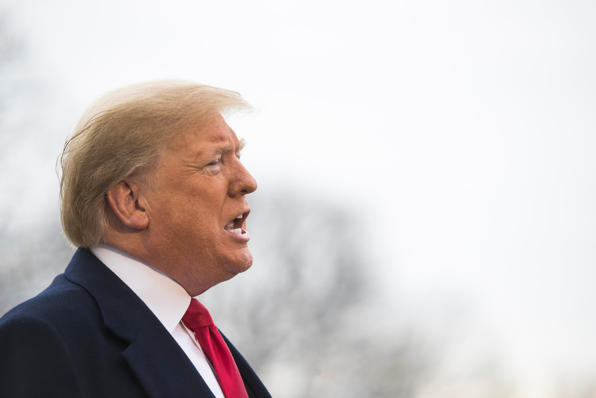
WEST PALM BEACH, Fla. — President Trump would not commit in an interview aired Sunday to making public the results of the special counsel’s investigation into Russia’s ties to his campaign, adding that it was time to “get rid” of the inquiry.
In the interview on CBS’s “Face the Nation,” Mr. Trump reiterated his belief that the attorney general would determine whether the public would see the results of the inquiry by the special counsel, Robert S. Mueller III. But he would not say whether he would be comfortable with the results being made public.
“I don’t know,” the president said. “It depends. I have no idea what it’s going to say.”
The law does not require the Justice Department to release a report, and Mr. Mueller has been silent on the issue. Last month, Trump advisers were pleased that William P. Barr, Mr. Trump’s nominee for attorney general, opened the door to the possibility that the special counsel’s report could be shielded from the public during a Senate confirmation hearing.
Trump Won’t Commit to Making Mueller Report Public - The New York Times: