"
(Via. )Trump accuser: 'Despicable' Trump mocks the 'Me Too' movement:
"Some time ago, the writer Nikki Giovanni offered me guidance on writing about the life of a public person. Most of her advice I understood and dutifully jotted into a small notebook. However, one of her dictums confused me: “Whenever you receive a letter from a prisoner, make sure you write him back.” I frowned, confused but also a little guilty. I’d received a few letters with penitentiary return addresses and hadn’t responded. “Write them back,” she repeated. “You don’t know how much mail means to people in prison. You can’t imagine what they have to do just to get the stamp.”
Since then, I’ve heeded her advice. But sometimes it isn’t possible to write back. One gentleman I met at a book club on Rikers Island said he wouldn’t reveal his last name or ID because he couldn’t bear the disappointment of not receiving a response. Those of us who live freely in the age of electronic communication often take the mail for granted. But for people in prison letters remain the best way to engage with a society that has forcibly excluded them.
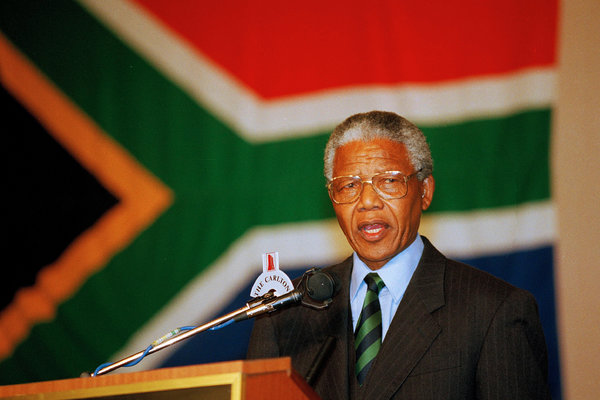
From Nov. 7, 1962, to Feb. 11, 1990, Nelson Mandela was a political prisoner in South Africa, jailed for his role as a leader in the African National Congress and its struggle against South Africa’s apartheid regime. Four years after his release he was elected his country’s president. Today, nearly five years after his death at age 95, his legacy as one of the 20th century’s most distinguished and influential freedom fighters is well enshrined. But the man himself is not completely known.
Like prisoners all over the world, Mr. Mandela wrote letters, hundreds of them, each one a condensed autobiography. They have been collected in a forthcoming volume, “The Prison Letters of Nelson Mandela,” published by Liveright. It includes more than 250 letters, well over half of them previously unpublished. In some ways these letters rock the pedestal he was placed on after his release in 1990, for they show his complicated humanity. I’m not using “humanity” as a euphemism for “flawed.” The prison letters reveal no cracks in the foundation of his faith and commitment to justice. Rather, these messages to family, friends, comrades, elected officials and prison administrators reveal a Mandela as vulnerable as any other human.
Prison is a depraved environment. Incarcerated people live without comfortable beds, healthy food, adequate health care or the freedom of movement most of us who have never been incarcerated take for granted. They’re subjected to great violence, as though their sentence invalidates their own legal protections. While these severe deprivations are harrowing, Mr. Mandela’s prison letters underscore isolation’s other violence: Every incarcerated human is stripped of family.
At the Robben Island prison Mandela was held in, people were made to sit in rows in the prison courtyard and smash stones into gravel.Photo by: Cloete Breytenbach/Daily ExpressAs a captive, Mr. Mandela was kin to Martin Luther King Jr., Mahatma Gandhi and other leaders who worked to overthrow racism and colonialism. But alone in his cell, he joined an international underclass including dissenters in North Korea, women in Arizona shackled as they give birth and infant children caged on our southern border.
Our humanity derives from our most intimate relationships. Mr. Mandela’s prison letters, particularly those to his family, reveal that even the most righteous cause cannot inoculate anyone from the agony of separation. Mr. Mandela was allowed occasional visitors; his wife Winnie’s visits were strictly limited. His daughters could see him only after they reached the age of 16. Visits, while precious, are ephemeral, but the letters he received and treasured gave him tangible connection with his loved ones with each rereading. Throughout Mr. Mandela’s incarceration, prison authorities severely restricted and censored his letters. Considering the solace and strength he took from these folded sheets of paper, it’s a marvel his captors allowed him any mail at all.
Pages of Mandela's letters.Photo by: The Estate of Nelson Rolihlahla Mandela and the Nelson Mandela FoundationStill, there are limits to paper and pen. When Mr. Mandela’s son, Thembi, was killed in a car accident, Mr. Mandela was forbidden to attend the funeral. Prison stole from him the critical years in the lives of young daughters. In a letter written to his daughter Zenani shortly after her 12th birthday, he reminds her of a brief visit he had with her nearly a decade before, during the time when he had gone underground and was living away from home: “In a corner you found … my clothing. After collecting it, you gave it to me and asked me to go home. You held my hand for quite some time, pulling desperately and begging me to return.”
Reading his anguished account, we understand another function of letters: to make memories tangible. He sought to remind his 12-year-old not only of his own love but also of the love that her heartbroken, 2-year-old self once felt for her vanished father. Winnie Mandela was briefly incarcerated while pregnant with Zenani, and Mr. Mandela reminded his daughter that she was the rare person who’d served jail time even before she was born.
Mandela and his wife Winnie in 1958.Photo by: API/Gamma-Rapho, via Getty ImagesMr. Mandela’s letters tell a story beyond their own words. The printed volume includes several images of the pages. His handwriting is careful but crowded, as though trying to include more words than any page could hold. Perhaps he is saving rationed paper and ink, but he also seems to be tying a rope bridge of words to carry him from prison to the home where his wife and children await.
While these letters overflow their pages, there’s also a haunting sense of all that’s not expressed. Mr. Mandela wrote knowing his letters would be censored. He often asks about earlier missives, possibly intercepted or destroyed. On Aug. 1, 1970, he writes to Winnie: “Can it be that you did not receive my letter of July 1? How can I explain your strange silence at a time when contact between us has become so vital?”
He must also have known that these letters would one day be read by people all over the world. This loss of privacy is also a loss of the intimacy at the heart of our most sustaining relationships. He laments, “There are affairs in life where third parties, no matter who they are, should not be let in at all.” But he knew, too, how to sneak in a thousand unspoken words. To Winnie he writes, “I suspect that you intended the picture to convey a special message that no words could ever express. Rest assured that I have caught it.”
The Mandela we have come to revere since his triumphant release in 1990 is an elder statesman, weathered yet elegant, intelligent yet accessible and above all, brave and resilient. His gray hair and smiling face, his fist raised gently in a nod to troubles past, has supplanted the image of a much younger man who appeared before the court in 1962 dressed in a cape made from the skin of jackals. Then, his raised fist promised continued defiance and civil insurgency. His vow to dismantle apartheid earned him not only the ire of the illegitimate white South African government but also the contempt of the Reagan administration, which branded him a terrorist.
Somehow we’ve chosen to laud Mr. Mandela’s capacity for forgiveness without dwelling on what he actually forgave. These letters remind us of the cost of freedom. Upon his release, Mr. Mandela was feted with state dinners and parades, and there’s joy in seeing a hero so rewarded. However, the fall of apartheid and even the triumph of a 1993 Nobel Peace Prize (which he graciously shared with South Africa’s President F. W. de Klerk) could never return to him what he lost: decades of intimacy with a young family, growing away from him in his absence.
Separating a person from his kin is the ultimate expression of state power. I can’t help seeing, in the image of Mr. Mandela’s daughter begging for her father’s return, the children weeping at our southern border. I understand the impulse to marvel at Mr. Mandela’s civility and eloquence, even under duress. How, it’s easy to wonder, could a man form such generous, brilliant philosophies in the face of cruelty and injustice? Mr. Mandela was unique. How often in a generation does a giant walk among us, with brilliance and courage, guided by an immaculate moral compass?
Mr. Mandela in Johannesburg in 1953, before his long period of incarceration.Photo by: Herbert Shore, courtesy Ahmed Kathrada FoundationBut we do his memory a disservice if we merely celebrate his difference from people who suffer with less transcendent purpose. To honor Mr. Mandela, we must remember him as a man — one of millions of incarcerated men and women separated from their families and denied basic rights.
In a letter to his son, Mr. Mandela writes, “those who want to wipe out poverty from the face of the earth must use other weapons, weapons other than kindness.” He means, of course, fighting with relentless urgency against the very structure of social injustice. While he’s right, anyone who reads this collection will also rediscover the power of small kindnesses penned onto paper and tucked into an envelope, which, Mr. Mandela wrote, had the power to “cut through massive iron doors and grim stone walls, bringing into the cell the splendor and warmth of springtime.”
Someone, somewhere in an enclosing prison — across town, in a border detention facility, in a country you’ve never known — is waiting for a letter."
"Therese Patricia Okoumou, an immigrant activist from the Republic of Congo, climbed the Statue of Liberty to protest the separation of migrant children from their families. But what’s that got to do with black folks?
Despite misconceptions, immigration in America has plenty to do with black people. In fact, black immigrants in the United States have faced significant racism and are also more likely to face deportation when coming in contact with the criminal justice system.
But African immigrants have a profound impact on the United States’ overall economy with $40.3 billion in spending power. And they’re also more likely to have graduate degrees than U.S.-born citizens.
So, should black people care about immigration?"
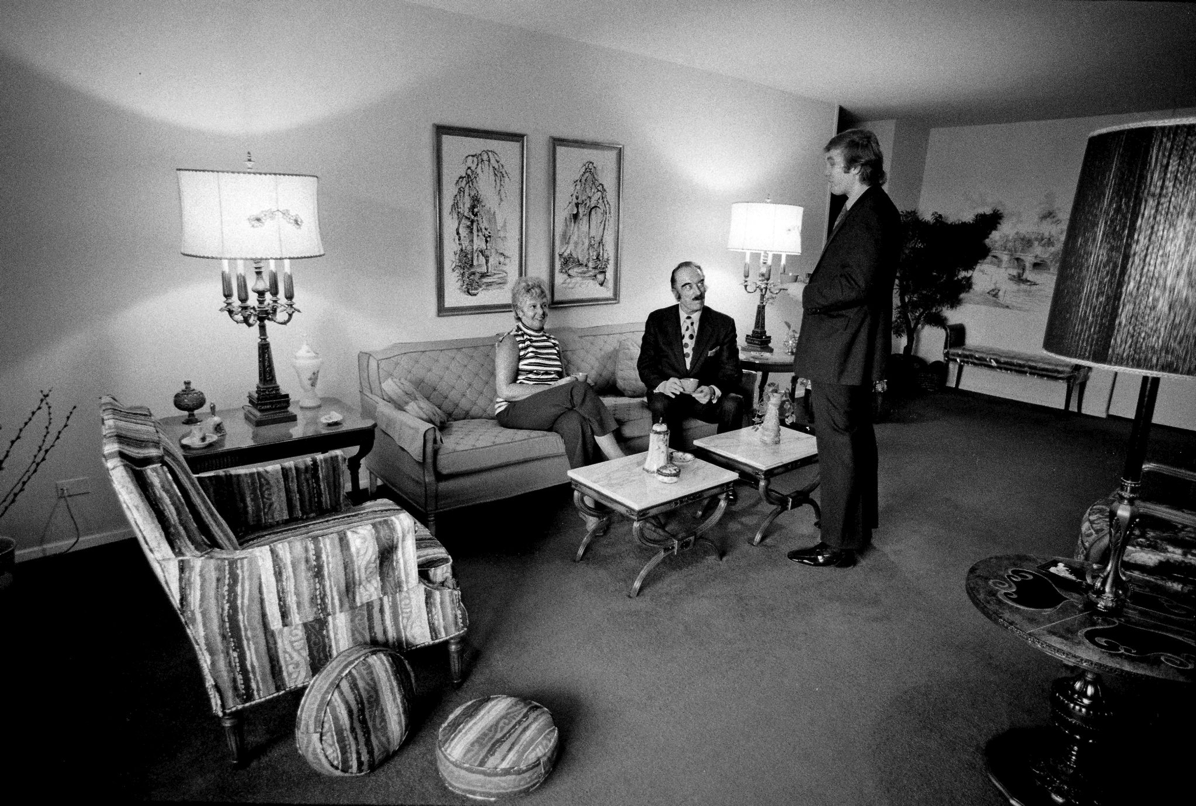
I had to turn off Joe Scarborough this morning on MSNBC for once again deceptively trying to distance Trump from other Republicans like President George "Willie Horton" Bush and Ronald "States Rights" Reagan. The Republican knowingly nominated and Americans elected a third generation racist gangster and now act surprised about that they got. Trumps grandfather made his money running a brothel in Canada, Trumps Dad, a KKK and early Nazi supporter ran a corrupt real estate empire and which was brought before Nixon's Justice Department twice for violating housing laws for blatantly discriminating against Blacks and Hispanics first in 1973 then later for violating the consent order rather signed. We have a thug President who has admitted to sexual battery. America knew they were electing a fascist like Mussolini and a racist like Andrew Jackson. They did not care. All they wanted was the anti-Obama. they got him.
By John H Armwood
‘No Vacancies’ for Blacks: How Donald Trump Got His Start, and Was First Accused of Bias
What was consistent about the man was his belief that each state has a sovereign right
to control its laws.
"Life on the Trail Martin Van Buren President Martin Van BurenNearly 125,000 Native Americans lived on millions of acres of land in Georgia, Tennessee, Alabama, North Carolina and Florida at the beginning of the 1830s, land their ancestors had occupied and cultivated for generations. For those who believed this land to be rightfully theirs, they stayed and hoped for compromise, unfortunately that was not an option as Andrew Jackson's Manifest Destiny was taking the nation by storm. The Cherokee tribe was opposed their removal but in turn only brought themselves into more conflict. In 1838-39 President Martin Van Buren sent over 7,000 troops led by General Winfield Scott into Cherokee territory and forced them to hit the road. Scott and his troops forced the Cherokee into stockades with bayonets pointed at them while his troops and other white settlers of the land began to loot homes and belongings. Accepting of their defeat the Cherokee then marched to their new Indian territory with the rest of the Five Civilized Tribes. For those who embarked on the brutal journey, they quickly found out it would be no walk in the park."
"America never was White. Whites were just the conquerers
By Eugene Robinson
“Racism is a feature of the Trump administration, not a bug. Like demagogues before him, President Trump and his aides consistently single out one group for scapegoating and persecution: nonwhite Hispanic immigrants.
Trump doesn’t much seem to like nonwhite newcomers from anywhere, in truth — remember how he once expressed a fond wish for more immigrants from Norway? — but he displays an especially vicious antipathy toward men, women and even children from Latin America. We have not seen such overt racism from a president since Woodrow Wilson imposed Jim Crow segregation in Washington and approvingly showed “The Birth of a Nation,” director D.W. Griffith’s epic celebration of the Ku Klux Klan, at the White House.
Trump encourages supporters to see the nation as beset by high levels of violent crime — and to blame the “animals” of the street gang MS-13. He is lying; crime rates nationwide are far lower than two or three decades ago, and some big cities are safer than they have been in a half-century. But Trump has to paint a dystopian panorama to justify the need to Make America Great Again.
MS-13 is, indeed, unspeakably violent. But it is small; law enforcement officials estimate the gang’s total U.S. membership at roughly 10,000, concentrated in a few metropolitan areas that have large populations of Central American immigrants — Los Angeles, New York and Washington. Trump never acknowledges that the gang was founded in the United States by immigrants from El Salvador and exported to Central America, where it took hold. He also neglects to mention that its members here, mostly teenagers, generally direct their violence at one another, not at outsiders.
Trump deliberately exaggerates the threat from MS-13 in order to justify his brutality toward Central American asylum seekers at the border. People should never be treated that way, but “animals” are a different story.
It is unbelievable that the U.S. government would separate more than 2,300 children from their parents for no good reason other than to demonstrate cruelty. It is shocking that our government would expect toddlers and infants to represent themselves at formal immigration hearings. It is incredible that our government, forced to grudgingly end the policy, would charge desperate parents hundreds or thousands of dollars to be reunited with their children. It is appalling that our government would refuse even to give a full and updated accounting of how many children still have not been returned. Yet all of this has been done — in our name.
Trump uses words such as “invading” and “infest” and “breeding” to describe Central American migrants who arrive at the border lawfully seeking asylum. I’ll believe this is neutral immigration policy when Immigration and Customs Enforcement agents begin hunting down and locking up Norwegians who have overstayed their visas.
Said Norwegians, if anyone bothered to look for them, might well be taking jobs away from American workers or taking advantage of social-welfare programs or boosting crime rates. There is no evidence that asylumseekers are doing any of these things.
Trump’s policies flow from a worldview that he has never tried to hide. To describe Trump and aides such as Attorney General Jeff Sessions and senior policy adviser Stephen Miller as “anti-immigration” tells only part of the story. They adopt the stance of racial and cultural warriors, “defending” the United States against brown-skinned, Spanish-speaking hordes “invading” from the south.
Trump has proposed not just building a wall along the border with Mexico to halt the flow of undocumented migrants but also changing the system of legal immigration so that it no longer promotes family unification. He calls his aim a “merit-based” system, but Miller has specified that the administration wants to produce “more assimilation.”
Yet there is no evidence that immigrants from Latin America fail to assimilate in any way except one: They do not come to look like Trump’s mental image of “American,” which is basically the same as his mental image of “Norwegian.”
This is a story as old as the nation. German, Irish, Polish, Italian and other immigrant groups were once seen as irredeemably foreign and incapable of assimilating. The ethnic and racial mix of the country has changed before and is changing now.
Hispanics are by far the biggest minority group in the country, making up nearly 18 percent of the population; by 2060, the Census Bureau estimates, that share will rise to nearly 29 percent . Trump is punishing Central American mothers and babies because, try as he might, he can’t Make America White Again.”
"In the Italian film “Life is Beautiful,” a Jewish bookstore owner uses creative stunts to distract his child from the horrible reality of being held in a Nazi concentration camp. I was reminded of that movie recently, as I found myself part of an eerily similar heartbreaking moment.
As lawyers with the Texas Civil Rights Project, my team has been working around the clock to document hundreds of cases of children taken from their parents since the Trump administration launched its “zero tolerance” immigration policy. Under that policy, the government charges every immigrant apprehended at the border with illegal entry, a misdemeanor offense — regardless of whether they’re fleeing violence and seeking asylum, or traveling with children. Before zero tolerance, immigration and Department of Justice officials exercised their discretion on whether to press criminal charges against some immigrants and asylum seekers, particularly those traveling with children or those with special circumstances.
Each morning for the last three weeks, my colleagues and I have gone to the federal courthouse in McAllen, Texas, seven miles from the Mexican border. We arrive no later than 7:45 a.m., pass the metal detectors at the security check, and make sure to get to the eighth floor by 8:00.
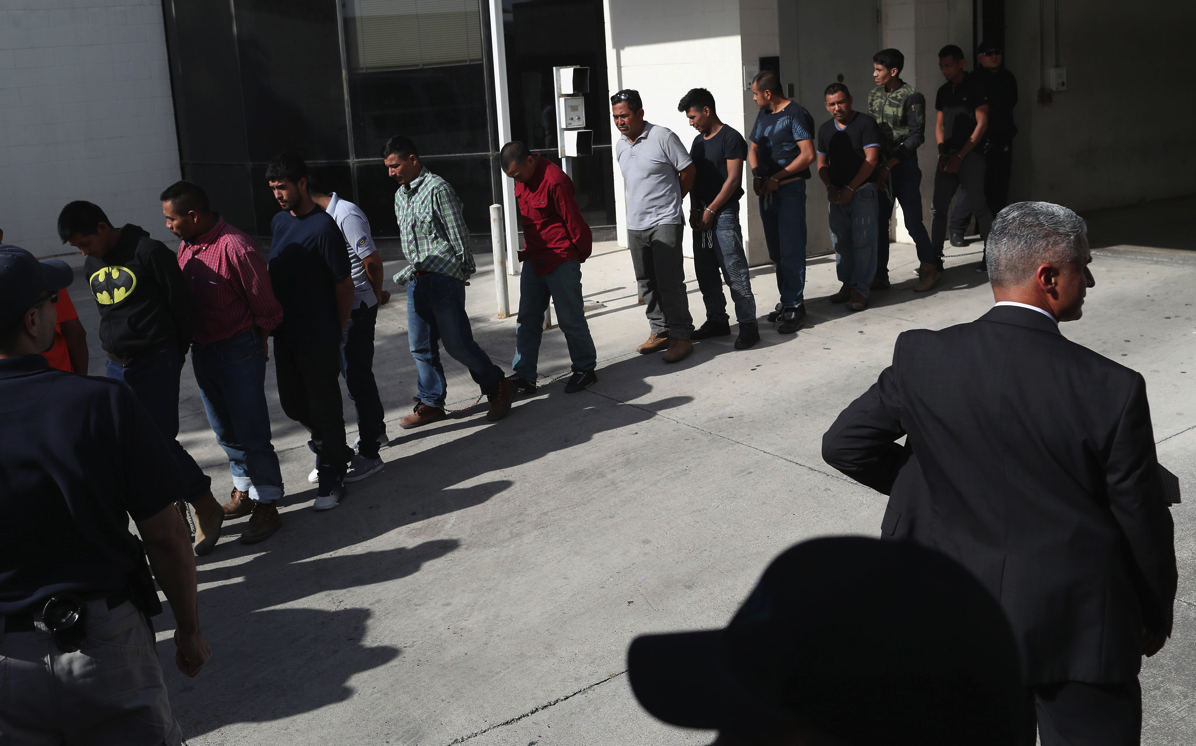
By that time, the courtroom is already nearly full. On a typical morning, some 70 to 80 men and women are brought to court and put in handcuffs with shackles around their ankles. The vast majority are first-time border crossers. A public defender asks the group whether any are traveling with children and have been separated from them. Struggling with the handcuffs, it’s not easy for them to raise their hands. Sometimes, to answer in the affirmative, they must stand up.
The criminal proceeding begins at 9 a.m., and depending on how many separated parents are there each day, we have maybe five to seven minutes to speak with each parent beforehand. Hopefully, that’s enough to get the most basic information about them and the children taken from them — names, dates of birth, country of origin. They’re frightened and confused, and most don’t speak English. I tell them in Spanish that I’m a lawyer working on family separations and that I can try to help get their children back.
The parents ask when they’re going to see their children again. I try to calm them and tell them I’ll do my best to make sure it happens soon. The truth is I don’t have an answer. And I can’t make a promise I’m not sure I can keep.
The stories they tell are all devastating. But as a father, I was really hit in the gut by one a few weeks back.
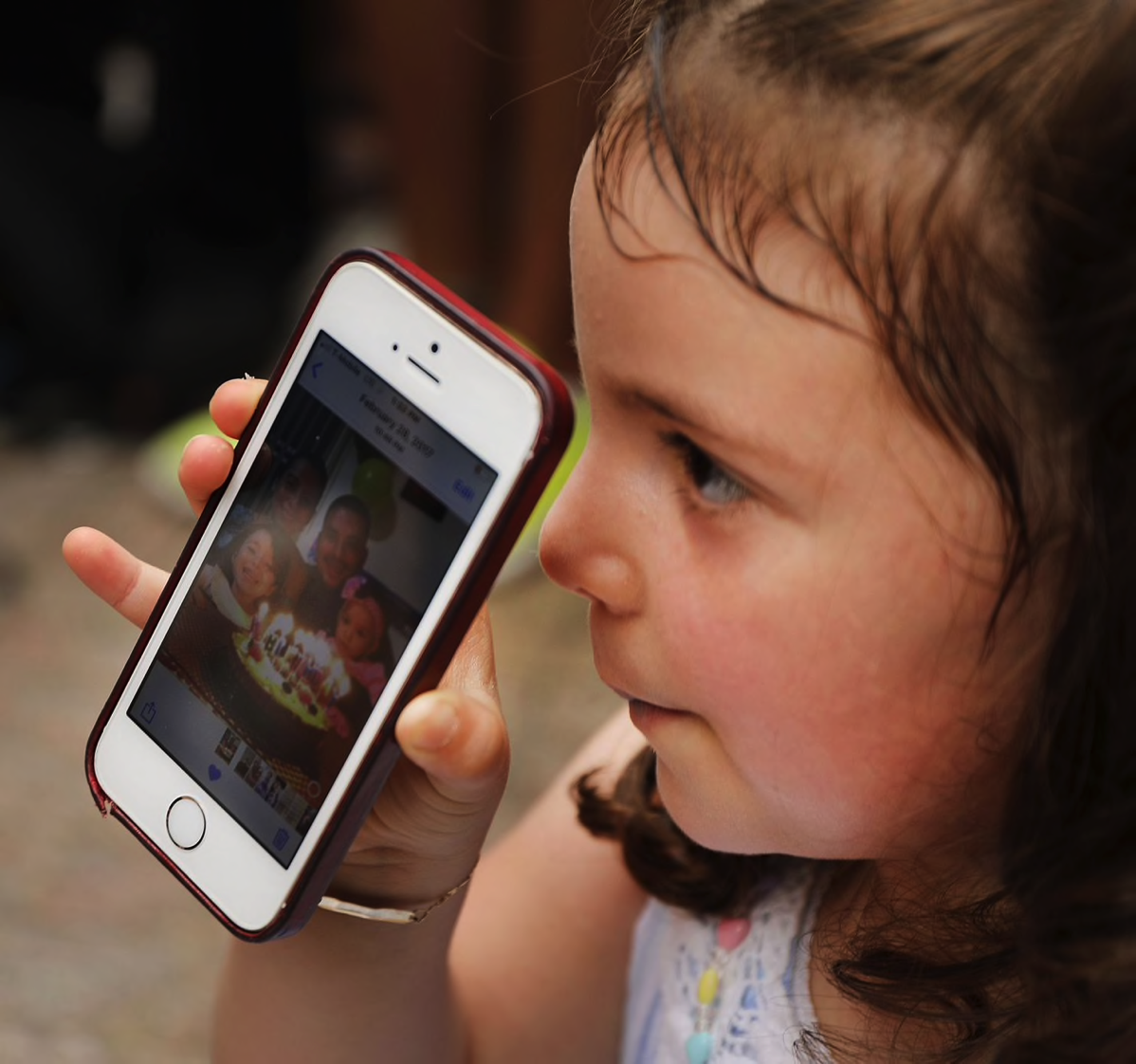
I was talking with a single father whose wife left him several years ago when his daughter was three years old. They were fleeing violence in Honduras in search of a better life. But it didn’t work out that way. Once they crossed the border, the United States charged him with a crime, and agents told him they had to take his daughter away.
As they were leaving, his daughter asked where she was going. What can a father possibly tell his daughter in that situation?
Like the character in “Life is Beautiful,” this dad’s priority was to try to shield his little girl from pain. So he made up a story: He told her she was going to summer camp.
The girl, only seven years old and oblivious to her plight, walked away with a big smile. She was so excited for her first day of camp.
I’ve encountered so many awful stories like this that I’ve become desensitized. I almost see them as normal.
The first time a crying parent asked me when she would see her son again, I struggled to find an answer. But many weeks after the Trump administration started its zero tolerance policy — and hundreds of separated families later — I’ve become hardened to these conversations because I’ve had them over and over, day after day.
Plus, there’s no time for those feelings in the courtroom. We have to get as much information as we can, and it’s a race against the clock. If we don’t quickly complete the intake and interview process to later track them down, no one except the government will know that a separation occurred. And without the information about these children and their parents, how will we look for them? How will anyone?
Of 381 families we interviewed, 278 are still separated. At least two children have been deported without their parents. And at least five parents have been deported without their children, who remain in the United States. This is only a fraction of the more than 2,000 families that remain separated today.
Parents seeking asylum and safety for their families need meaningful access to attorneys and the courts. They shouldn’t be forced into a Hobson’s choice between seeing their children again or pursuing their asylum claim. Some of the parents we’ve interviewed tell us these illegal pressures from the government are increasing.
The way to end this nightmare is to rescind the zero tolerance policy that criminalizes immigrants and asylum seekers. The solution is not to detain these families indefinitely as the government currently plans. Rather, immigrants and asylum seekers should be allowed to pursue their cases in immigration court without being detained, as was done under the Family Case Management Program, which was highly successful in terms of people appearing for their court hearings, which this administration terminated.
In effect, the administration can end this crisis with the stroke of a pen today. Until then, my colleagues and I will be in the courthouse bright and early tomorrow morning, and each one thereafter.
Dozens of frightened immigrants and a courtroom full of heartbreaking stories will be waiting for us at 8:00."
Opinion | A Day in the Life of an Attorney at the Border - The New York Times
We did not get this light by accident. It was by rape by the those enemies of ours many celebrated yesterday.
“Plantation wives in the slave-era South resorted to willful blindness when their husbands conscripted black women as sexual servants and filled the household with mixed-race children who inevitably resembled the master. Thomas Jefferson’s wife, Martha, was several years dead when he set off on this path, fathering at least six children with Martha’s enslaved black half sister, Sally Hemings. The task of dissembling fell to the remaining white Jeffersons, who aided in a cover-up that held sway for two centuries and feigned ignorance of a relationship between Jefferson and Hemings that lasted nearly four decades.
The foundation that owns Monticello, Jefferson’s mountaintop home near Charlottesville, Va., broke with this long-running deception last month when it unveiled several new exhibits that underscore the centrality of slavery on the founder’s estate. The most important — in the South Wing, where Sally Hemings once lived — explores the legacy of the enslaved woman whom some historians view as the president’s second wife and who skillfully prevailed on him to free from slavery the four Jefferson-Hemings children who lived into adulthood.
The exhibit underscores the fact that the Jefferson estate was an epicenter of racial mixing in early Virginia, making it impossible to draw clear lines between black and white. It reminds contemporary Americans that slave owners like the Jeffersons often held their own black children, aunts, uncles and cousins in bondage. And it illustrates how enslaved near-white relations used proximity to privilege to demystify whiteness while taking critical measure of the relatives who owned them.
Masters who maintained black “second families” are a familiar presence in the chronicles of the slave trade. Madison Hemings, the third of the Jefferson-Hemings children who survived into adulthood, offered his account of second-family life at Monticello in a poignant, strikingly detailed memoir published in an Ohio newspaper in 1873. He explains that his mother was born of a union between Martha’s widowed father, John Wayles, and his enslaved lover, Elizabeth Hemings, and was conveyed to Jefferson as property when Wayles died. It is widely known that Sally Hemings traveled to France in 1787 — Jefferson was serving as a diplomat there — and learned French while serving in the family’s household on the eve of the revolution.
We learn from Madison’s account that during that time in France, Sally Hemings became pregnant with Jefferson’s child and considered remaining in the country, where she would be a free woman, instead of returning to slavery in Virginia. She agreed to return only after Jefferson promised her “extraordinary privileges’’ and gave a “solemn pledge” to free any children the two might have once they reached adulthood. Jefferson kept his pledge, making Sally Hemings the only enslaved parent at Monticello to see all of her children freed.
Thomas Jefferson's bedroom, left; and bedroom of John Hemmings, brother of Sally Hemings, and his wife, Priscilla.
This negotiation suggests that the 16-year-old Sally Hemings had considerable insight into Jefferson’s mind and some sense of what he could be obligated to do. She saw her surviving children — Beverly, Harriet, Madison and Eston — reap what the historian Annette Gordon-Reed describes as “an almost 50-year head start on emancipation, escaping the system that had engulfed their ancestors and millions of others.”
That Jefferson conceded to Sally Hemings suggests that he did not view her through the abjectly racist lens he deploys against African-Americans in his infamous book “Notes on the State of Virginia.” Musing on this subject two decades ago, the historian Winthrop Jordan suggested that her training as a lady’s maid, lightly colored skin and diction that probably matched Jefferson’s — if not his late wife’s — narrowed the social distance between them. Sally Hemings would have been keenly aware of this.
Madison refers to Jefferson affectionately as “father” throughout his memoir, noting that he was “uniformly kind to all about him,” but as the historian Jan Ellen Lewis has written, “The Hemings children knew … that they were the disfavored children of a loving and powerful man.” Indeed, Madison depicts his family at Monticello as lying beyond the reach of the warmth and congeniality that Jefferson reflexively extended to his white grandchildren.
Madison seemed genuinely and affectionately interested in his white relatives — who never acknowledged their black relations and referred to them as slaves, “these parties” or “the yellow children.” He cast a gimlet eye on James Madison’s wife, Dolley, who was visiting Monticello when he was born and promised Sally Hemings a gift in exchange for naming him Madison: “But like many promises of white folks to the slaves,” he said dryly, “she never gave my mother anything.”
Image
The interracial tableau that played out at Monticello was familiar in the plantation South. The 19th-century diarist Mary Boykin Chesnut, for example, likened plantation husbands to “the patriarchs of old’’ who lived openly in one household with their wives and their concubines, noting bitterly that “the mulattoes one sees in every family partly resemble the white children.” White widowers like John Wayles and Thomas Jefferson who forged relationships with black women they owned were less controversial but equally common. Nevertheless, historians ridiculed Madison’s story, dismissing him as a social-climbing fabulist.
His credibility was gradually restored during the late 20th century, after historians like Fawn Brodie, Winthrop Jordan and Gordon-Reed re-evaluated this issue in light of corroborating evidence that forced Monticello to ratify Jefferson’s paternity. Fittingly, the new exhibit tells the Sally Hemings story through Madison’s testimony.
This places Sally Hemings at the center of plantation life, where she clearly belongs. It also shows that Jefferson’s baronial mountaintop estate was just like any other plantation when it came to matters of sexual conduct.”
Opinion | The Legacy of Monticello’s Black First Family - The New York Times: ""
(Via.)
We did not get this light by accident. It was by rape by the those enemies of ours many celebrated yesterday.“Plantation wives in the slave-era South resorted to willful blindness when their husbands conscripted black women as sexual servants and filled the household with mixed-race children who inevitably resembled the master. Thomas Jefferson’s wife, Martha, was several years dead when he set off on this path, fathering at least six children with Martha’s enslaved black half sister, Sally Hemings. The task of dissembling fell to the remaining white Jeffersons, who aided in a cover-up that held sway for two centuries and feigned ignorance of a relationship between Jefferson and Hemings that lasted nearly four decades.The foundation that owns Monticello, Jefferson’s mountaintop home near Charlottesville, Va., broke with this long-running deception last month when it unveiled several new exhibits that underscore the centrality of slavery on the founder’s estate. The most important — in the South Wing, where Sally Hemings once lived — explores the legacy of the enslaved woman whom some historians view as the president’s second wife and who skillfully prevailed on him to free from slavery the four Jefferson-Hemings children who lived into adulthood.ImageVisitors wait to take a “Slavery at Monticello” tour outside a recreation of the cabin of John Hemmings.The exhibit underscores the fact that the Jefferson estate was an epicenter of racial mixing in early Virginia, making it impossible to draw clear lines between black and white. It reminds contemporary Americans that slave owners like the Jeffersons often held their own black children, aunts, uncles and cousins in bondage. And it illustrates how enslaved near-white relations used proximity to privilege to demystify whiteness while taking critical measure of the relatives who owned them.Masters who maintained black “second families” are a familiar presence in the chronicles of the slave trade. Madison Hemings, the third of the Jefferson-Hemings children who survived into adulthood, offered his account of second-family life at Monticello in a poignant, strikingly detailed memoir published in an Ohio newspaper in 1873. He explains that his mother was born of a union between Martha’s widowed father, John Wayles, and his enslaved lover, Elizabeth Hemings, and was conveyed to Jefferson as property when Wayles died. It is widely known that Sally Hemings traveled to France in 1787 — Jefferson was serving as a diplomat there — and learned French while serving in the family’s household on the eve of the revolution.We learn from Madison’s account that during that time in France, Sally Hemings became pregnant with Jefferson’s child and considered remaining in the country, where she would be a free woman, instead of returning to slavery in Virginia. She agreed to return only after Jefferson promised her “extraordinary privileges’’ and gave a “solemn pledge” to free any children the two might have once they reached adulthood. Jefferson kept his pledge, making Sally Hemings the only enslaved parent at Monticello to see all of her children freed.EDITORS’ PICKSThe Most Powerful Conservative Donors You’ve Never Heard OfSafety Concerns Grow as Inmates Are Guarded by Teachers and SecretariesThe A.C.L.U. vs. Trump: 170 Legal Actions (So Far)ImageThomas Jefferson's bedroom, left; and bedroom of John Hemmings, brother of Sally Hemings, and his wife, Priscilla.This negotiation suggests that the 16-year-old Sally Hemings had considerable insight into Jefferson’s mind and some sense of what he could be obligated to do. She saw her surviving children — Beverly, Harriet, Madison and Eston — reap what the historian Annette Gordon-Reed describes as “an almost 50-year head start on emancipation, escaping the system that had engulfed their ancestors and millions of others.”That Jefferson conceded to Sally Hemings suggests that he did not view her through the abjectly racist lens he deploys against African-Americans in his infamous book “Notes on the State of Virginia.” Musing on this subject two decades ago, the historian Winthrop Jordan suggested that her training as a lady’s maid, lightly colored skin and diction that probably matched Jefferson’s — if not his late wife’s — narrowed the social distance between them. Sally Hemings would have been keenly aware of this.Madison refers to Jefferson affectionately as “father” throughout his memoir, noting that he was “uniformly kind to all about him,” but as the historian Jan Ellen Lewis has written, “The Hemings children knew … that they were the disfavored children of a loving and powerful man.” Indeed, Madison depicts his family at Monticello as lying beyond the reach of the warmth and congeniality that Jefferson reflexively extended to his white grandchildren.Madison seemed genuinely and affectionately interested in his white relatives — who never acknowledged their black relations and referred to them as slaves, “these parties” or “the yellow children.” He cast a gimlet eye on James Madison’s wife, Dolley, who was visiting Monticello when he was born and promised Sally Hemings a gift in exchange for naming him Madison: “But like many promises of white folks to the slaves,” he said dryly, “she never gave my mother anything.”ImageInside a recreated cabin at Monticello.The interracial tableau that played out at Monticello was familiar in the plantation South. The 19th-century diarist Mary Boykin Chesnut, for example, likened plantation husbands to “the patriarchs of old’’ who lived openly in one household with their wives and their concubines, noting bitterly that “the mulattoes one sees in every family partly resemble the white children.” White widowers like John Wayles and Thomas Jefferson who forged relationships with black women they owned were less controversial but equally common. Nevertheless, historians ridiculed Madison’s story, dismissing him as a social-climbing fabulist.His credibility was gradually restored during the late 20th century, after historians like Fawn Brodie, Winthrop Jordan and Gordon-Reed re-evaluated this issue in light of corroborating evidence that forced Monticello to ratify Jefferson’s paternity. Fittingly, the new exhibit tells the Sally Hemings story through Madison’s testimony.This places Sally Hemings at the center of plantation life, where she clearly belongs. It also shows that Jefferson’s baronial mountaintop estate was just like any other plantation when it came to matters of sexual conduct.”