Contact Me By Email


What To Do When You're Stopped By Police - The ACLU & Elon James White

What To Do When You're Stopped By Police - The ACLU & Elon James White

Know Anyone Who Thinks Racial Profiling Is Exaggerated? Watch This, And Tell Me When Your Jaw Drops.


This video clearly demonstrates how racist America is as a country and how far we have to go to become a country that is civilized and actually values equal justice. We must not rest until this goal is achieved. I do not want my great grandchildren to live in a country like we have today. I wish for them to live in a country where differences of race and culture are not ignored but valued as a part of what makes America great.

Wednesday, December 29, 2021

Where I Live, No One Cares About COVID - The Atlantic. It amazes me how stupid average people are.

Where I Live, No One Cares About COVID

"Outside the world inhabited by the professional classes in a handful of major metropolitan areas, many Americans are leading their lives as if COVID is over.
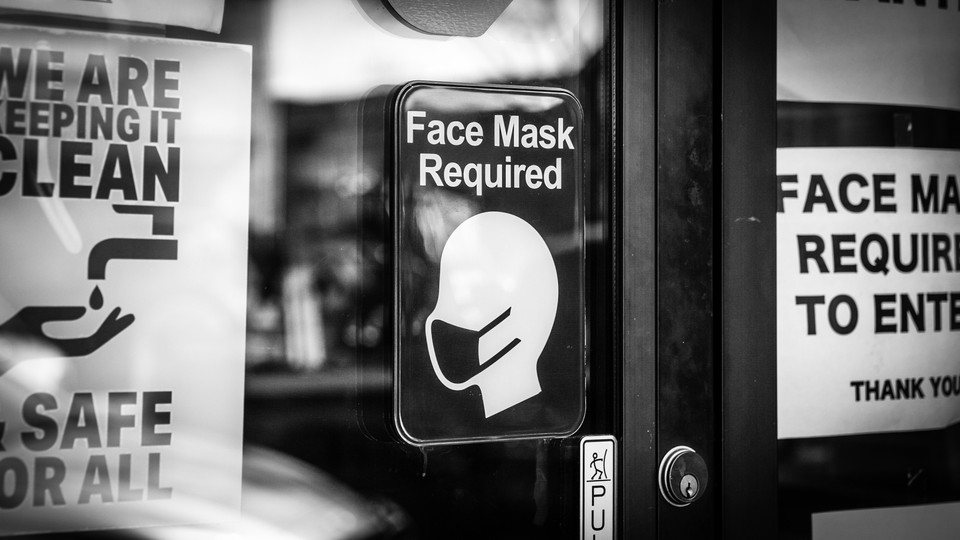
Signs requiring face masks and COVID-19 protocols on a restaurant window in Plymouth, Michigan
Emily Elconin / Bloomberg / Getty

About the author: Matthew Walther is editor of The Lamp, a Catholic literary journal, and a contributing editor at the American Conservative.

In November, my wife asked me whether I had seen an article with the remarkable headline “Is It Safe to Go to Thanksgiving Dinner?”

“Is that from last year?” I asked.

“No, it’s a few days old,” she said, her voice sinking to a growling murmur. “These people.”

I am old enough to remember the good old days when holiday-advice pieces were all variations on “How to Talk to Your Tea Party Uncle About Obamacare.” As Christmas approaches, we can look forward to more of this sort of thing, with the meta-ethical speculation advanced to an impossibly baroque stage of development. Is it okay for our 2-year-old son to hug Grandma at a Christmas party if she received her booster only a few days ago? Should the toddler wear a mask except when he is slopping mashed potatoes all over his booster seat? Our oldest finally attended her first (masked) sleepover with other fully vaccinated 10-year-olds, but one of them had a sibling test positive at day care. Should she stay home or wear a face shield? What about Omicron?

I don’t know how to put this in a way that will not make me sound flippant: No one cares. Literally speaking, I know that isn’t true, because if it were, the articles wouldn’t be commissioned. But outside the world inhabited by the professional and managerial classes in a handful of major metropolitan areas, many, if not most, Americans are leading their lives as if COVID is over, and they have been for a long while.

In my part of rural southwest Michigan, and in similar communities throughout the country, this is true not despite but without any noticeable regard for cases; hospitalization statistics, which are always high this time of year without attracting much notice; or death reports. I don’t mean to deny COVID’s continuing presence. (For the purposes of this piece, I looked up the COVID data for my county and found that the seven-day average for positive tests is as high as it has ever been, and that 136 deaths have been attributed to the virus since June 2020.) What I wish to convey is that the virus simply does not factor into my calculations or those of my neighbors, who have been forgoing masks, tests (unless work imposes them, in which case they are shrugged off as the usual BS from human resources), and other tangible markers of COVID-19’s existence for months—perhaps even longer.

Read: Rural America’s false sense of security

Indeed, in my case, when I say for a long while, I mean for nearly two years, from almost the very beginning. In 2020, I took part in two weddings, traveled extensively, took family vacations with my children, spent hundreds of hours in bars and restaurants, all without wearing a mask. This year my wife and I welcomed our fourth child. Over the course of her pregnancy, from the first phone call to the midwife a few months after getting a positive pregnancy test until after delivery, the subject of the virus was never raised by any health-care professional, including her doula, a dear friend from New York.

Meanwhile, our children, who have continued to attend their weekly homeschooling co-op since April 2020, have never donned masks, and they are distinctly uncomfortable on the rare occasions when they see them, for reasons that, until recently, child psychologists and other medical experts would have freely acknowledged. They have continued seeing friends and family, including their great-grandparents, on a weekly basis. As far as I can tell, they are dimly aware that “germs” are a remote cause of concern, but only our oldest, who is 6, has any recollection of the brief period last year when public Masses were suspended in our diocese and we spent Sunday mornings praying the rosary at home.

The CDC recommends that all adults get a booster shot; I do not know a single person who has received one. When I read headlines like “Here’s Who May Need a Fourth COVID-19 Vaccine Dose,” I find myself genuinely reeling. Wait, there are four of them now? I would be lying if I said I knew what all the variants were or what differences exist between them. (They all sound like the latest entry in some down-market action franchise: Tom Clancy’s Delta Variant: A Jack Ryan Novel, Transformers 4: Rise of the Omicron.) COVID is invisible to me except when I am reading the news, in which case it strikes me with all the force of reports about distant coups in Myanmar.

Granted, my family’s experience of 2020 was somewhat unusual. But I wager that I am now closer to most of my fellow Americans than the people, almost absurdly overrepresented in media and elite institutions, who are still genuinely concerned about this virus. And in some senses my situation has always been more in line with the typical American’s pandemic experience than that of someone in New York or Washington, D.C., or Los Angeles.

The best example of this fact, apart from the agita about holiday travel, is outdoor masking. Prescinding from the question of whether there was ever any meaningful evidence in favor of outdoor transmission, let me point out that until I found myself in Washington, D.C., on a work trip in March, I had never seen anyone wearing a mask outside. For someone who had never worn one in any situation, it was bizarre to find thousands of people indifferently donning these garments outdoors, including those walking alone or in pairs at night after leaving bars or restaurants where they had presumably taken them off. It was even stranger seeing people recognize one another in the street and pull their masks down casually, sometimes but not always before stopping to engage in conversation, like Edwardian gentlemen doffing their top hats.

Conor Friedersdorf: America’s blue and red tribes aren’t so far apart

I came away from this experience with the impression that, whatever their value, masks long ago transcended public health and became a symbol, not unlike In This House We Believe signs or MAGA hats. This, no doubt, is why in my part of America, the only people one ever sees with masks are brooding teenagers seated alone in coffee shops, who seem to have adopted masks to set themselves apart from the reactionary banality of life in flyover country in the same way that I once scribbled anti-Bush slogans on T-shirts. The survival of such old-fashioned adolescent angst is, at any rate, deeply heartening.

As far as my wife and I are concerned, an atmosphere of parochialism hangs upon relentless adherence to CDC directives. By European standards, hand-wringing about masks in schools is as silly and absurdly risk-averse as the American medical establishment’s insistence that pregnant women not drink coffee or wine. Indeed, there is something small-minded and puritanical and distinctly American about the whole business of obsessing over whether vaccinated teachers remove their face covering during a long school day. (When I read such things, I experience the same secondhand embarrassment I felt upon witnessing an American tourist in Rome ask a waiter at a trattoria to remove the ashtray from the outdoor table at which the employee in question had just been smoking.)

I am always tempted to ask the people who breathlessly quote what various public-health authorities are now saying about masking and boosters whether they know how the National Institutes of Health defines a “problem drinker”? The answer is a woman who has more than one “unit” of alcohol a day, i.e., my wife and nearly all of my female friends. These same authorities, if asked, would probably say that considerable risks are associated with eating crudos or kibbeh nayyeh, or taking Tylenol after a hangover. (This is to say nothing of cannabis, which is of course still banned at the federal level.) My point is that sophisticated adults are generally capable of winking at overly stringent guidelines. In the case of COVID, many are not.

I wish I could convince myself that for once in my life with COVID we were actually experiencing a healthy break from the usual pattern, according to which the latest silly novelties—no-fault divorce, factory-sliced bread, frozen meals, and, of course, infant formula—are adopted enthusiastically by the upper middle classes, who then think better of them by the time the lower orders come around.

But I am afraid that the future, at least in major metropolitan areas, is one in which sooner or later elites will acknowledge their folly while continuing to impose it on others. I, for one, would not be surprised if for years to come it were the expectation in New York and California that even vaccinated workers in the service industry wear masks, the ultimate reification of status in a world in which casual dress has otherwise erased many of what were once our most visible markers of class.

After all, you never know how they spent their Thanksgiving."

Where I Live, No One Cares About COVID - The Atlantic

Dr. Fauci Explains New CDC Isolation Guidelines

Iowa man Dale Weeks dies after waiting 15 days for open hospital bed; family blames covid-19 surge - The Washington Post

He died after waiting 15 days for a hospital bed. His family blames unvaccinated covid-19 patients.

Dale Weeks, center, died last month in Iowa. His family blames the surge in unvaccinated covid-19 patients in the state for him not getting the treatment he needed. (Jenifer Owenson)

"But at a time when unvaccinated covid-19 patients have again overwhelmed hospitals because of the fast-spreading omicron variant, finding an available bed at a large medical center able to give him the treatment he needed proved to be difficult. Weeks was being treated at a small, rural hospital. He had waited 15 days to be transferred to a larger hospital with better treatment options, because facilities throughout Iowa did not have an open bed for him as a result of the latest hospital surge of unvaccinated patients, his children told The Washington Post.

“It was terribly frustrating being told, ‘There’s not a bed yet,’ ” Jenifer Owenson, one of his four children, said Tuesday. “All of us were talking multiple times a day, ‘Why can’t we get him a bed?’ There was this logjam to get him in anywhere.”

When Weeks was finally able to have surgery more than two weeks later, his condition from sepsis had worsened. Weeks died Nov. 28 of complications after surgery. He was 78.

Anthony Weeks, his son, said that the family believes their vaccinated and boosted father was the latest indirect victim of the pandemic — and that he would have survived his sepsis diagnosis if he was immediately admitted to a larger medical center that had an open bed.

“The frustrating thing was not that we wanted him to get care that others weren’t getting, but that he didn’t get care when he needed it. And when he did get it, it was too late,” he said. “The question comes up of: ‘Who was in those beds?’ If it’s people who are unvaccinated with covid, then that’s the part where it really hurts.”

Owenson added: “The thing that bothers me the most is people’s selfish decision not to get vaccinated and the failure to see how this affects a greater group of people. That’s the part that’s really difficult to swallow.”

Marcy Peterson, a spokeswoman with MercyOne, the hospital system that cared for Dale Weeks in Newton, Iowa, did not get into the specifics of his case, but she acknowledged the frustration surrounding hospitals that are again overwhelmed with unvaccinated patients. She said in a statement to The Post that “a large percentage” of covid-19 patients at MercyOne hospitals are unvaccinated.

“In addition to an increased number of covid-19 cases and spread of the delta and omicron variants, hospitals across the country are dealing with traumas and experiencing multiple types of illness,” Peterson said. “This demand is coupled with a reduced number of staff to care for patients. These challenges can strain available resources and contribute to delays in care or other complications for patients.”

The story was first reported by the Des Moines Register.

Omicron is the fifth coronavirus variant of concern and is spreading rapidly around the world. Here’s what we know. (Luis Velarde/The Washington Post)

Weeks’s case comes as hospitals nationwide continue to reel from surging volumes of coronavirus patients thanks to omicron and a record-breaking flurry of infections stemming from what’s now the nation’s dominant virus variant. Cities such as New York and hospitals in states such as Louisiana, Florida and Texas have all reported significant upticks in cases during the holiday week.

More than 71,000 people in the United States are currently hospitalized with covid-19, with 16,344 occupying beds in the intensive care unit, according to data tracked by The Post.

As in much of the country, coronavirus cases in Iowa have increased since last week. The state is averaging more than 1,500 new infections a day, according to data tracked by The Post. More than 720 people are hospitalized in the state, which is an improvement compared with the previous seven-day stretch, data shows.

But the state is feeling the effects of unvaccinated covid-19 patients overwhelming hospitals amid the current surge. Almost 82 percent of hospitalized covid-19 patients in the state are unvaccinated, according to the Iowa Department of Public Health, and state data shows that more than 85 percent of covid-19 patients occupying beds in intensive care units are unvaccinated.

Less than 60 percent of the state is fully vaccinated, which trails the national rate of 62 percent.

Similar cases of vaccinated people dying, in part, because of hospitals overwhelmed by unvaccinated patients have come up throughout the pandemic. In Alabama, Ray DeMonia died of a cardiac emergency in September after he was turned away from 43 hospitals in three states.

Weeks was born June 16, 1943, and grew up in a “very poor” environment in rural Iowa, but was enamored with school and education at an early age, his family said. After receiving his undergraduate degree from Northwest Missouri State University and obtaining master’s and specialist degrees in education from Drake University, Weeks knew he wanted to serve and educate young people in Iowa, according to his obituary.

“Dad could have taken the easy route of saying, ‘I’ll just be a school administrator because it’s a job,’ but he truly believed his work was helping people who needed to learn,” said Owenson, 57, of Des Moines. “He believed education was what was going to help people get to the next place they need to be.”

Weeks taught math and science, and was also a principal, before becoming a schools superintendent for three school districts in the state. He retired in 2007.

The resident of Seymour, Iowa, would do whatever it took to save his school district some money, including picking up school buses. Julie Simanski, one of his daughters, recalled a time when he pulled over in Ohio to help a church congregation whose own bus had broken down on the side of the road.

“This whole church congregation ran over and said, ‘Hallelujah, the Lord has answered our prayers!’ He said, ‘How can I help?’ ” said Simanski, 57, of Ankeny, Iowa. “He told them to get on the bus and he took them to where they needed to go. That was the epitome of who he was.”

When the pandemic began to devastate the country last year, the Weeks family joined the millions of Americans who worried about their parents and loved ones being separated from them. But Weeks was careful, Owenson said, and was vaccinated and boosted in late October. Simanski recalled later telling her dad about how a friend of hers was struggling to get family members vaccinated.

“He said, ‘I don’t understand that, what is the reason for not getting vaccinated?’ ” Simanski said. “I told him how these people didn’t know what was in the vaccine. He said, ‘Well, we didn’t know what was in polio, either, but we got the shot.’ ”

Around Halloween, Weeks called his children to let them know he would not be able to attend his granddaughter’s birthday party because he “didn’t feel good,” Owenson said. He had just gotten his booster and flu shots, and his doctor figured he was feeling some side effects.

“He said, ‘I shouldn’t be around if I don’t know what’s making me feel this way,’ ” Simanski said. “He went that extra mile to make sure he wasn’t going to infect anyone if he had covid.”

But on Nov. 1, Weeks and his wife, Roberta, went to a hospital, where it was determined that he had sepsis, a dangerous, blood-borne infection unrelated to covid-19 that is the body’s often-deadly response to out-of-control infections. According to the Centers for Disease Control and Prevention, 1 in 3 patients who die in a hospital have sepsis.

Instead of staying at the hospital in Centerville, Iowa, for treatment, the family said, they were told by officials that the facility had no available beds. The surge was so bad in the state that the closest hospital bed officials could initially find was in Illinois. The next day, they were able to locate a bed at a small hospital in Newton, about 80 miles from Centerville.

Although the hospital did the best it could to help treat Weeks with intravenous antibiotics, Owenson said, the family repeatedly pleaded for their father to be transferred to a hospital with more advanced treatment methods. A cardiologist ran tests on Weeks and concluded that his condition was worsening.

“He was languishing in the hospital bed without care,” said Anthony Weeks, 52, of San Francisco. “He was a fixer and liked to explore creative solutions to things. So it was really baffling why he couldn’t fix this — or why no one could fix this.”

After the family was allegedly told by hospital employees that their father was not high up on a “list of degrees of severity” to warrant a transfer, Owenson reached out to the University of Iowa Hospitals & Clinics about two weeks into his wait. Christopher Beard, a spokesman for the University of Iowa Hospitals & Clinics, told The Post that it is “the only tertiary-care hospital in Iowa.”

“I was begging for someone to look at his case,” Owenson said.

On Nov. 17, after 15 days, the university’s hospital transferred Dale Weeks to its clinic. About a week later, on Thanksgiving, doctors determined that he needed surgery to clear out an infection in an artery near his stomach, where he had a stent previously installed to repair an aneurysm.

“He called us and said, ‘The doctor said I’ll have to have surgery or I’ll likely die in a few days,’ ” Simanski said.

Despite the 17-hour surgery on Nov. 26, Weeks was still struggling, his family said. A second surgery was performed, but it could not help his failing kidneys or intestines. He died shortly thereafter.

Days after Christmas, the family said they are still struggling to wrap their heads around how their father died — and the care he needed that he was unable to receive.

“One of the things that nags at me is if he could have gotten the care he needed earlier, would the surgery not be as onerous as it turned out to be?” Owenson said.

As the omicron variant continues to affect hospitals nationwide during the holidays, Weeks’s children are begging the millions who remain unvaccinated to look to their father’s example of what it is to be “a good neighbor.”

“The irony of it all is that someone who was committed to service and helping people his whole life ended up dying from people not being neighborly or helpful,” Simanski said."

Iowa man Dale Weeks dies after waiting 15 days for open hospital bed; family blames covid-19 surge - The Washington Post

She had big dreams’: parents of Valentina Orellana-Peralta, teen killed by LAPD, speak out The 14-year-old came to LA from Chile with her mother six months ago, excelled in school and wanted to become an engineer

‘She had big dreams’: parents of Valentina Orellana-Peralta, teen killed by LAPD, speak out

The 14-year-old came to LA from Chile with her mother six months ago, excelled in school and wanted to become an engineer

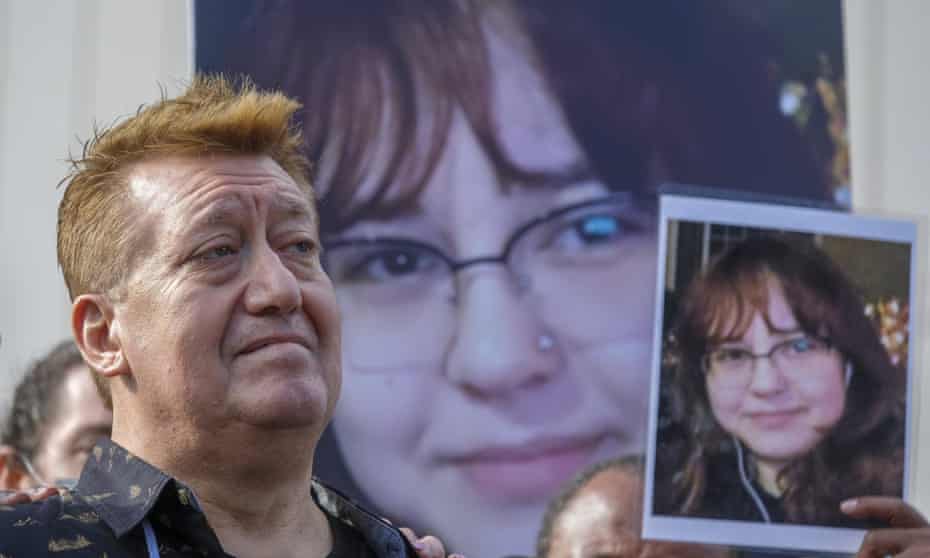
A tearful father stands in front of images of his teen daughter during a news conference.
The father of Valentina Orellana-Peralta, Juan Pablo Orellana Larenas, had planned to take his daughter to a Lakers game in the new year. Photograph: Ringo HW Chiu/AP

Valentina Orellana-Peralta, 14, came to Los Angeles from her native Chile earlier this year. She dreamed of becoming an American citizen and an engineer, and looked forward to seeing LeBron James play basketball in person.

But her life was cut short two days before Christmas, when a Los Angeles police officer opened fire at a man inside a department store, and in the process fatally shot the young girl.

Orellana-Peralta’s shellshocked parents, and their attorneys, including civil rights lawyer Benjamin Crump, gathered outside the LAPD headquarters in downtown Los Angeles on Tuesday morning to share stories of their “sweet angel” who died before she could open her Christmas gifts.

“It is like my whole heart has been ripped out of my body,” said Juan Pablo Orellana Larenas, Valentina’s father, who spoke in Spanish, with his lawyers translating. He arrived from Chile over the weekend after his daughter was killed. He held in his hand a skateboard, still in its plastic wrapping, that arrived for Valentina on Christmas Eve, the day after she died. He said he would deliver the board and other Christmas gifts to her grave.

When he spoke to his daughter the day before she was killed, she told her father how excited she was to pass her physics and math exams and how she hoped the two of them could go to a Lakers game in the new year when he arrived to LA.

The parents’ cries for justice, in front of a dozens of cameras outside LAPD, came one day after the department released body-camera footage and surveillance video of the incident last Thursday in which an officer shot and killed Valentina in a Burlington Coat Factory store in North Hollywood while firing at another person. Valentina had been shopping for a Christmas dress with her mother when the officer fatally shot her. Police said the officer’s bullet bounced off the floor and into the store dressing room, and the LA coroner ruled the death a homicide, saying the girl was hit in the chest.

Valentina died on the scene. The man shot by the officer was Daniel Elena Lopez, who had assaulted several customers with a bike lock, and was also pronounced dead at the store. The officer is on paid leave, according to LAPD, who have not identified him. The police video showed that Elena Lopez, 24, was standing away from the officer, at the opposite end of a store aisle, and appeared to be turning away when the officer fired three bullets in rapid succession.

The distraught parents, who could barely get through their remarks at a packed press conference, said that Valentina came to LA with her mother roughly six months ago and had excelled at her high school, High Tech Los Angeles in Van Nuys, despite English being her second language. She was interested in building robots and dreamed of going to college and having a career in engineering or technology “to make the world a better place”, said Crump, the attorney who has represented the family of George Floyd and other high-profile victims of police violence. “Her most important dream was to become an American citizen. They came to America from Chile to get away from violence and to have a better life.”

The girl’s aunt told the LA Times earlier this week that she grew up in Macul, a working-class neighborhood in Santiago, the capital of Chile.

At the news conference, Valentina’s mother, Soledad Peralta, described a horrifying scene at the Burlington store”

She had big dreams’: parents of Valentina Orellana-Peralta, teen killed by LAPD, speak outShe had big dreams’: parents of Valentina Orellana-Peralta, teen killed by LAPD, speak out

Tuesday, December 28, 2021

We need criminal charges against the conspirators. Young people are in jail for marijuana while these Republican traitors who tried to execute a Coup d'état walk free. Where is the Attorney General Merrick Garland? Do your job.


Opinion | The Rise of Eric Adams and Black New York - The New York Times

The Rise of Eric Adams and Black New York

Damon Winter/The New York Times

By Mara Gay

Ms. Gay is a member of the editorial board.

"It was winter in Black New York, and the last thing Eric Leroy Adams wanted to do was join the New York Police Department.

It was the early 1980s and waves of joblessness and crime were sweeping over working-class areas of the city. In Black neighborhoods, the Police Department, still overwhelmingly white, had become an occupying force, deepening the misery and the injustice.

Inside a Brooklyn church, the Rev. Herbert Daughtry, a veteran of the civil rights movement, told a young Mr. Adams, then a local college student, that it was time to join the N.Y.P.D. The Black community, Mr. Daughtry said, needed someone to make change from the inside.

“You got to be out of your mind,” Mr. Adams recalls telling Mr. Daughtry.

On Jan. 1, when Mr. Adams, 61, is sworn in as mayor, Mr. Daughtry’s vision will be realized. Working-class Black New York, which makes up the heart of the Democratic base but has long been shut out of City Hall, will finally have its moment.

To many, the future mayor is still an enigma. He talks of law and order, but also Black Lives Matter. He courts Wall Street, then travels to Ghana to be spiritually cleansed. He parties late into the night alongside the rapper Ja Rule and the former Google chief executive Eric Schmidt. His talent and intellect are obvious. But he sounds nothing like Barack Obama.

What exactly Mr. Adams intends to do once at City Hall is unclear. What is certain for now is that Mr. Adams knows who sent him there.

New York’s Black Democratic base had endured a plague and marched for Black lives. They had kept the city going, along with municipal workers of all backgrounds, while wealthier New Yorkers remained safely at home. They had felt the rise in violence in their neighborhoods, and seen the resurgence of white supremacy under President Donald Trump. Their choice for mayor was Eric Adams.

In his victory speech in November, Mr. Adams said his election belonged to the city’s working poor. “I am you. I am you. After years of praying and hoping and struggling and working, we are headed to City Hall,” Mr. Adams boomed. “It is proof that people of this city will love you if you love them.”

New York’s first Black mayor, David Dinkins, died last year at the age of 93. A soft-spoken Marine, in his signature bow tie, he made plain he intended to serve the entire city, which he famously called a “gorgeous mosaic.” Mr. Dinkins served just one term in office and was ousted by Rudy Giuliani in 1993 in an election fraught with racist backlash. It was a bitter defeat Black New York would never forget.

Mr. Dinkins was part of a storied tradition of Black politicians from Harlem that included Adam Clayton Powell Jr., Charles Rangel, Percy Sutton, and Basil Paterson. The political club swung Black votes in the city for more than a generation.

Mr. Adams’s pathway to Gracie Mansion runs through a different New York.

He was born in the Brownsville area of Brooklyn, among the poorest neighborhoods in the city. Later, the family moved to South Jamaica, a largely Black enclave in Queens. Like many of his neighbors, Mr. Adams grew up poor, the fourth of six children of Dorothy Mae Adams, a single mother who worked cleaning houses, and later, at a day care center.

At 15, Mr. Adams was arrested on a criminal trespass charge for entering the home of an acquaintance. He has said he was beaten so severely by police officers that his urine was filled with blood for a week.

Several years later, Mr. Adams met Mr. Daughtry. The pastor was recruiting young Black New Yorkers to organize Brooklyn’s struggling communities as part of the National Black United Front, a Black empowerment group.

“It was a tough time,” Mr. Daughtry, now 90 years old, said in a phone interview. Mr. Adams stood out. “He was rather precocious,” Mr. Daughtry said. “He didn’t just want a job. He was concerned about the lack of progress, the gang violence, the addiction.”

Mr. Adams joined the Police Department in 1984 and served 22 years there. He co-founded 100 Blacks in Law Enforcement Who Care, a group that protested police brutality. He also served as president of the Grand Council of Guardians, a statewide group of Black law enforcement officials.

He was protesting police brutality in the late 1980s when he met the Rev. Al Sharpton. Both were the sons of single mothers who had arrived in New York from Alabama.

And both men said they reveled in eschewing the snobbishness exuded by the Black elite: a small but dazzling world of the powerful — if not always wealthy — shaped by historic college fraternities and sororities, and exclusive societies like the Sigma Pi Phi fraternity and the Links. The groups were created in the depths of segregation to help members network and uplift the Black community. Some of the organizations are over a century old.

“Me and Eric used to tease each other,” Mr. Sharpton told me recently. “I used to say, ‘You’re the guy with the patrolman’s hat and I’m the guy with the conked hair style like James Brown, and we do not care if the bougies don’t like us,’” he said. “We used to laugh about that.”

Mr. Dinkins was a member of Sigma Pi Phi, also known as the Boulé (pronounced boo-lay). That fraternity, among the most exclusive of the bunch, counted the Rev. Dr. Martin Luther King Jr. as a member. Percy Sutton, who as Manhattan borough president was once the highest ranking Black elected official in New York, belonged to Kappa Alpha Psi — one of the “Divine Nine” historically Black fraternities and sororities. Representative Hakeem Jeffries is also a member of Kappa Alpha Psi. Former Representative Charles Rangel is a member of Alpha Phi Alpha but joined Boulé only several years ago (“They never invited me” before that, he said). Vice President Kamala Harris is a member of Alpha Kappa Alpha.

“I’m not part of any of those things, you know what I’m saying?” Mr. Adams told me. “But the energy and spirit they bring, we need that.”

By 2006, Mr. Adams had risen to the rank of captain, but his public advocacy had made him a thorn in the side of the Police Department’s clubby, white male brass. He left the department and was quickly elected to the State Senate. In 2013, he was elected Brooklyn borough president, a largely ceremonial role — but a good launching pad for a campaign for mayor.

In the decades since David Dinkins had left office, the center of Black life and political power had shifted firmly from Harlem to Brooklyn. Letitia James, the state attorney general, is from Brooklyn. Jumaane Williams, the city’s public advocate, is also from Brooklyn. Representative Jeffries represents part of the borough, as well as a part of Queens.

Making the rise of these Black politicians possible was a decades-long shift to an increasingly diverse electorate from one that had once been dominated by white voters. Some white Democrats have proven more willing to vote for Black candidates. The changes have turned Brooklyn into a political powerhouse.

In 2013, that Brooklyn coalition, led by Black voters, sent Mayor Bill de Blasio to Gracie Mansion.

Then, in early 2020, the pandemic hit New York City, claiming tens of thousands of lives. It killed people from all walks of life, but hit especially hard in the minority and immigrant communities in the Democratic base. Every level of government, including City Hall, had failed them.

A year later, the Democratic primary included three major Black candidates. One of them, Maya Wiley, a progressive, garnered significant support. But working-class Black New York went with Mr. Adams, handing him a narrow victory. Basil Smikle, director of the public policy program at Hunter College, said they wanted someone who understood their everyday lives.

“The Dinkinses and the Obamas of the world, yes it’s aspirational, we’d all like our children to grow up to be them,” said Mr. Smikle, who is Black. “But to what extent do you know how people are living?”

Mr. Adams’s political showmanship doesn’t hurt.

In 2016, when Mr. Adams became a vegan, reversing a diabetes diagnosis, he promoted the diet as a way to liberate Black Americans from the history of slavery and published a cookbook.

Years earlier, in the State Senate, Mr. Adams produced a dramatized video from his office encouraging parents to search their children’s belongings for contraband. “You don’t know what your child may be hiding,” Mr. Adams tells the camera, pulling a gun out of a jewelry box. The stunt left political insiders giggling. But it demonstrated how deeply connected Mr. Adams was to the voters he represented.

“It is comical, but let me tell you, my mom would probably be nodding her head for the entire video,” said Zellnor Myrie, 35, who holds Mr. Adams’s former Senate seat, and was raised in the district by his mother.

Much of what appears to be paradoxical about Mr. Adams is, to Black Americans, just familiar.

“All of us have been at dinner with some uncle who talks about ‘Black on Black’ crime,” said Christina Greer, associate professor of political science at Fordham University. “We know Eric Adams.”

Yet, Mr. Adams is familiar to New Yorkers of many backgrounds. They recognize the swagger of the beat cop; the blunt cadence of southeast Queens, with its languorous vowels; the hustle and ambition found all over New York.

Starting Jan. 1, he will be mayor for the entire city. His support is expansive and includes large numbers of Asian, Latino and Orthodox Jewish voters. If he can cement this coalition, he may become a formidable force nationally in a Democratic Party hungry for stars.

Mr. Adams has also shown a savvy for courting The New York Post, announcing his pick for police commissioner — Nassau County chief of detectives Keechant Sewell, a Black Queens native — in the right-wing tabloid. Better to feed the beast, Mr. Adams understands, than let it maul you.

At his inner circle, though, is a tight-knit group of Black New Yorkers who have waited a generation for their shot to run City Hall.

Outside a public school in Brooklyn recently, Mr. Adams stood with David Banks, a veteran Black educator he tapped to serve as schools chancellor. “If 65 percent of white children were not reaching proficiency in this city, they would burn the city down,” Mr. Adams said to the enthusiastic, largely nonwhite crowd.

From the moneyed corners of Manhattan to the gracious brownstones of Cobble Hill, there is a creeping sense of shock: The new mayor is not necessarily speaking to them. Power in America’s largest city has changed hands."

Opinion | The Rise of Eric Adams and Black New York - The New York Times

Capitol panel to investigate Trump call to Willard hotel in hours before attack | US Capitol attack | The Guardian

Capitol panel to investigate Trump call to Willard hotel in hours before attack

Trump speaking to supporters near the White House on 6 January.
Trump speaking to supporters near the White House on 6 January. Photograph: Brendan Smialowski/AFP/Getty Images

"Congressman Bennie Thompson, the chairman of the House select committee investigating the Capitol attack, has said the panel will open an inquiry into Donald Trump’s phone call seeking to stop Joe Biden’s certification from taking place on 6 January hours before the insurrection.

The chairman said the select committee intended to scrutinize the phone call – revealed last month by the Guardian – should they prevail in their legal effort to obtain Trump White House records over the former president’s objections of executive privilege.

“That’s right,” Thompson said when asked by the Guardian whether the select committee would look into Trump’s phone call, and suggested House investigators had already started to consider ways to investigate Trump’s demand that Biden not be certified as president on 6 January.

Thompson said the select committee could not ask the National Archives for records about specific calls, but noted “if we say we want all White House calls made on January 5 and 6, if he made it on a White House phone, then obviously we would look at it there.”

The Guardian reported last month that Trump, according to multiple sources, called lieutenants based at the Willard hotel in Washington DC from the White House in the late hours of 5 January and sought ways to stop Biden’s certification from taking place on 6 January.

Trump first told the lieutenants his vice-president, Mike Pence, was reluctant to go along with the plan to commandeer his ceremonial role at the joint session of Congress in a way that would allow Trump to retain the presidency for a second term, the sources said.

But as Trump relayed to them the situation with Pence, the sources said, on at least one call, he pressed his lieutenants about how to stop Biden’s certification from taking place on 6 January in a scheme to get alternate slates of electors for Trump sent to Congress.

The former president’s remarks came as part of wider discussions he had with the lieutenants at the Willard – a team led by Trump lawyers Rudy Giuliani, John Eastman, Boris Epshteyn and Trump strategist Steve Bannon – about delaying the certification, the sources said.

House investigators in recent months have pursued an initial investigation into Trump’s contacts with lieutenants at the Willard, issuing a flurry of subpoenascompelling documents and testimony to crucial witnesses, including Bannon and Eastman.

But Thompson said that the select committee would now also investigate both the contents of Trump’s phone calls to the Willard and the White House’s potential involvement, in a move certain to intensify the pressure on the former president’s inner circle.

“If we get the information that we requested,” Thompson said of the select committee’s demands for records from the Trump White House and Trump aides, “those calls potentially will be reflected to the Willard hotel and whomever.”

A spokesperson for the select committee declined to comment about what else such a line of inquiry might involve. But a subpoena to Giuliani, the lead Trump lawyer at the Willard, is understood to be in the offing, according to a source familiar with the matter.

The Guardian reported that the night before the Capitol attack, Trump called the lawyers and non-lawyers at the Willard separately, because Giuliani did not want to have non-lawyers participate on sensitive calls and jeopardize claims to attorney-client privilege.

It was not clear whether Giulaini might invoke attorney-client privilege as a way to escape cooperating with the investigation in the event of a subpoena, but Congressman Jamie Raskin, a member of the select committee, noted the protection does not confer broad immunity.

“The attorney-client privilege does not operate to shield participants in a crime from an investigation into a crime,” Raskin said. “If it did, then all you would have to do to rob a bank is bring a lawyer with you, and be asking for advice along the way.”

The Guardian also reported Trump made several calls the day before the Capitol attack from both the White House residence, his preferred place to work, as well as the West Wing, but it was not certain from which location he phoned his top lieutenants at the Willard.

The distinction is significant as phone calls placed from the White House residence, even from a landline desk phone, are not automatically memorialized in records sent to the National Archives after the end of an administration.

That means even if the select committee succeeds in its litigation to pry free Trump’s call detail records from the National Archives, without testimony from people with knowledge of what was said, House investigators might only learn the target and time of the calls."


Capitol panel to investigate Trump call to Willard hotel in hours before attack | US Capitol attack | The Guardian