Contact Me By Email


What To Do When You're Stopped By Police - The ACLU & Elon James White

What To Do When You're Stopped By Police - The ACLU & Elon James White

Know Anyone Who Thinks Racial Profiling Is Exaggerated? Watch This, And Tell Me When Your Jaw Drops.


This video clearly demonstrates how racist America is as a country and how far we have to go to become a country that is civilized and actually values equal justice. We must not rest until this goal is achieved. I do not want my great grandchildren to live in a country like we have today. I wish for them to live in a country where differences of race and culture are not ignored but valued as a part of what makes America great.

Tuesday, October 03, 2023

FBI interviewed individuals who accuse Amy Coney Barrett faith group of abuse | Amy Coney Barrett | The Guardian

FBI interviewed individuals who accuse Amy Coney Barrett faith group of abuse

"Revealed: individuals contacted by agency gave detailed accounts of abusive behavior they allegedly experienced or witnessed
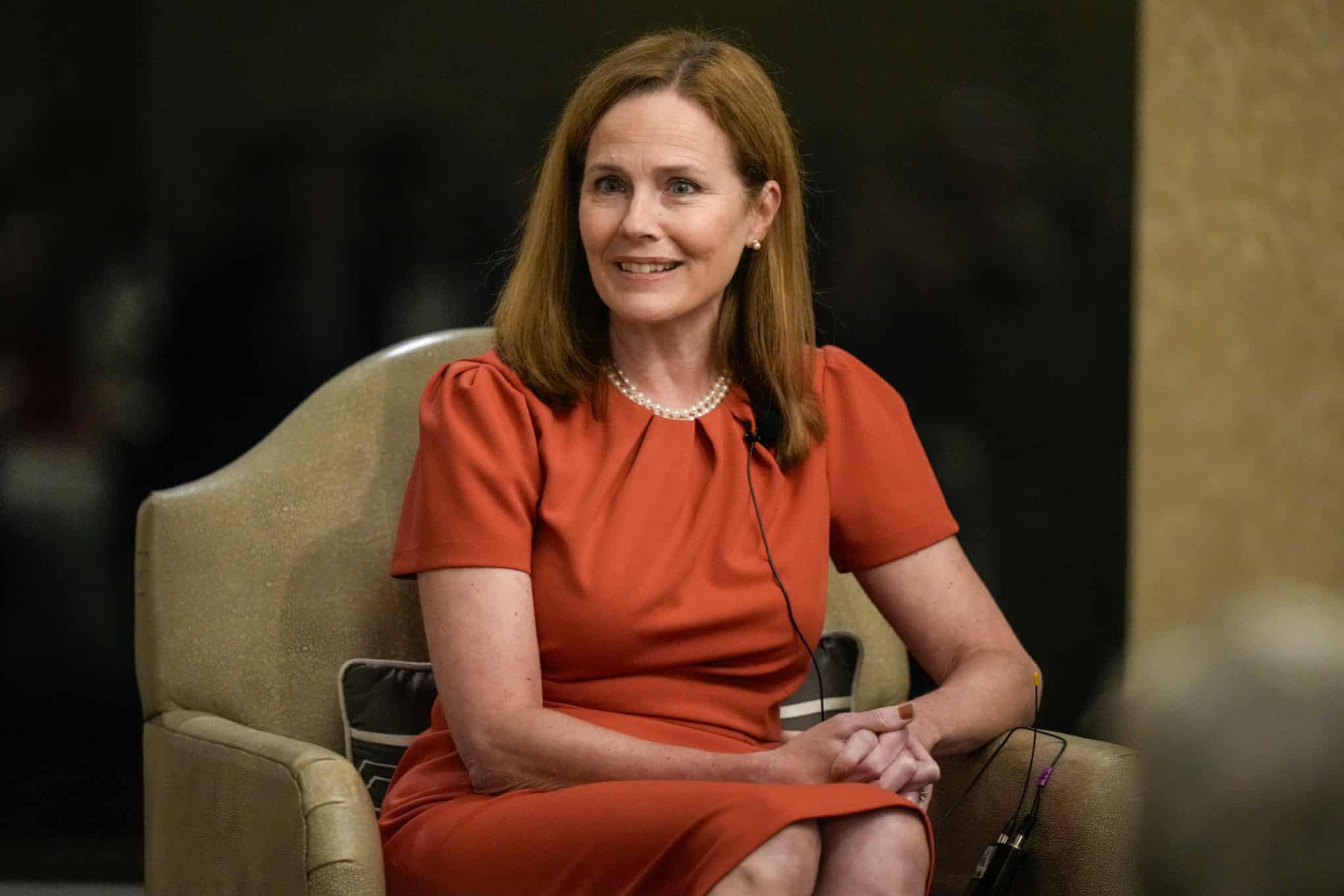
Supreme court justice Amy Coney Barrett speaks during the Seventh Circuit Judicial Conference on 28 August 2023, in Lake Geneva, Wisconsin.
Supreme court justice Amy Coney Barrett speaks during the Seventh Circuit Judicial Conference on 28 August 2023, in Lake Geneva, Wisconsin. Photograph: Morry Gash/AP

The FBI has interviewed several individuals who have alleged they were abused by members of the People of Praise (PoP), a secretive Christian sect that counts conservative supreme court justice Amy Coney Barrett as a lifelong member, according to sources familiar with the matter.

The individuals were contacted following a years-long effort by a group called PoP Survivors, who have called for the South Bend-based sect to be investigated for leaders’ handling of sexual abuse allegations. The body, which has 54 members, has alleged that abuse claims were routinely mishandled or covered up for decades in order to protect the close-knit faith group.

It is not clear whether the FBI has launched a formal investigation into the PoP.

The Guardian has confirmed that at least five individuals were contacted by the FBI and four gave detailed accounts to agents of abusive behavior they allegedly experienced or witnessed. Individuals spoke to the Guardian on the condition of anonymity and said they believed the FBI interviews were part of an initial inquiry.

One woman who was interviewed by agents from Minneapolis, Minnesota, said she received an update last week and was told by agents that the investigation into her own claims, which involved allegations of sexual abuse by a teacher, had been closed. The woman told the Guardian that news had left her disappointed and defeated, and full of “a lot of questions”, because the agents had seemed interested in pursuing the matter.

A spokesperson for PoP Survivors said: “We urge the FBI to use their power to unearth the long-standing pattern of child sexual abuse and coverup in the People of Praise. All perpetrators and their enablers must finally be held accountable. We must ensure that no child is victimized and silenced by a People of Praise member ever again.”

The FBI did not respond to a request for comment. A spokesperson for the PoP did not respond to a request for comment.

The PoP was founded in the 1970s as part of a Christian charismatic movement. The group is led exclusively by men. Like other charismatic communities, it blends Catholicism and Protestant Pentecostalism – its members are mostly Catholic but include some Protestants. In meetings, members are encouraged to share prophecies and speak in tongues. One former member said adherents believe God can speak through members to deliver messages, sometimes about their future.

A PoP handbook states that members are expected to be obedient to male authorities, or group heads, and are expected to give 5% of their earnings to the group. Heads are influential decision-makers in members’ lives, weighing in on issues ranging from dating to marriage, and determining where members should live.

After a waiting period, members agree to a covenant – a lifelong vow – to support each other “financially and materially and spiritually”.

The group has been criticized for endorsing discriminatory practices. Members who engage in gay sex are expelled, and private schools closely affiliated with the group – the Trinity Schools – have admission policies that in effect ban the children of gay parents from attending.

Single members are encouraged to live with other members of the community, including families with children, a practice that former members and adults who grew up in the sect say created opportunities for sexual abuse.

Justice Barrett’s membership in PoP was first widely publicized in a 2017 New York Times report, which noted that Barrett’s membership in the “tightly knit Christian group” never came up in a Senate hearing to confirm her as an appeals court judge.

In 2020, following Barrett’s nomination to the supreme court by then president Donald Trump, the Guardian and other media outlets delved deeper into PoP, including reports about how some former members, and some children who grew up in the group, had been abused by other members of the sect.

Some but not all members who have since been critical of the PoP believe it is a cult, given the amount of control the group exerts over people’s lives.

Barrett’s membership in the group was not raised in her confirmation hearing for the high court, but media outlets reported on her role as a handmaid and that PoP had erased all mentions and photos of Barrett from its website. The Guardian also reported that Barrett and her husband, Jesse Barrett, had lived together in the home of a key PoP founder, Kevin Ranaghan, before they were married.

It was around this time that a Facebook group of PoP survivors was established, as former members of the sect, and adults who had been raised in it, began sharing stories about their experiences of alleged abuse, and how those abuse claims were allegedly mishandled. Multiple members have said that PoP’s prominence in the news triggered their desire to share stories, but that they were not seeking to target Barrett in raising their experiences.

One member, Pete Smith, told the Guardian the survivor group first contacted the FBI in 2022 through a tip line, offering a list of witnesses to the group’s alleged “crimes”. Smith said members were confused about why the FBI had not responded to reports in the press that had begun to emerge about sexual assault and other claims that victims said were swept under the carpet.

Those media reports prompted PoP to hire lawyers at Quinn Emanuel Urquhart & Sullivan, who said they would investigate the claims. No report was ever publicly released.

The letter to the FBI, which was seen by the Guardian, alleged that PoP had engaged in a “widespread and ongoing conspiracy to cover-up the abuse of children within its families and the schools it operates”. It said members had experienced sexual abuse from non-family members of their household, from their parents, and teachers.

The letter also alleged that the PoP’s alleged culture of secrecy “in any matter that would embarrass” the group had contributed to alleged coverups, which included transferring offenders to other cities. The letter said members of the group were prepared to offer sworn testimony, documents, photographs and “our collective expertise”.

Smith said he solicited the help of his senators in Oregon, where he lives, when the FBI was not responsive. The FBI ultimately responded after Ron Wyden, a Democratic senator from Oregon, raised the matter on his constituent’s behalf. In a statement, a spokesperson for the senator said Wyden had contacted the FBI “not to advocate for any particular outcome, but to make sure they were aware of the claim”.

While some individuals have already come forward publicly with allegations of abuse, the Guardian interviewed one woman who grew up in a PoP household and spoke to the FBI last summer and has never shared her story publicly.

The woman, who declined to be named in order to protect her privacy, said she had been sexually and physically abused from age three to 16 by a male member of her family. When she came forward and told her mother about the abuse, the male member was forced to leave her home, but remained in the PoP community, including at one point being housed with another family that had a six-year-old child.

When her mother talked to leaders of the community, she was told it was best to not press charges.

“They were a big influence on her,” the woman said.

She later reported the abuse so that the name of her abuser was on record, though it was too late for her to press charges."

FBI interviewed individuals who accuse Amy Coney Barrett faith group of abuse | Amy Coney Barrett | The Guardian

Opinion | In America, Not Having a College Degree Can Take Years Off Your Life - The New York Times

In America, Not Having a College Degree Can Take Years Off Your Life

In an illustration, an individual in orange garb is superimposed against a larger figure holding a college degree.
Nadia Hafid

By Anne Case and Angus Deaton

"Ms. Case and Mr. Deaton are the authors of “Deaths of Despair and the Future of Capitalism.”

By many measures, the U.S. economy is thriving: Unemployment stands close to the 50-year low set in April, the fraction of people aged 25 to 54 in work is at a two-decade high, gross domestic product is growing rapidly, inflation is falling, and the S & P 500 is a third higher than it was before the pandemic.

While encouraging, economic statistics like these offer an incomplete picture of the state of the country. There is a deep and persistent national malcontent — in one recent NBC News poll, nearly three-quarters of Americans say the country is on the wrong track, while Gallup reports that poor life ratings are at record highs.

What the economic statistics obscure in the averages is that there is not one but two Americas — and a clear line demarcating the division is educational attainment. Americans with four-year college degrees are flourishing economically, while those without are struggling.

Worse still, as we discovered in new research, the America of those without college degrees has been scarred by death and a staggeringly shorter life span.

Almost two-thirds of American adults do not have college degrees, and they have become increasingly excluded from good jobs, political power and social esteem. As their lives and livelihoods are threatened, their longevity declines.

In the 1970s, American life expectancy grew by about four months each year. By the 1980s, it was similar to life expectancy in other rich countries. Since then, other countries have continued to progress, with life spans increasing by more than two and a half months a year.

But the United States has slowly, gradually and then precipitously fallen behind.

Life expectancy in the United States falls behind other rich countries

Life expectancy of Americans at birth

These ever widening gaps have long troubled demographers and prompted threereports from the National Academy of Sciences. The gaps grew wider during the pandemic.

But even before, not only was life expectancy in the United States far from that of the best performing countries — Japan and Switzerland — but it was also more than two years lower than that of the worst performers — Germany and Britain — among 22 other rich countries.

Public health authorities in the United States record educational qualifications at death so that, after 1992, we can calculate life expectancy by college degree, starting at age 25, when most people have completed their education. In new research using these individual death records, we have found startling results.

Life expectancy at age 25 (adult life expectancy) for those with four-year college degrees rose to 59 years on the eve of the pandemic — so an average individual would live to 84 — up from 54 years (or 79 years old) in 1992. During the pandemic, by 2021, the expectation slipped back a year.

But we were staggered to discover that for those without college degrees, life expectancy reached its peak around 2010 and has been falling since, an unfolding disaster that has attracted little attention in the media or among elected officials.

Adult life expectancy for this group started out two and a half years lower, at 51.6, in 1992 — so an average individual would live to nearly 77 years old. But by 2021, it was 49.8 years (or almost 75 years old), roughly eight and a half years less than people with college degrees, and those without had lost 3.3 years during the pandemic.

The mortality gap between Americans with and without four-year degrees is widening

Average years of life remaining for 25-year-old Americans

The divergence of life expectancies on either side of the college divide — one going up, one going down — is both shocking and rare. We have found reference to only one other case in modern history, in the former Communist countries of Eastern Europe after the collapse of the Soviet Union. Like those countries, the United States is failing its less educated people, an awful condemnation of where the country is today.

If all Americans had the life expectancy of the college educated, the United States would have been one of the best performers among the rich countries in terms of life expectancy, not the worst. It is the experience of those without college degrees that accounts for America’s failure.

The educational divide is also clear in economic circumstances. Since 1979, wages for those with a B.A. or more far exceeded wages for those with less education. Families without a member with a college degree had a median income that was only 4 percent higher in 2019 than in 1970, compared with 24 percent higher for families where at least one member had a college degree. According to Federal Reserve data, wealth was equally split between those with and without college degrees in 1990, but today three-quarters of wealth is owned by college graduates.

Why is this happening in America? We and others have documented an increase in corporate power relative to workers, which includes the decline of competition, the decline of unions and their ability to raise wages for workers without college degrees and the decreased mobility of workers from less to more successful places.

Other rich countries have been less prone to creating an elite class out of the college educated, while the United States has designed a system that too often works for itself but not for working-class Americans. They have been increasingly excluded from the local and national power that once came with unions and have lost good jobs and wages to excessive health care costs, globalization and automation. Furthermore, the children of the elite rarely serve in the military and increasingly hoard places in top selective colleges.

Unhealthy behaviors are more common among people without college degrees, but those behaviors can often be traced to the environments in which they live, lack of work and community decay, as well as their being targeted by the pharmaceutical industry in the first phase of the opioid epidemic. The destruction of good jobs for less educated men also helps explain much of the decline in stable two-parent families among non-college-educated men and women. We have also increasingly come to believe that a college degree works through often arbitrary assignation of status, so that jobs are handed out not on the basis of necessary or useful skills but by the use of the degree as a hiring screen.

The divergence with Europe is also striking. European nations generally financetheir much less costly health care through government support and not through what is essentially a flat tax on employment (with employer contributions to worker premiums effectively taken out of salary), and its much broader safety net helps people deal with the disruption of jobs.

Other countries do not have Republican-controlled state legislatures passing corporate-friendly measures — on minimum wages, right-to-work laws, guns, pollution or tobacco taxes — that harm the communities, lives and health of less educated Americans. Nor do they have a Republican governor advising some constituents not to get vaccinated.

As the economy has recovered from Covid, less well educated Americans have been doing better in a tight labor market. What we don’t know is whether this improvement will last or peter out as the market weakens, as happened in the past.

What can be done? We could learn from those European countries that have a range of educational qualifications that fit different kinds of jobs and lack the sharp binary distinction between those with and without college degrees that is so corrosive in the United States.

We are encouraged by the efforts of both public and private employers to remedy this; it is a low-cost policy that could have large benefits. For example, Gov. Josh Shapiro of Pennsylvania signed an executive order removing the B.A. requirement for 92 percent of state jobs; similar policies are in place in Utah, Maryland, Colorado, Georgia, South Carolina, Virginia, New Jersey and Alaska.

Anything that reduces health care costs would help, as would eliminating employer-funded health insurance, replacing it with vouchers paid for by general taxation. Fighting NIMBYism (an acronym that stands for “not in my backyard,” which describes neighbors who protest local development) and expanding affordable housing in successful cities would increase mobility. Job creation under the Inflation Reduction Act is a move in the right direction. Working people would do better with stronger unions and fewer hostile measures such as right-to-work laws.

The suffering of less educated America is not something that must happen, nor is it a necessary price to be paid for progress for the rest of us. Indeed, we find it hard to imagine that an educated elite can prosper indefinitely without a better future for everyone else.

Anne Case and Angus Deaton, economists at Princeton, are the authors of “Deaths of Despair and the Future of Capitalism.” Mr. Deaton is also the author of “Economics in America: An Immigrant Economist Explores the Land of Inequality.”

Opinion | In America, Not Having a College Degree Can Take Years Off Your Life - The New York Times

Monday, October 02, 2023

Supreme Court denies Jan. 6 appeal from former Trump lawyer John Eastman - The Washington Post

Supreme Court denies Jan. 6 appeal from former Trump lawyer John Eastman

Justice Clarence Thomas did not participate in the decision involving his former law clerk, the architect of Trump’s legal strategy to overturn 2020 election

John Eastman, the architect of Donald Trump's strategy to try to overturn his 2020 election loss, is seen on video as the House Jan. 6 select committee holds a hearing in 2022. (Jabin Botsford/The Washington Post)
"The Supreme Court on Monday denied a request from conservative lawyer John Eastman to wipe out a lower court ruling that said he and former president Donald Trump “more likely than not” committed a crime when they worked together to try to block certification of the 2020 election.

Eastman, who was a law clerk for Justice Clarence Thomas, was the architect of the legal strategy Trump used to try to overturn his election loss to President Biden. He faces criminal charges in Georgia, along with Trump, in connection with those efforts, and his conduct is described in the federal indictment of Trump in Washington on charges of trying to obstruct the election results.

Thomas “took no part” in the high court’s decision to deny Eastman’s request to vacate the ruling by the lower court, which stemmed from a lawsuit Eastman filed to try to block a congressional committee examining the Jan. 6, 2021, riot at the U.S. Capitol from obtaining his emails.

In March, a federal judge in California sided with the committee and ordered Eastman to turn over his emails. While the lawsuit was a civil matter, U.S. District Judge David O. Carter said in his order that Eastman and Trump had likely committed crimes in trying to overturn the election.

“The illegality of the plan was obvious,” Carter wrote in finding that Eastman’s emails could not be shielded by attorney-client privilege. “Dr. Eastman and President Trump launched a campaign to overturn a democratic election, an action unprecedented in American history.”

The Supreme Court issued the order denying Eastman’s request to vacate the ruling on the first day of its new term, which will include politically sensitive cases involving gun rights, the future of free speech on social media platforms, and racial gerrymandering. The justices are also facing pressure from Democratic lawmakers to address ethics issues, including potential conflicts of interest.

Thomas’s decision to step away in the Eastman matter was a departure from his previous participation in cases involving the investigation of the Jan. 6 attack on the Capitol. Thomas was the only member of the court last year to side with Trump’s request to withhold White House documents from the committee. He was criticized for participating in that decision because his wife, Virginia “Ginni” Thomas, was actively involved in challenging the election results.

Thomas did not provide an explanation for his recusal in the court’s brief order regarding Eastman.

In his petition to the Supreme Court, Eastman urged the justices to reverse the lower court ruling on his emails and formally wipe out the decision because of what he described as the significant legal and political ramifications for Trump, the leading Republican candidate for president in the 2024 election.

Eastman took issue with the House select committee’s decision to access and inadvertently publish the disputed documents before his appeal was resolved. The U.S. Court of Appeals for the 9th Circuit refused to vacate the district court opinion.

Eastman told the justices that he and Trump were denied an opportunity to show that the district court’s conclusions were “clearly erroneous, thus clearing his name and that of his former client, former President Trump.”

Supreme Court denies Jan. 6 appeal from former Trump lawyer John Eastman - The Washington Post

Crypto Goes on Trial, as Sam Bankman-Fried Faces His Reckoning - The New York Times

Crypto Goes on Trial, as Sam Bankman-Fried Faces His Reckoning

"The FTX founder’s uphill court battle starts Tuesday, after he has come to symbolize everything that went wrong with the cryptocurrency industry.

A uniformed officer stands next to Sam Bankman-Fried in a crowd in front of a courthouse.
Sam Bankman-Fried, founder of the crypto firm FTX, leaving federal court in Manhattan in February. He is going on trial on charges of fraud and money laundering.Hiroko Masuike/The New York Times

A year ago, Sam Bankman-Fried was a fixture on magazine covers and in the halls of Congress, a tousle-haired crypto billionaire who hobnobbed with movie stars and bankrolled political campaigns.

On Tuesday, the founder of the failed FTX digital currency exchange is set to leave the jail where he has been confined for more than seven weeks and stand trial in a Manhattan courtroom on federal charges of fraud and money laundering, capping one of the largest and swiftest corporate collapses in decades.

The charges against Mr. Bankman-Fried, 31, have put the rest of the crypto industry on trial with him. He has emerged as a symbol of the unrestrained hubris and shady deal-making that turned cryptocurrencies into a multitrillion-dollar industry during the pandemic. The demise of FTX in November helped burst that bubble, sending other high-profile companies into bankruptcy and provoking a government crackdown.

The trial will offer a window into the Wild West-style financial engineering that fueled crypto’s growth and lured millions of inexperienced investors, many of whom lost their savings when the market crashed. Lawyers on both sides of the case are expected to lay bare the culture of scams and risk-taking that surrounded FTX and to dissect the often-misleading publicity campaigns that helped drive years of crypto hype.

“It’s a fraud that was enabled and supercharged by crypto, and by crypto’s unique aspects,” said Lee Reiners, a crypto expert who teaches at Duke Law School. “It wouldn’t have been possible in any other context.”

Jury selection begins on Tuesday in U.S. District Court, with the trial expected to last six weeks. Camera crews and reporters are expected to swarm the courthouse, and the author Michael Lewis has a widely anticipated book about the case coming out that same day, featuring behind-the-scenes details of Mr. Bankman-Fried’s rise and fall.

Mr. Bankman-Fried, who faces seven criminal counts, is accused of orchestrating a yearslong fraud that siphoned billions of dollars from customers to finance political contributions, venture capital investments and luxury real estate purchases. He has pleaded not guilty. If convicted, he could receive what would amount to a life sentence.

What to Know About the Collapse of FTX

What is FTX? The now bankrupt company was one of the world’s largest cryptocurrency exchanges. It enabled customers to trade digital currencies for other digital currencies or traditional money; it also had a native cryptocurrency known as FTT. The company, based in the Bahamas, built its business on risky trading options that are not legal in the United States.

He faces an uphill battle. Three of his closest advisers have pleaded guilty and agreed to testify against him. Prosecutors have accumulated millions of pages of digital evidence, including text transcripts, financial records and emails, and they plan to introduce about 1,300 exhibits at the trial. The judge, Lewis A. Kaplan, has repeatedly sided with the prosecution in procedural disputes, rejecting expert witnesses the defense had hoped to call and allowing the government to use evidence that Mr. Bankman-Fried had contested.

For the past month and a half, Mr. Bankman-Fried has also had to prepare his case from a jail cell in Brooklyn, after Judge Kaplan revoked his bail, ruling that he had tried to interfere with witnesses.

“It doesn’t appear that there’s any sort of path to victory” for Mr. Bankman-Fried, said Renato Mariotti, a former federal prosecutor.

Also looming over the trial is the question of whether Mr. Bankman-Fried, who is unusually garrulous for a criminal defendant, will testify — a high-risk move that defense lawyers tend to discourage.

“It will surely be painful for him to remain quiet if he believes or convinces himself that the government is mischaracterizing his transactions and his closest associates are making up stories about him,” said Daniel Richman, a law professor at Columbia University and a former federal prosecutor. The downside is “he might not respond well to forceful cross-examination.”

A representative for Mr. Bankman-Fried declined to comment. A spokesman for the U.S. attorney’s office for the Southern District of New York, the division that is prosecuting Mr. Bankman-Fried, also declined.

Known for his signature outfit of T-shirts and shorts, Mr. Bankman-Fried rose to prominence as a rare good guy in the loosely regulated world of crypto. He founded FTX in 2019 and raised $2 billion in venture funding, promising to work with regulators to write new rules for the industry. He was also a prolific political donor, contributing more than $5 million to support Joseph R. Biden’s 2020 presidential run.

Then, over four frantic days in November, FTX and its sister hedge fund, Alameda Research, imploded, with customers unable to withdraw more than $8 billion in deposits. The companies filed for bankruptcy, and Mr. Bankman-Fried was charged with counts including securities fraud, wire fraud and money laundering. A count accusing him of violating campaign finance law was eventually dropped, along with a handful of other charges, though all could be revived at a second trial next year.

Many of his closest allies have turned on him. Caroline Ellison, Alameda’s chief executive and Mr. Bankman-Fried’s on-and-off girlfriend, pleaded guilty and agreed to cooperate with the prosecution. She was joined by two co-founders of FTX, Gary Wang and Nishad Singh, who admitted to conspiring with Mr. Bankman-Fried to defraud customers. A fourth high-level executive, Ryan Salame, also pleaded guilty, without agreeing to cooperate.

After his arrest, Mr. Bankman-Fried was confined to his parents’ house in Palo Alto, Calif., where he entertained guests and had a pickleball court installed in the yard. In August, Judge Kaplan revoked those privileges and sent him to the Metropolitan Detention Center after he shared some of Ms. Ellison’s private writings with The New York Times.

Ms. Ellison is poised to be a crucial figure at the trial. She, Mr. Wang and Mr. Singh were all close friends with Mr. Bankman-Fried and lived together in a five-bedroom penthouse in the Bahamas, where FTX had its headquarters. But even within that tight circle, Ms. Ellison had unique access — and a long romantic history with her boss that could create one of the most dramatic and personal moments of the trial.

In court filings, prosecutors have previewed some of the evidence they plan to present, including notes that Ms. Ellison took at meetings with Mr. Bankman-Fried, as well as spreadsheets that “kept track of illicit money flows.” Prosecutors have also lined up testimony from FTX investors and customers who lost money in the firm’s collapse.

The contours of Mr. Bankman-Fried’s defense are less clear. After FTX’s bankruptcy, he blamed an accounting error that he said had caused billions of users’ dollars to vanish without his knowledge. He has also criticized his colleagues, especially Ms. Ellison, saying she failed to manage risk at Alameda. And in legal filings, Mr. Bankman-Fried’s lawyers have indicated that they’ll argue that outside law firms authorized his actions at FTX.

More recently, the defense has also suggested that FTX’s use of customer deposits to make investments was akin to how a bank operates. The problem for Mr. Bankman-Fried is that FTX was an exchange, a type of company that isn’t supposed to put customer money at risk.

As the trial approaches, the defense has faced setbacks. Mr. Bankman-Fried has had trouble getting access to documents from jail, his lawyers say, because of a spotty internet connection and battery problems with a laptop he was given.

Judge Kaplan has mostly dismissed those complaints. Last month, he rejected the defense’s attempt to stop prosecutors from citing evidence related to FTX’s bankruptcy filing and Mr. Bankman-Fried’s resignation from the company. The judge said those events were “intertwined inextricably” with the charges. And in a ruling Sunday, he said he might limit the defense’s ability to argue that some of the decisions made at FTX involved lawyers.

“The issues in this case are pretty straightforward,” Judge Kaplan said at a court hearing last week.

The pretrial disputes have put the defense on the back foot. But ultimately the legal wrangling could help Mr. Bankman-Fried mount an appeal if he loses at trial.

“The defense here is doing a really nice job of creating a record on that,” said Jordan Estes, a former federal prosecutor in Manhattan. “They’re setting up this theme that they’re not getting due process, they’re not getting a fair trial.”

Crypto Goes on Trial, as Sam Bankman-Fried Faces His Reckoning - The New York Times

Opinion | One Reason the Trump Fever Won’t Break - The New York Times

One Reason the Trump Fever Won’t Break

A man in a blue suits holds a red-white-and-blue microphone in his right hand and a Bible in his left.
Mark Peterson/Redux

"The more I consider the challenge posed by Christian nationalism, the more I think most observers and critics are paying too much attention to the wrong group of Christian nationalists. We mainly think of Christian nationalism as a theology or at least as a philosophy. In reality, the Christian nationalist movement that actually matters is rooted in emotion and ostensibly divine revelation, and it’s that emotional and spiritual movement that so stubbornly clings to Donald Trump.

Three related stories illustrate the challenge.

First, Katherine Stewart wrote a disturbing report for The New Republic about the latest iteration of the ReAwaken America Tour, a radical right-wing road show sponsored by Charisma News, a Pentecostal Christian publication. The tour has attracted national attention, including in The Times, and features a collection of the far right’s most notorious conspiracy theorists and Christian populists.

The rhetoric at these events, which often attract crowds of thousands, is unhinged. There, as Stewart reported, you’ll hear a pastor named Mark Burns declare, “This is a God nation, this is a Jesus nation, and you will never take my God and my gun out of this nation.” You’ll also hear him say, “I have come ready to declare war on Satan and every race-baiting Democrat that tries to destroy our way of life here in the United States of America.” You’ll hear the right-wing radio host Stew Peters call for “Nuremberg Trials 2.0” and death for Anthony Fauci and Hunter Biden. The same speaker taunted the Fulton County, Ga., prosecutor Fani Willis by shouting: “Big Fani. Big fat Fani. Big fat Black Fani Willis.”

Then there’s Thursday’s report in The Times describing how an anti-Trump conservative group with close ties to the Club for Growth is finding that virtually nothing is shaking Trump voters’ confidence in Trump. As the group wrote in a memo to donors, “Every traditional postproduction ad attacking President Trump either backfired or produced no impact on his ballot support and favorability.” Even video evidence of Trump making “liberal” or “stupid” comments failed to shake supporters’ faith in him.

And finally, we cannot forget the astounding finding of a HarrisX poll for The Deseret News, showing that more Republicans see Donald Trump as a “person of faith” than see openly religious figures like Mitt Romney, Tim Scott and Mike Pence, Trump’s own (very evangelical) vice president, that way. It’s an utterly inexplicable result, until you understand the nature of the connection between so many Christian voters and Donald Trump.

In the immediate aftermath of the Jan. 6 insurrection, there was a tremendous surge of interest in Christian nationalism. Christian displays were common in the crowd at the Capitol. Rioters and protesters carried Christian flags, Christian banners and Bibles. They prayed openly, and a Dispatch reporter in the crowd told me that in the late afternoon Christian worship music was blaring from loudspeakers. I started to hear questions I’d never heard before: What is Christian nationalism and how is it different from patriotism?

I’ve long thought that the best single answer to that question comes from a church history professor at Baylor named Thomas Kidd. In the days before Jan. 6, when apocalyptic Christian rhetoric about the 2020 election was building to a fever pitch, Kidd distinguished between intellectual or theological Christian nationalism and emotional Christian nationalism.

The intellectual definition is contentious. There are differences, for example, among Catholic integralism, which specifically seeks to “integrate” Catholic religious authority with the state; Protestant theonomy, which “believes that civil law should follow the example of Israel’s civil and judicial laws under the Mosaic covenant”; and Pentecostalism’s Seven Mountain Mandate, which seeks to place every key political and cultural institution in the United States under Christian control.

But walk into Christian MAGA America and mention any one of those terms, and you’re likely to be greeted with a blank look. “Actual Christian nationalism,” Kidd argues, “is more a visceral reaction than a rationally chosen stance.” He’s right. Essays and books about philosophy and theology are important for determining the ultimate health of the church, but on the ground or in the pews? They’re much less important than emotion, prophecy and spiritualism.

Arguments about the proper role of virtue in the public square, for example, or arguments over the proper balance between order and liberty, are helpless in the face of prophecies, like the declarations from Christian “apostles” that Donald Trump is God’s appointed leader, destined to save the nation from destruction. Sometimes there’s no need for a prophet to deliver the message. Instead, Christians will claim that the Holy Spirit spoke to them directly. As one longtime friend told me, “David, I was with you on opposing Trump until the Holy Spirit told me that God had appointed him to lead.”

Several weeks ago, I wrote about the “rage and joy” of MAGA America. Outsiders see the rage and hatred directed at them and miss that a key part of Trump’s appeal is the joy and fellowship that Trump supporters feel with each other. But there’s one last element that cements that bond with Trump: faith, including a burning sense of certainty that by supporting him, they are instruments of God’s divine plan.

For this reason, I’ve started answering questions about Christian nationalism by saying it’s not serious, but it’s very dangerous. It’s not a serious position to argue that this diverse, secularizing country will shed liberal democracy for Catholic or Protestant religious rule. But it’s exceedingly dangerous and destabilizing when millions of citizens believe that the fate of the church is bound up in the person they believe is the once and future president of the United States.

That’s why the Trump fever won’t break. That’s why even the most biblically based arguments against Trump fall on deaf ears. That’s why the very act of Christian opposition to Trump is often seen as a grave betrayal of Christ himself. In 2024, this nation will wrestle with Christian nationalism once again, but it won’t be the nationalism of ideas. It will be a nationalism rooted more in emotion and mysticism than theology. The fever may not break until the “prophecies” change, and that is a factor that is entirely out of our control.

David French is an Opinion columnist. He is a veteran of Operation Iraqi Freedom and a former constitutional litigator. His most recent book is “Divided We Fall: America’s Secession Threat and How to Restore Our Nation.” @DavidAFrench"

Opinion | One Reason the Trump Fever Won’t Break - The New York Times