Contact Me By Email


What To Do When You're Stopped By Police - The ACLU & Elon James White

What To Do When You're Stopped By Police - The ACLU & Elon James White

Know Anyone Who Thinks Racial Profiling Is Exaggerated? Watch This, And Tell Me When Your Jaw Drops.


This video clearly demonstrates how racist America is as a country and how far we have to go to become a country that is civilized and actually values equal justice. We must not rest until this goal is achieved. I do not want my great grandchildren to live in a country like we have today. I wish for them to live in a country where differences of race and culture are not ignored but valued as a part of what makes America great.

Thursday, June 07, 2018

Opinion | ‘I Want to Hate …’ So I remember that. I center that. I hear “I want to hate” every time I hear him speak. And I draw strength from the fact that I’m not fighting for or against a political party; I’m fighting hatred itself, as personified by the man who occupies the presidency.- The New York Times


"In Trump’s America people are understandably experiencing news fatigue. There are torrents of it on multiple streams. There is outrage after outrage. It is often overwhelming.

That’s the plan, I suspect. Trump is operating on the Doctrine of Inundation. He floods the airwaves until you simply give up because you feel like you’re drowning.

And unfortunately, it’s working. A Pew Research Center report released Tuesday found that nearly seven in 10 Americans “feel worn out by the amount of news there is these days.”

Fighting this fatigue is the real test of a person’s resolve, including mine.

When my enthusiasm for resisting this vile man and his corrupt administration starts to flag, I remember the episode that first revealed to me the darkness at Trump’s core, and I am renewed.

On an April night nearly 30 years ago, a young investment banker was beaten and raped when she went for a jog in Central Park. The attack left her in a coma. She happened to be white. Five teenagers arrested for the crime — four black and one of Hispanic descent — went to trial. As this newspaper reported at the time, they were “in what the police said was part of a marauding spree by as many as 30 youths in the northern end of the park” that night.

After being questioned for hours, the defendants gave false confessions that conflicted with one another, and those confessions were captured on video. As The New York Times pointed out in 2002: “The defendants in the jogger case were put on camera after they had been in custody, in some cases, for as long as 28 hours.”

As one of the five wrote in 2016 in The Washington Post: “When we were arrested, the police deprived us of food, drink or sleep for more than 24 hours. Under duress, we falsely confessed.”

A few days after the attack, long before the teenagers would go on trial, Donald Trump bought full-page ads in New York newspapers — you may think of this as a precursor to his present-day tweets to a mass audience — under a giant, all-caps headline that read: “Bring Back the Death Penalty. Bring Back Our Police!”

The boys would be convicted even though the physical evidence in the case was inconclusive. When one of the teenagers was led away in handcuffs, he yelled at the prosecutor: “You’re going to pay for this. Jesus is going to get you. You made this … up.”

After serving up to 13 years in prison, the boys were proven right: Another man confessed to the crime and his DNA matched that at the scene of the crime.

The boys, then men, had their convictions overturned, were freed, and eventually reached a multimillion-dollar settlement with the city over their wrongful convictions.

How did Trump respond after having called for them to be put to death? In true Trump fashion, he refused to apologize or show any contrition whatsoever.

In a 2014 opinion essay in The Daily News, Trump wrote that the settlement was a “disgrace” and that “settling doesn’t mean innocence.” He continued his assertion that the men were guilty, urging his readers: “Speak to the detectives on the case and try listening to the facts. These young men do not exactly have the pasts of angels.”

Some people will never admit that they are wrong, even when they are as wrong as sin.

But it is the language in the body of Trump’s 1989 death penalty ad that sticks with me. Trump wrote:

“Mayor Koch has stated that hate and rancor should be removed from our hearts. I do not think so. I want to hate these muggers and murderers. They should be forced to suffer and, when they kill, they should be executed for their crimes.”

He continued:

“Yes, Mayor Koch, I want to hate these murderers and I always will. I am not looking to psychoanalyze or understand them, I am looking to punish them.”

That to me is the thing with this man: He wants to hate. When Trump feels what he believes is a righteous indignation, his default position is hatred. Anyone who draws his ire, anyone whom he feels attacked by or offended by, anyone who has the nerve to stand up for himself or herselfand tell him he’s wrong, he wants to hate, and does so.

This hateful spirit envelopes him, consumes him and animates him.

He hates women who dare to stand up to him and push back against him, so he attacks them, not just on the issues but on the validity of their very womanhood.

He hates black people who dare to stand up — or kneel — for their dignity and against oppressive authority, so he attacks protesting professional athletes, Black Lives Matter and President Barack Obama himself as dangerous and divisive, unpatriotic and un-American

He hates immigrants so he has set a tone of intolerance, boasted of building his wall (that Mexico will never pay for), swollen the ranks of Immigration and Customs Enforcement, and attacks some as criminals and animals.

He hates Muslims, so he moves to institute his travel ban and attacks their religion with the incendiary comment that “I think Islam hates us.”

He always disguises his hatred, often as a veneration and defense of his base, the flag, law enforcement or the military. He hijacks their valor to advance his personal hatred.

So I remember that. I center that. I hear “I want to hate” every time I hear him speak. And I draw strength from the fact that I’m not fighting for or against a political party; I’m fighting hatred itself, as personified by the man who occupies the presidency. That is my spine stiffener."

Opinion | ‘I Want to Hate …’ - The New York Times

Judge allows suit over family separation to proceed

Guardianship: Last Week Tonight with John Oliver (HBO)

Tuesday, June 05, 2018

Going “Full Dictator”? Trump Claims He Has Right to End Mueller Investig...

Experts agreed. Unlawful presence is neither a felony nor a misdemeanor, said Ilya Shapiro, a senior fellow in constitutional studies at the libertarian Cato Institute. It is a civil infraction that results in removal and a bar on re-entry for a certain period of time.


“Hidden Horrors”: Reporter Debbie Nathan on Mass Trials & Kids Separated from Parents at the Border. 😈😈😈 This is how America has always treated people of color with few exceptions. This conversation is the personification of evil.

Driving While Black Has Gotten Even Worse; Four years after Ferguson, some stark data from Missouri. – Mother Jones


'... And people question whether racism in America is permanent.  I guess for many it is hard to give up on a false narrative of American progress they have worshipped all of their lives.


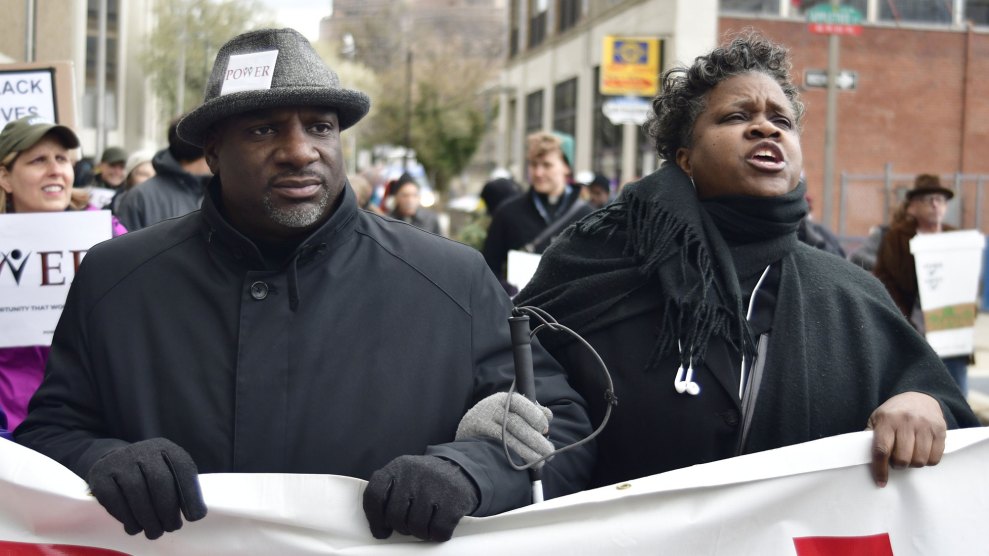
"A protest in April after the controversial arrest of two black men at a Starbucks in Philadelphia.Bastiaan Slabbers / ZUMA


There is a stark new statistic out from the office of Missouri Attorney General Josh Hawley: In 2017, black drivers in the state were 85 percent more likely to be pulled over than white drivers. That’s an even greater disparity than the state AG’s office found when it gathered the same data last year—and the biggest disparity since it began analyzing traffic-stop data in 2000.


According to the report, there was also a major disparity with how black drivers are treated once they are pulled over: African Americans who were stopped were 51 percent more likely than white drivers to be searched. And Hispanic drivers were 45 percent more likely than whites to be searched.


Four years after Ferguson, these numbers suggest that the institutional discrimination that launched a national protest movement—sparked by the fatal police shooting of Michael Brown—has, if anything, deepened. And they reiterate that the phenomenon is hardly confined to just one troubled municipality; Ferguson’s racial disparity in traffic stops wasn’t even above average for Missouri last year. Of course, as my colleague Brand Patterson has recently shown, you don’t have to be in a car to come in for the driving-while-black treatment—in recent weeks, black people have had the cops called on them for everything from barbecuing at a public park to golfing too slowly."


Driving While Black Has Gotten Even Worse – Mother Jones

Trump and His Lawyers Embrace a Vision of Vast Executive Power - The New York Times


"WASHINGTON — President Trump, ramping up his assertions of extraordinary powers, declared in a tweet on Monday that he had “the absolute right” to pardon himself for any crime.


While no president has ever purported to pardon himself, and it is not clear whether Mr. Trump could legitimately take such a step, the president’s claim was the latest in an aggressive series of moves to assert his control over federal law enforcement.


Last month, Mr. Trump crossed a traditional line by ordering an investigation into the Russia investigators. And late last year he boasted he has “an absolute right to do what I want to with the Justice Department.”


The president has had help in shaping his expansive view of his authority: For at least a year, his lawyers in the investigation into whether he tried to obstruct the Russia inquiry have been advising the president that he wields sweeping constitutional powers to impede investigations no matter his motive — and despite obstruction-of-justice laws that everyone else must obey.


He has unfettered authority to fire the F.B.I. director, which he did last year; to order a federal investigation opened or closed; and to pardon anyone, including felons or criminal suspects, his longtime personal lawyer Marc E. Kasowitz said in a confidential memo last June. “The president cannot obstruct himself or subordinates acting on his behalf by simply exercising these inherent constitutional powers,” he wrote.


Many legal scholars have derided such claims as going too far, although no Supreme Court precedents offer definitive guideposts about whether Congress can make it illegal for a president to use his powers to supervise the Justice Department in a corrupt way.


“We overthrew control by a monarchy, and the Constitution signals in multiple places that the president is subject to law,” said Peter Shane, an Ohio State University law professor and co-author of a separation-of-powers casebook.


Mr. Kasowitz made his case in a letter to the special counsel, Robert S. Mueller III, and it was endorsed by two of the president’s other personal lawyers, John M. Dowd and Jay A. Sekulow, who incorporated his arguments in their own letter to Mr. Mueller in January. Both letters, published over the weekend by The New York Times, offered an array of factual and legal arguments for why Mr. Trump has not violated obstruction laws and need not answer questions from Mr. Mueller.


But their striking constitutional claim that obstruction statutes cannot bind Mr. Trump stood apart from the rest of their case.


The idea that presidents, by virtue of their unique constitutional powers, are above ordinary law has surfaced from the White House before. Defenders of the Reagan administration made the claim during the Iran-contra affair, and lawyers in the George W. Bush administration wrote memos blessing torture and warrantless wiretapping programs. As Richard M. Nixon claimed after the Watergate scandal: “When the president does it, that means that it is not illegal.”


But the Trump team’s claim that obstruction-of-justice statutes do not apply to the president carries new twists.


For one thing, such disputes have tended to arise in the context of a president, in his role as commander in chief, pushing legal limits to defend the country from foreign threats. Even the Nixon administration rationalized surveillance of domestic political opponents, including antiwar and civil rights leaders, by citing worries about potential covert Soviet subversion.


Mr. Trump’s lawyers, by contrast, are claiming that he is “the chief law enforcement officer” — a description usually applied to the attorney general — wielding absolute power to command the actions of every federal prosecutor or F.B.I. agent in a way no congressional statute can limit. And he is doing so in the context of an investigation aimed at uncovering the scope of a foreign power’s covert meddling with American democracy — and whether he personally obstructed that inquiry.


The implications of Mr. Trump’s claim also go beyond the context of his lawyers defending him in a criminal case. If obstruction statutes cannot stop Mr. Trump from shutting down an investigation even if he did so with a corrupt motive, then Justice Department procedures and regulations also cannot stop him from ordering an investigation into his political opponents for corrupt reasons.


Those factors make the Trump lawyers’ claims different from assertions by previous presidents that the White House can lawfully bypass important statutes, said David Kris, a former senior Justice Department national security official during the Bush and Obama administrations who is a co-founder of the consulting firm Culper Partners.


“Trump is doing this not for national security reasons but to impede an investigation into himself and his associates, and he’s staking a far more sweeping claim to power than even other presidents by saying he can use the Justice Department for whatever he wants,” Mr. Kris said.


He added: “They are saying not just that the president is above the law, but in effect that he is the law — that he is the personification of justice and cannot obstruct himself. That is very stark and not very persuasive.”


The constitutional theory Mr. Trump’s team has put forward is not his first line of defense. They also have mustered factual claims, denying wrongdoing and arguing that as a technical matter, a particular obstruction statute did not apply to his actions. (The memo, however, appeared to be focused on the wrong statute, rendering the statutory arguments beside the point.)


But the Trump team is invoking its aggressive constitutional theory to backstop its other arguments. Even though Congress has made it a crime to impede a pending or potential grand-jury investigation or trial with corrupt intentions, they said, that statute cannot be applied to Mr. Trump, no matter what the evidence shows about his actions and intentions.


Both Nixon and President Bill Clinton were accused of obstruction of justice by lawmakers as part of impeachment proceedings, drawing on evidence brought to light by prosecutors who, rather than charging them with crimes, sent reports to the House Judiciary Committee for impeachment consideration. But the actions those presidents were accused of — like witness tampering or suborning perjury — were not an exercise of their official powers as president.


The novel issue raised by the investigation into Mr. Trump — assuming Mr. Mueller has not uncovered evidence of other obstructive actions that is not yet public — is whether Congress can make it a crime for him to use his power over the law enforcement system with a corrupt purpose, even if it would otherwise be lawful for him to take such steps.


“Put simply,” Mr. Kasowitz wrote last June, “the Constitution leaves no question that the president has exclusive authority over the ultimate conduct and disposition of all criminal investigations and over those executive branch officials responsible for conducting those investigations.”


He added that “while there are various political checks and balances that would inform the president’s exercise of this authority as a prudential matter, and various norms have developed over the years as a result of those checks and balances, none of these diminish the president’s ultimate constitutional authority over investigations and prosecutions.”


No Supreme Court precedent exists that directly addresses the questions of how far Mr. Trump’s constitutional authority extends to supervise the Justice Department, or whether, if he did corruptly exercise that power, the statutes that make obstruction of justice a crime apply to him. Presidents and Congress routinely jostle over where to draw the line between their respective and often overlapping powers, but the Supreme Court rarely gets involved in adjudicating such questions.


Still, the court has ruled that Congress can impose some restrictions on a president’s power to control the executive branch, including by upholding statutes that prevent him from firing certain officials, including certain prosecutors, without good cause. On the other hand, Congress clearly signaled that it intended for those statutes to apply to presidents, while the obstruction statute is a general law.


While Britain’s kings traditionally wielded a prerogative power to suspend or dispense with laws, the framers of the Constitution required the American president to faithfully execute them, Mr. Shane noted. Though what that means can sometimes be blurry, he said, the Trump claim struck him as dubiously broad.


“The idea that the president could — regardless of his motive — just work his will on the investigation of civil or criminal offenses, that the Constitution frees him to act with corrupt motives, is just an affront to the idea of the president as a public trustee and subject to law.”


By Charlie Savage on Twitter: @charlie_savage.


Trump and His Lawyers Embrace a Vision of Vast Executive Power - The New York Times

Monday, June 04, 2018

Sen. describes immigrants held in cages 'like dog kennels'


Sen. describes immigrants held in cages 'like dog kennels'

Sen. describes immigrants held in cages 'like dog kennels'


Sen. describes immigrants held in cages 'like dog kennels'

Is homophobic bigotry legally protected in the United States because it is religiously based? Remember that at one time the same evangelicals who today attack homosexuality believed into my lifetime that Black people were the descendants of Ham

Is homophobic bigotry legally protected in the United States because it is religiously based? Remember that at one time the same evangelicals who today attack homosexuality believed into my lifetime that Black people were the descendants of Ham

The New York Times wrote on November 3, 2003 that "By the 19th century, many historians agree, the belief that African-Americans were descendants of Ham was a primary justification for slavery among Southern Christians." The largest Southern Denomination is and has been the evangelical Southern Convention. They were wrong then and they are wrong now. Evangelicals will cite Paul's 1st letter to the Corinthians Chapter 6; "... Do not be deceived: Neither the sexually immoral nor idolaters nor adulterers nor men who have sex with mena 10nor thieves nor the greedy nor drunkards nor slanderers nor swindlers will inherit the kingdom of God. 11 And that is what some of you were." . We live in a country where our 1st Amendment separates church and state. Religious discrimination in public accommodations is unconstitutional. Religious bigotry is wrong, whether it is Christian, Islamic or Jewish. Justifications taken from nearly 2000 year old writings should not be taken out of their historical context. Bigotry is bigotry and the United States has a long history of justifying and rationalizing bigotry. It is time to stop.

Today instead of focusing on the denial of civil rights to gay Americans, the Court focused on the procedural considerations given to the discriminating baker, by the Colorado Civil Rights Commission. This case is straight out of the late 19th Century Supreme Court playbook.


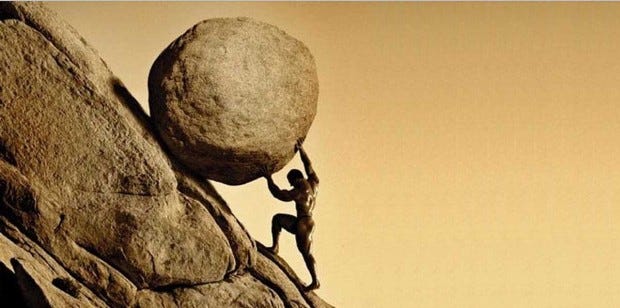
The Sisyphean cycle of progress and regress in American human rights protections continues as the Supreme Court, much like in the Santa Clara County v. Southern Pacific Railroad Co. case of 1886 takes the focus of civil rights protection away from discriminated against a class of people and focuses on protecting businesses. In the Santa Clara County case of 1886, the 14th Amendment was used to protect corporations, declaring them persons. The focus subsequently was no longer on protecting the rights of former slaves and their descendants. Ten years after Santa Clara County v. Southern Pacific Railroad Co. 1886 we had the infamous Plessy v. Ferguson, 163 U.S. 537 (1896), decision legalizing segregation under the "separate but equal doctrine. 

Today instead of focusing on the denial of civil rights to gay Americans, the Court focused on the procedural considerations given to the discriminating baker, by the Colorado Civil Rights Commission.  This case is straight out of the late 19th Century Supreme Court playbook. Justice Kennedy wrote in today's opinion “The neutral and respectful consideration to which Phillips was entitled was compromised here,”  MASTERPIECE CAKESHOP, LTD., ET AL. v.
COLORADO CIVIL RIGHTS COMMISSION ET AL.   The result is that the interest of gay Americans to be free from discrimination was trumped by a greater concern by the Court for procedural neutrality by the reviewing commission, in order to protect those who actively discriminate in the course of interstate commerce, out of religious beliefs.

John H Armwood

Supreme Court rules in favor of baker who would not make wedding cake for gay couple - The Washington Post. The Sisyphean cycle of progress and regress in American human rights protections continues.

Image result for sisyphus


"The Supreme Court on Monday ruled for a Colorado baker who refused to create a wedding cake for a gay couple, but it left undecided whether a business owner’s religious beliefs or free speech rights can justify refusing some services to gay people.


Instead, Justice Anthony M. Kennedy’s 7-to-2 decision focused on what he described as religious bias on the part of Colorado Civil Rights Commission members who ruled against baker Jack Phillips, who owns Masterpiece Cakeshop.


“The neutral and respectful consideration to which Phillips was entitled was compromised here,” Kennedy wrote, adding that the commission’s decision that the baker violated the state’s anti-discrimination law must be set aside.


But Kennedy acknowledged that the decision was more of a start than a conclusion to the court’s consideration of the rights of those with religious objections to same-sex marriage and the rights of gay people, who “cannot be treated as social outcasts or as inferior in dignity and worth.”


Future cases that raise those issues “must be resolved with tolerance, without undue disrespect to sincere religious beliefs, and without subjecting gay persons to indignities when they seek goods and services in an open market,” he wrote."


Supreme Court rules in favor of baker who would not make wedding cake for gay couple - The Washington Post

Trump: I have 'absolute right to pardon myself' King Richard redux.

Saturday, June 02, 2018

Opinion | On Race: The Moral High Ground - The New York Times

Charles Blow

"Racist comments don’t hurt my feelings. Not at all.

However, I find that people assume that they are hurtful, both the persons spewing them and those empathic about the perceived pain.

But I register no such pain. I’m from the Toni Morrison school of morality on the subject of race. As she once told Charlie Rose:

“I always knew that I had the high ground, all my life. I always thought those people who said I couldn’t come in the drugstore, and I had to sit in this funny place, and I couldn’t go in the park — —”

Rose interjects:

“You felt morally superior to them from Day 1.”

Morrison continued:

“I did. And I thought they knew that I knew that they were inferior to me, morally. I always thought that, and my parents always thought that.”

You see, racism is a moral corruption built on an intellectual fallacy and exists as a construction invented for the very purpose of violence. So, when people demonstrate that they subscribe to theories of racism, they have shown their hand, and I am immediately roused by the euphoric understanding that they are compromised, diminished and assailable.

Instead of reducing me, their racism reduces them. That is the ironic, poetic justice of it.

Of course, one only has to think about it for a moment to find the enormous hole in the logic that racism morally weakens the object of the sickness rather than the possessor of the sickness.

Although it doesn’t hurt my feelings, it does enrage me when racists are granted power in society to allow their idiocy to have a negative impact on other people, whether that be culturally, psychologically and spiritually, or materially and physically.

It enrages me when ignorance is elevated and empowered, when historical truth is eschewed, when current realities are denied.

But this moral rage is separate and apart from emotional distress, the former being active and energetic while the latter is passive and plaintive.

In this context, Roseanne Barr’s recent racist tweets, including one suggesting that the Obama-era White House official Valerie Jarrett was the offspring of apes, were not emotionally injurious, but were rage-inducing.

I doubt Jarrett’s feelings were hurt because she knows, like everyone else, that even with two broken legs and rubber crutches she could run moral and intellectual rings around Barr any day of the week.

Appearing at a town hall about race on Tuesday night, Jarrett said: “I’m fine.”

Later, when asked if she agreed that Donald Trump had set a tone that has made people feel increasingly empowered to make racist statements, she said: “Tone does start at the top, and we like to look up to our president and feel as though he reflects the values of our country. But I also think every individual citizen has the responsibility too, and it’s up to all of us to push back.”

That was ever so diplomatic of Jarrett, but the blunt fact is that while racism and racists predated Trump’s presidency, he has clearly relieved a lot of the guilt and shame some may otherwise have felt about having their hatred and intolerance on display.

Trump is a walking, talking permission slip for the white supremacist.

He had the gall to tweet on Wednesday:

“Bob Iger of ABC called Valerie Jarrett to let her know that ‘ABC does not tolerate comments like those’ made by Roseanne Barr. Gee, he never called President Donald J. Trump to apologize for the HORRIBLE statements made and said about me on ABC. Maybe I just didn’t get the call?”

First, he included no condemnation of Barr’s comments at all. Failure to rebuke can rightly be taken as tacit approval and acceptance.

But then, the man who never apologizes for his growing glut of offenses wants an apology for unspecified “horrible statements” about him.

Did he apologize to the Central Park Five for calling for their executions?

Did he apologize to Barack Obama for leading the charge on the racist birther lie?

Did he apologize for calling Mexican immigrants rapists and murderers?

Did he apologize to the Muslim community for saying that Islam hates us?

Did he apologize to African countries or Haiti and El Salvador for describing them with an expletive?

Did he apologize to Colin Kaepernick and other protesting N.F.L. players for calling them sons of bitches?

No, no, no, no, no, no.

Donald Trump, White House racist, Nazi sympathizer, alt-right hero, receiver of laurels from the former Ku Klux Klan Grand Wizard David Duke, is the absolute last person who should be demanding an apology in this Roseanne controversy.

Barr and Trump are morally and intellectually compromised by their racial contempt. It enrages me that they have the power to influence the culture and, in Trump’s case, to actually craft toxic policy.

Against that, I will fight always because policies produce real injuries, but I will never allow the racist to believe that his words alone have the power to inflict those injuries. That, to me, is laughable.

As Zora Neale Hurston once put it: “Sometimes, I feel discriminated against, but it does not make me angry. It merely astonishes me. How can any deny themselves the pleasure of my company? It’s beyond me.”

I have even stopped being astonished."

Opinion | On Race: The Moral High Ground - The New York Times

Racist comments don’t hurt my feelings. Not at all.
However, I find that people assume that they are hurtful, both the persons spewing them and those empathic about the perceived pain.
But I register no such pain. I’m from the Toni Morrison school of morality on the subject of race. As she once told Charlie Rose:
“I always knew that I had the high ground, all my life. I always thought those people who said I couldn’t come in the drugstore, and I had to sit in this funny place, and I couldn’t go in the park — —”
Rose interjects:
“You felt morally superior to them from Day 1.”
Morrison continued:
“I did. And I thought they knew that I knew that they were inferior to me, morally. I always thought that, and my parents always thought that.”
You see, racism is a moral corruption built on an intellectual fallacy and exists as a construction invented for the very purpose of violence. So, when people demonstrate that they subscribe to theories of racism, they have shown their hand, and I am immediately roused by the euphoric understanding that they are compromised, diminished and assailable.
Instead of reducing me, their racism reduces them. That is the ironic, poetic justice of it.
Of course, one only has to think about it for a moment to find the enormous hole in the logic that racism morally weakens the object of the sickness rather than the possessor of the sickness.
Although it doesn’t hurt my feelings, it does enrage me when racists are granted power in society to allow their idiocy to have a negative impact on other people, whether that be culturally, psychologically and spiritually, or materially and physically.
It enrages me when ignorance is elevated and empowered, when historical truth is eschewed, when current realities are denied.
But this moral rage is separate and apart from emotional distress, the former being active and energetic while the latter is passive and plaintive.
In this context, Roseanne Barr’s recent racist tweets, including one suggesting that the Obama-era White House official Valerie Jarrett was the offspring of apes, were not emotionally injurious, but were rage-inducing.
I doubt Jarrett’s feelings were hurt because she knows, like everyone else, that even with two broken legs and rubber crutches she could run moral and intellectual rings around Barr any day of the week.
Appearing at a town hall about race on Tuesday night, Jarrett said: “I’m fine.”
Later, when asked if she agreed that Donald Trump had set a tone that has made people feel increasingly empowered to make racist statements, she said: “Tone does start at the top, and we like to look up to our president and feel as though he reflects the values of our country. But I also think every individual citizen has the responsibility too, and it’s up to all of us to push back.”
That was ever so diplomatic of Jarrett, but the blunt fact is that while racism and racists predated Trump’s presidency, he has clearly relieved a lot of the guilt and shame some may otherwise have felt about having their hatred and intolerance on display.
Trump is a walking, talking permission slip for the white supremacist.
He had the gall to tweet on Wednesday:
“Bob Iger of ABC called Valerie Jarrett to let her know that ‘ABC does not tolerate comments like those’ made by Roseanne Barr. Gee, he never called President Donald J. Trump to apologize for the HORRIBLE statements made and said about me on ABC. Maybe I just didn’t get the call?”
First, he included no condemnation of Barr’s comments at all. Failure to rebuke can rightly be taken as tacit approval and acceptance.
But then, the man who never apologizes for his growing glut of offenses wants an apology for unspecified “horrible statements” about him.
Did he apologize to the Central Park Five for calling for their executions?
Did he apologize to Barack Obama for leading the charge on the racist birther lie?
Did he apologize for calling Mexican immigrants rapists and murderers?
Did he apologize to the Muslim community for saying that Islam hates us?
Did he apologize to African countries or Haiti and El Salvador for describing them with an expletive?
Did he apologize to Colin Kaepernick and other protesting N.F.L. players for calling them sons of bitches?
No, no, no, no, no, no.
Donald Trump, White House racist, Nazi sympathizer, alt-right hero, receiver of laurels from the former Ku Klux Klan Grand Wizard David Duke, is the absolute last person who should be demanding an apology in this Roseanne controversy.
Barr and Trump are morally and intellectually compromised by their racial contempt. It enrages me that they have the power to influence the culture and, in Trump’s case, to actually craft toxic policy.
Against that, I will fight always because policies produce real injuries, but I will never allow the racist to believe that his words alone have the power to inflict those injuries. That, to me, is laughable.
As Zora Neale Hurston once put it: “Sometimes, I feel discriminated against, but it does not make me angry. It merely astonishes me. How can any deny themselves the pleasure of my company? It’s beyond me.”
I have even stopped being astonished.

Starbucks’s Tall Order: Tackle Systemic Racism in 4 Hours - The New York Times

"By, and  For Starbucks, the scope of companywide anti-bias training on Tuesday was easy to measure. Roughly 175,000 employees at 8,000 locations pored over nearly 23,000 iPads, learning about the processing power of unconscious brains and the roots of unconscious bias.

The training — part social justice crash course and part self-reflection exercise — is at the core of a well-choreographed effort by Starbucks to improve its corporate image after a backlash over the arrests of two African-American men in a Starbucks in Philadelphia last month. Since then, the company has apologized, most recently in full-page newspaper ads. It has changed its guest policy, allowing people to sit without buying anything. And it enlisted a full complement of social justice activists and policy advocates for guidance.

Starbucks is trying to send a statement with the training. It closed most company-owned stores in the United States, leaving caffeine addicts without Frappuccinos and freelancers without office space.

But the company acknowledges that it is trying to tackle systemic racism going back centuries. And there is only so much that can be crammed into a four-hour session.

The anti-bias training is taking on a broader significance for Starbucks as it tries to show a commitment to social justice issues and create a sense of community at its stores.

Pomp and Circumstance

Starbucks infused its training with some star power.

In one video shown to workers via iPad, the artist Common explains that it is sometimes better to embrace differences than to look for only similarities in one another. In another, the documentary filmmaker Stanley Nelson Jr. provides an overview of the civil rights era and viral videos of racial incidents in the past. Former Attorney General Eric H. Holder Jr. reviewed the materials, and Sherrilyn Ifill of the NAACP Legal Defense and Educational Fund Inc. gave advice.

The training “is a transformational moment in the history of Starbucks,” said Howard Schultz, the company’s executive chairman.

The company, which spent tens of millions of dollars to bring it all together, needs to put on a show. It is trying to convince customers that it is committed to social justice issues and that it wants to create a sense of community at its stores.

Its image was tarnished after the incident at the Starbucks in Philadelphia, where an employee called the police after two African-American men asked to use the restroom. The men, Rashon Nelson and Donte Robinson, who hadn’t made a purchase and were waiting for a business meeting, were arrested on suspicion of trespassing — a charge that prosecutors declined to pursue. Mr. Nelson and Mr. Robinson, both 23, reached a settlement this month with the city and Starbucks.

To design the training program, Starbucks teamed up with Perception Institute, an anti-bias research and advisory group, and solicited input from several social scientists. The questions were based on years of research and on past workshops, the group said, adding that the four-hour time frame was more generous than the one hour typically allotted.

A Starbucks in Bucks County, Pa. The company worked with the Perception Institute, an anti-bias research and advisory group, to create the training, which will focus on how employees can better assess their own assumptions and biases.CreditCorey Perrine for The New York Times

As they developed the materials, Starbucks tested them in select stores in Texas, New York, Indiana and elsewhere, and incorporated feedback from employees. Some said that earlier drafts of the materials were confusing and that directions needed to be clearer, according to a consultant from SYPartners, a consultancy that also helped come up with Tuesday’s program

A Lesson in Sociology and Science

At the training sessions, employees broke into small groups to guide themselves through 68 pages of materials printed on newspaper print, sure to create ink-stained hands. They watched videos on iPads, some with stands made from a cut-up Starbucks cup.

Many of the exercises had the sort of open-ended approaches that have long been the province of sociology classes and business retreats. In personal notebooks, employees were asked to jot down private responses to vague questions like “What makes me, me? And you, you?” After one of the Common videos, they were asked to pair with a co-worker and list all the ways they were different from each other.

After a brief lesson on brain science, they took the Stroop effect test, quickly reciting the colors that words were written in to show how they form implicit associations. The notebook then took them through what it means to be “color brave” — rather than “colorblind.”

One of the more powerful exercises came toward the end of the training, when the employees listened to recorded audio clips of other colleagues discussing biased decisions they had made. In one instance, an employee said he had hid the tip jar when he saw a group of black men walk in. He became embarrassed, he said, after he gave them their change and they asked if there was a tip jar for them to leave it in.

Peering inside a closed Starbucks store Tuesday afternoon in New York. The anti-bias training has limits, experts said. “You can’t change people’s attitudes through a short-term intervention,” said Frank Dobbin, a Harvard sociology professor.

“The big question was we need to make it much more personal,” said Zarina Masih, a Starbucks employee in Evanston, Ill., alluding to advice she received about how to treat people in the store. “To make sure we’re not making assumptions, that we get to know them.”

Talking About Race

The documentary in the training includes an interview with a bald white man who reflects on how easy he has it when he leaves his house.

“I walk out a free man,” he said. “I just do my thing.”

Going out is much more complicated for a black man with braids, who is also interviewed. He has to be careful of how close he stands to fellow train commuters and how he talks to people in public.

Leaving the house can be so exhausting, the man said, that it sometimes “just keeps you at home.”

The training bluntly shows how white and black people experience the world differently.

To that end, Starbucks is toeing a difficult line. How do you convince white people that they are beneficiaries of the country’s racist history without calling them racists? And if you can convince them, how, then, do you turn that into a more welcoming in-store environment?

The training is at the core of a well-choreographed effort by Starbucks to improve its corporate image after an incident at a Starbucks in Philadelphia, where an employee summoned the police after two African-American men asked to use the restroom.CreditCorey Perrine for The New York Times

This can, expectedly, be a tall task for a company whose work force transcends geographic, socioeconomic, racial and educational lines. Some undoubtedly were familiar with, and had experienced, the concepts in the training. Others found them foreign.

“You’re always talking about a particular percentage that is willing to move off of their narrative,” Ms. Ifill said. “You’re appealing to people who are willing to listen and willing to learn.”

In the training, an exercise of “firsts” could serve to highlight the Rorschach that is race, in America.

When was the first time you “altered your communication style (dialed it up or down) to avoid playing into stereotypes?” For African-Americans, that is likely so common that it would be difficult to remember a first.

When was the first time you “went to work with your natural hair without comments or questions from others?” For white people, that’s likely always.

The company is also trying to learn from past missteps, like a widely criticized campaign in 2015 that tried to have baristas start conversations on race with customers.

One question in the notebook highlights the efforts of its creators to emphasize that this wasn’t about proving someone to be a racist.

“Upon reflection, do you notice ways in which you treat people differently?” the booklet asked. “The point here is not to judge whether that is a good or bad thing, but merely to notice.”

The booklet also offered definitions of what it called “key terms,” such as bias, confirmation bias, inclusion and stereotype.

The definition given for institutional racism could prove upsetting without further context. “The ways in which institutional policies and practices create different outcomes for different racial groups, creating unbalanced advantages for whites along with oppression and disadvantages for people from groups classified as nonwhite,” it read.

Starbucks and the creators of the training say it is not meant to end bias. Rather, it is about getting employees to start grappling with issues of race. In other contexts, like policing, this might mean thinking twice before pulling a weapon on someone. For Starbucks, it might mean a barista’s thinking twice before accusing someone in the store of nefarious behavior.

A Starbucks in downtown Los Angeles. The training will not solve years of systemic racism and abuse, but the company is trying to start a dialogue.CreditCody James for The New York Times

If nothing else, Starbucks employees may have to think twice because all the publicity surrounding the training could send a message that messing up on race could cost them their job.

Challenge in History and Logistics

“It always seems to me that they’re doing it to save face. It is, to me, too little too late,” said Doug Brandt, who was sitting at a Starbucks cafe in New York with two other men on Tuesday afternoon, several minutes before the store would close. “But it can’t hurt.”

One of the men, De’Monie Jackson, joined in. “It’s not Starbucks that needs the training,” he said. “It’s the police.”

Not even Starbucks pretends that the training will solve systemic racism and abuse. But the company is trying to start a dialogue.

“We also have to recognize that there will be some customers for some reason or another who are having a bad day, and that’s the moment of truth where we have to perform,” Mr. Schultz said.

“We as a company are systemically dealing with things that are far, far out of the control of Starbucks as a company or the four walls of our stores,” he said.

Putting aside whether a corporation is well equipped to address hundreds of years of racism, Starbucks is also up against a “customer is always right” ethos. And it is putting the burden on employees to rethink their own prejudices to offer better customer service, while doing little to help Starbucks’s nearly half-minority work force address the bias it may face from customers.

Then there are the more logistical concerns. Brian Nosek, a psychology professor at the University of Virginia who was consulted on the training, worried that Starbucks was moving ahead too quickly. Productive sessions, he said, require concrete goals, specific behavioral standards and a clear metric for evaluating performance.

“Training to make a caramel macchiato can be quite effective,” he said. “Training to be unbiased toward your fellow human doesn’t achieve any of those criteria.”

Reporting was contributed by Nick Madigan, Sarah Maslin Nir, Noam Scheiber and Mindy Sink.

Starbucks’s Tall Order: Tackle Systemic Racism in 4 Hours - The New York Times

"By, and  For Starbucks, the scope of companywide anti-bias training on Tuesday was easy to measure. Roughly 175,000 employees at 8,000 locations pored over nearly 23,000 iPads, learning about the processing power of unconscious brains and the roots of unconscious bias.
The training — part social justice crash course and part self-reflection exercise — is at the core of a well-choreographed effort by Starbucks to improve its corporate image after a backlash over the arrests of two African-American men in a Starbucks in Philadelphia last month. Since then, the company has apologized, most recently in full-page newspaper ads. It has changed its guest policy, allowing people to sit without buying anything. And it enlisted a full complement of social justice activists and policy advocates for guidance.
Starbucks is trying to send a statement with the training. It closed most company-owned stores in the United States, leaving caffeine addicts without Frappuccinos and freelancers without office space.
But the company acknowledges that it is trying to tackle systemic racism going back centuries. And there is only so much that can be crammed into a four-hour session.
The anti-bias training is taking on a broader significance for Starbucks as it tries to show a commitment to social justice issues and create a sense of community at its stores.CreditJeenah Moon for The New York TimesPomp and CircumstanceStarbucks infused its training with some star power.
In one video shown to workers via iPad, the artist Common explains that it is sometimes better to embrace differences than to look for only similarities in one another. In another, the documentary filmmaker Stanley Nelson Jr. provides an overview of the civil rights era and viral videos of racial incidents in the past. Former Attorney General Eric H. Holder Jr. reviewed the materials, and Sherrilyn Ifill of the NAACP Legal Defense and Educational Fund Inc. gave advice.
The training “is a transformational moment in the history of Starbucks,” said Howard Schultz, the company’s executive chairman.
The company, which spent tens of millions of dollars to bring it all together, needs to put on a show. It is trying to convince customers that it is committed to social justice issues and that it wants to create a sense of community at its stores.
Its image was tarnished after the incident at the Starbucks in Philadelphia, where an employee called the police after two African-American men asked to use the restroom. The men, Rashon Nelson and Donte Robinson, who hadn’t made a purchase and were waiting for a business meeting, were arrested on suspicion of trespassing — a charge that prosecutors declined to pursue. Mr. Nelson and Mr. Robinson, both 23, reached a settlement this month with the city and Starbucks.
To design the training program, Starbucks teamed up with Perception Institute, an anti-bias research and advisory group, and solicited input from several social scientists. The questions were based on years of research and on past workshops, the group said, adding that the four-hour time frame was more generous than the one hour typically allotted.
A Starbucks in Bucks County, Pa. The company worked with the Perception Institute, an anti-bias research and advisory group, to create the training, which will focus on how employees can better assess their own assumptions and biases.CreditCorey Perrine for The New York TimesAs they developed the materials, Starbucks tested them in select stores in Texas, New York, Indiana and elsewhere, and incorporated feedback from employees. Some said that earlier drafts of the materials were confusing and that directions needed to be clearer, according to a consultant from SYPartners, a consultancy that also helped come up with Tuesday’s program
A Lesson in Sociology and ScienceAt the training sessions, employees broke into small groups to guide themselves through 68 pages of materials printed on newspaper print, sure to create ink-stained hands. They watched videos on iPads, some with stands made from a cut-up Starbucks cup.
Many of the exercises had the sort of open-ended approaches that have long been the province of sociology classes and business retreats. In personal notebooks, employees were asked to jot down private responses to vague questions like “What makes me, me? And you, you?” After one of the Common videos, they were asked to pair with a co-worker and list all the ways they were different from each other.
After a brief lesson on brain science, they took the Stroop effect test, quickly reciting the colors that words were written in to show how they form implicit associations. The notebook then took them through what it means to be “color brave” — rather than “colorblind.”
One of the more powerful exercises came toward the end of the training, when the employees listened to recorded audio clips of other colleagues discussing biased decisions they had made. In one instance, an employee said he had hid the tip jar when he saw a group of black men walk in. He became embarrassed, he said, after he gave them their change and they asked if there was a tip jar for them to leave it in.

Peering inside a closed Starbucks store Tuesday afternoon in New York. The anti-bias training has limits, experts said. “You can’t change people’s attitudes through a short-term intervention,” said Frank Dobbin, a Harvard sociology professor.CreditJeenah Moon for The New York Times“The big question was we need to make it much more personal,” said Zarina Masih, a Starbucks employee in Evanston, Ill., alluding to advice she received about how to treat people in the store. “To make sure we’re not making assumptions, that we get to know them.”
Talking About Race
The documentary in the training includes an interview with a bald white man who reflects on how easy he has it when he leaves his house.
“I walk out a free man,” he said. “I just do my thing.”
Going out is much more complicated for a black man with braids, who is also interviewed. He has to be careful of how close he stands to fellow train commuters and how he talks to people in public.
Leaving the house can be so exhausting, the man said, that it sometimes “just keeps you at home.”
The training bluntly shows how white and black people experience the world differently.
To that end, Starbucks is toeing a difficult line. How do you convince white people that they are beneficiaries of the country’s racist history without calling them racists? And if you can convince them, how, then, do you turn that into a more welcoming in-store environment?
ImageThe training is at the core of a well-choreographed effort by Starbucks to improve its corporate image after an incident at a Starbucks in Philadelphia, where an employee summoned the police after two African-American men asked to use the restroom.CreditCorey Perrine for The New York TimesThis can, expectedly, be a tall task for a company whose work force transcends geographic, socioeconomic, racial and educational lines. Some undoubtedly were familiar with, and had experienced, the concepts in the training. Others found them foreign.
“You’re always talking about a particular percentage that is willing to move off of their narrative,” Ms. Ifill said. “You’re appealing to people who are willing to listen and willing to learn.”
In the training, an exercise of “firsts” could serve to highlight the Rorschach that is race, in America.
When was the first time you “altered your communication style (dialed it up or down) to avoid playing into stereotypes?” For African-Americans, that is likely so common that it would be difficult to remember a first.
When was the first time you “went to work with your natural hair without comments or questions from others?” For white people, that’s likely always.
The company is also trying to learn from past missteps, like a widely criticized campaign in 2015 that tried to have baristas start conversations on race with customers.
One question in the notebook highlights the efforts of its creators to emphasize that this wasn’t about proving someone to be a racist.
“Upon reflection, do you notice ways in which you treat people differently?” the booklet asked. “The point here is not to judge whether that is a good or bad thing, but merely to notice.”
The booklet also offered definitions of what it called “key terms,” such as bias, confirmation bias, inclusion and stereotype.
The definition given for institutional racism could prove upsetting without further context. “The ways in which institutional policies and practices create different outcomes for different racial groups, creating unbalanced advantages for whites along with oppression and disadvantages for people from groups classified as nonwhite,” it read.
Starbucks and the creators of the training say it is not meant to end bias. Rather, it is about getting employees to start grappling with issues of race. In other contexts, like policing, this might mean thinking twice before pulling a weapon on someone. For Starbucks, it might mean a barista’s thinking twice before accusing someone in the store of nefarious behavior.
A Starbucks in downtown Los Angeles. The training will not solve years of systemic racism and abuse, but the company is trying to start a dialogue.CreditCody James for The New York TimesIf nothing else, Starbucks employees may have to think twice because all the publicity surrounding the training could send a message that messing up on race could cost them their job.
Challenge in History and Logistics
“It always seems to me that they’re doing it to save face. It is, to me, too little too late,” said Doug Brandt, who was sitting at a Starbucks cafe in New York with two other men on Tuesday afternoon, several minutes before the store would close. “But it can’t hurt.”
One of the men, De’Monie Jackson, joined in. “It’s not Starbucks that needs the training,” he said. “It’s the police.”
Not even Starbucks pretends that the training will solve systemic racism and abuse. But the company is trying to start a dialogue.
“We also have to recognize that there will be some customers for some reason or another who are having a bad day, and that’s the moment of truth where we have to perform,” Mr. Schultz said.
“We as a company are systemically dealing with things that are far, far out of the control of Starbucks as a company or the four walls of our stores,” he said.
Putting aside whether a corporation is well equipped to address hundreds of years of racism, Starbucks is also up against a “customer is always right” ethos. And it is putting the burden on employees to rethink their own prejudices to offer better customer service, while doing little to help Starbucks’s nearly half-minority work force address the bias it may face from customers.
Then there are the more logistical concerns. Brian Nosek, a psychology professor at the University of Virginia who was consulted on the training, worried that Starbucks was moving ahead too quickly. Productive sessions, he said, require concrete goals, specific behavioral standards and a clear metric for evaluating performance.
“Training to make a caramel macchiato can be quite effective,” he said. “Training to be unbiased toward your fellow human doesn’t achieve any of those criteria.”
Reporting was contributed by Nick Madigan, Sarah Maslin Nir, Noam Scheiber and Mindy Sink.