Saturday, February 28, 2026


A visual guide to US-Israeli strikes on Iran – and Tehran’s response | Iran | The Guardian
A visual guide to US-Israeli strikes on Iran – and Tehran’s response

The US and Israel have announced the beginning of an unprecedented joint operation against Iran, beginning with a wide-ranging bombing campaign aimed at regime change.
Israeli jets and US missiles struck hundreds of targets across Iran, sending residents fleeing in panic from major urban centres. Among the targets were Iran’s supreme leader, Ayatollah Ali Khameini, and Iran’s president, Masoud Pezeshkian, as well as weapons facilities across the country.
Israel announced the beginning of what it called Operation Lion’s Roar in tandem with Trump, which an Israeli military official said was aimed at “degrading the regime’s capabilities”. The Israeli official added that operations would continue for “as long as necessary”.
Before Trump even announced the start of the campaign against Iran, a swarm of Tomahawk missiles and F-16s were flying towards hundreds of targets. The barrage of US and Israeli missiles and bombs landed across the country, hitting key security and political targets in Tehran, including the residence of Iran’s supreme leader, and ballistic missile caches on the peripheries of the country. Satellite footage shows destruction and black smoke coming from the secure compound of Khamenei.

Hundreds of strikes hit at least 14 cities across Iran in what an Israeli military official said was a much more wide-ranging campaign than the previous US-Israeli attack on Iran in the 12-day war last summer. Strikes were aimed at intelligence and security headquarters, homes of Iranian officials, as well as ballistic missile launchers and caches – a tactic intended to limit Iran’s ability to respond to the US and Israeli attacks.
At least 85 people were killed and more than 63 wounded in a strike on a girls’ school in Minab in the southern Hormozgan province, according to state media. The attack was verified by Reuters. There is an Islamic Revolutionary Guard Corps base in the same city.
Reuters said it had also verified the footage as being from the school.
Iran’s retaliation to the military campaign was swift. It launched waves of missiles at Israel, while striking US military bases in five Gulf countries – pushing past previous red lines that had excluded the Gulf from the Washington-Tehran conflict.
Within hours, the conflict consumed much of the Middle East. People in Damascus, south Lebanon and Amman were shaken by explosions above their heads as Israel intercepted incoming Iranian missiles in the sky.
Iran also targeted US military bases in Qatar, Kuwait, UAE and Bahrain, as well as a strike in Riyadh, Saudi Arabia. The Gulf states reacted with outrage, condemning the attacks and saying that they reserved the right to respond.
The US also carried out strikes on Popular Mobilization Forces (PMF) in Iraq, injuring several members of the Iranian-backed group.
The speed at which the conflict turned regional was dizzying. The geographical scope of the conflict exceeded that of the 12-day war within just a few hours.


Panic consumed the streets of Tehran as explosions rocked the densely packed city. Israeli military spokespeople told Iranians to distance themselves from military and industrial facilities. Iranian authorities instructed citizens to flee big cities for safety in scenes reminiscent of the mass exodus of Iranians from Tehran this summer, when Israeli bombs rained down upon them.
Smoke rose above Tehran’s skyline as people ran for cover as strikes continued to pound the capital. The city is densely populated. Many security institutions and officials are located in residential areas, making civilian casualties likely as large airdropped bombs hit targets nestled between apartment buildings.


Israelis spent much of the day on Saturday in blast shelters as the sound of air-raid sirens were near constant. Israel’s home command instructed its citizens to take shelter as Iran launched wave after wave of ballistic missiles at the country. Most of them were intercepted by Israel’s Iron Dome missile defence system, which hits projectiles heading towards populated areas in mid-air."
Satellite images show damage from US strikes on Iran’s Fordow nuclear site | Interactive News | Al Jazeera
Why are the US and Israel attacking Iran? What we know so far
"The US and Israel have bombed multiple Iranian cities, including capital Tehran. Iran hits back, launching missiles at Israel, and US bases.

The United States and Israel have struck multiple locations across Iran, including the capital, Tehran, in what US President Donald Trump described as “major combat operations”.
The attacks come amid negotiations between the US and Iran over the latter’s nuclear and ballistic missiles programmes, after weeks of mounting threats from Trump – and eight months after the US and Israel waged a 12-day war against Iran.
Iran has struck back with missiles aimed at northern Israel and at US military bases in the Middle East. Details of casualties and damage in Iran and Israel are sparse at the moment.
Here’s what we know so far:
What happened in Iran?
At about 9:27am (06:27 GMT), Iran’s Fars news agency reported a series of explosions in the capital, Tehran.
Al Jazeera’s correspondent in western Tehran said he heard two explosions, while videos shared on social media showed smoke rising from several parts of the city.
Israel first announced that it had launched missile strikes on targets inside Iran.
A US official told Al Jazeera that the strikes were carried out as part of a joint military operation with Israel. In recent weeks, Washington has assembled a large fleet of fighter jets and warships in the region, its most significant military buildup there since the Iraq War.
Trump described the operation as “massive and ongoing”.
The US Department of Defense later said the mission was named “Operation Epic Fury”, in the first public statement from the US military since the start of the joint US-Israeli attack.
Where in Iran have the US and Israel attacked?
Several missiles struck University Street and the Jomhouri area in Tehran, and close to Iran’s Islamic Revolutionary Guard Corps headquarters, Fars reported.
Get instant alerts and updates based on your interests. Be the first to know when big stories happen.
The Associated Press news agency reported that a strike in Iran’s capital happened near the offices of Supreme Leader Ayatollah Ali Khamenei.
Iran’s semiofficial Tasnim news agency reported that explosions also occurred in Tehran’s northern Seyyed Khandan area.
Explosions have also been reported in the cities of Kermanshah, Qom, Tabriz, Isfahan, Ilam and Karaj, as well as in Lorestan province, according to local media.

What did Trump say?
While announcing “major combat operations”, Trump said the aim of the US campaign was to “destroy their missiles and raze their missile industry to the ground”.
“We are going to annihilate their navy,” Trump added.
Here are the key points of his message:
- The US has begun major combat operations in Iran, describing them as “massive and ongoing”.
- The stated aim is to eliminate what Washington calls imminent threats from the Iranian government.
Trump said the campaign’s military objectives include:
- Destroying Iran’s missile capabilities.
- Target Iran’s navy.
- Disrupting Iran-backed armed groups in the region.
- Making sure that Iran does not obtain a nuclear weapon.
He also laid out a warning-cum-offer to Iran’s military personnel. If they laid down their weapons, Trump said, he would ensure they had amnesty. But if they did not, he warned, they would face “certain death”. He acknowledged US forces could face casualties.
Reuters quoted a US official as saying that the Trump administration was planning a “multiday operation”.
The US president’s comments suggest that Trump was setting “the table for a revolution in Iran” — 73 years after the CIA orchestrated a coup against democratically elected Iranian Prime Minister Mohammad Mosaddegh, Al Jazeera’s Alan Fisher reported from Washington.
“They’ve done it before. This time, they’re doing it with weapons and bombs rather than covertly through the CIA,” Fisher said. “It’s clear that this is going to be a continuous military operation, with Donald Trump accepting the fact that there may be casualties.”
How are the US and Israel justifying their attack on Iran?
US and Israeli attacks on Iran follow years of confrontation over Tehran’s nuclear programme and regional influence.
The two allies have long claimed that Iran’s advancing enrichment activities and missile capabilities pose a threat to them, and they have repeatedly warned that they could use force against Tehran. Iran has publicly committed — repeatedly — that it has no intention of building a nuclear bomb. Israel is the only Middle Eastern nation to have nuclear weapons.
In June last year, Israel and the US attacked Iranian nuclear and military sites, assassinating several senior commanders.
The current escalation began after Omani mediators announced progress in Geneva negotiations, where Iran had reportedly agreed to zero uranium stockpiling and full verification by the International Atomic Energy Agency (IAEA).
Both the US and Israel have also argued that this is an opportunity for Iranians to “take over” the government.
“When we are finished, take over your government. It will be yours to take. This will be, probably, your only chance for generations,” Trump said.
What is Iran’s response?
Iran retaliated by first launching missiles towards Israel, according to the Israeli military. Air-raid sirens sounded in several parts of the country, and explosions were reported in northern Israel.
“The public is requested to follow the instructions of the Home Front Command,” Israel’s military said in a statement. “At this time, the Israeli Air Force is operating to intercept and strike threats where necessary to remove the threat.”
But soon after, Iranian forces launched missiles at several locations linked to US military operations across the region, including:
- Al Udeid airbase in Qatar.
- Al-Salem airbase in Kuwait.
- Al-Dhafra airbase in the United Arab Emirates.
- The US Fifth Fleet headquarters in Bahrain.
- Explosions were also heard in Riyadh, Saudi Arabia
- US bases were also reportedly attacked in Jordan
Earlier, Ebrahim Azizi, head of the Iranian parliament’s national security commission, threatened a “crushing” response. “We warned you!” Azizi wrote on social media. “Now you have started down a path whose end is no longer in your control.”
What did Israel’s Netanyahu say?
In a statement, Israel’s Prime Minister Benjamin Netanyahu said that the military operation “will continue as long as necessary.” He said the Israeli operation was called “Lion’s Roar”.
Where are Iran’s leaders?
It is not immediately clear where the 86-year-old Khamenei is. He hasn’t been seen publicly in days as tensions with the United States have grown.
Roads to Khamenei’s compound in downtown Tehran were shut down by authorities as blasts rang out across the capital.
Meanwhile, Iran’s state-run IRNA news agency quoted a source in the presidential office as saying that President Masoud Pezeshkian was unharmed.
How has the world reacted?
- Oman: Foreign Minister Badr Albusaidi said that active and serious negotiations mediated by his country between Iran and the US were “yet again undermined” amid the ongoing escalation, and urged the US “not to get sucked in further”.
- Qatar condemned the Iranian attack, describing it as “a flagrant violation of its national sovereignty,” while adding that the country reserves the right of response in according with international law.
- The United Arab Emirates condemned the Iranian missile attacks that reportedly killed a Pakistani national earlier, warning of “grave consequences” if such violations continue.
- European Union foreign policy chief Kaja Kallas described the situation as “perilous” and called for civilians to be protected and international law to be upheld.
- French President Emmanuel Macron warned that the conflict involving the US, Israel and Iran carries “grave consequences for international peace and security”, adding, “The current escalation is dangerous for everyone. It must stop.”
- In Russia, Security Council Deputy Chairman Dmitry Medvedev criticised Trump, accusing Washington of using negotiations with Iran as a “cover operation” and questioning how the confrontation would unfold in the long term.
- The UK said that Iran must never be allowed to develop nuclear weapons and stood ready to defend its interests.
- Canada’s Prime Minister Mark Carney said the country supports US efforts to prevent Iran from obtaining a nuclear weapon and from further threatening international peace and security."
Friday, February 27, 2026
Ellie Aghayeva was detained by immigration agents—no one knew why or what would happen next. Then Mayor Mamdani got involved.
| |||||||||||
|




A Billion-Dollar Shield: U.S. And Burkina Faso Ink Massive Health Security Deal
A Billion-Dollar Shield: U.S. And Burkina Faso Ink Massive Health Security Deal
“The U.S. and Burkina Faso signed a five-year bilateral health agreement to strengthen disease tracking and treatment in the Sahel region. The U.S. will provide up to $147 million to combat HIV/AIDS, malaria, and modernize disease surveillance, while Burkina Faso will contribute $107 million. This partnership aims to build resilient, locally led health systems and enhance global health security.
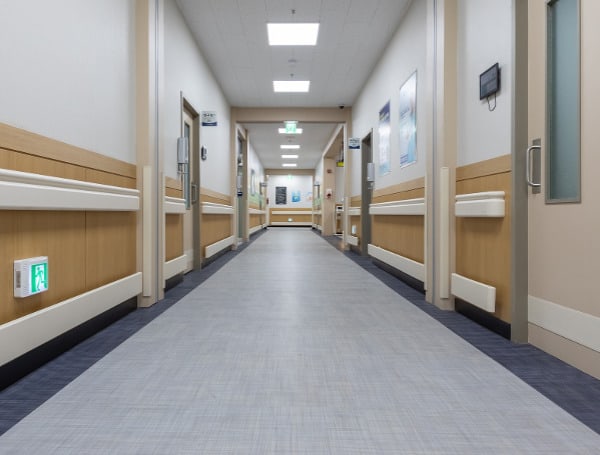
In a major move to lock down regional health security, the United States and Burkina Faso signed a five-year bilateral health agreement on Wednesday. The deal, formalized through a Memorandum of Understanding (MOU), aims to overhaul how infectious diseases are tracked and treated in the Sahel, a region often viewed as a critical frontline for global health.
The agreement falls under the America First Global Health Strategy, a framework designed to strengthen health systems abroad as a way to protect the U.S. mainland from potential outbreaks.
Under the terms of the deal, the State Department plans to work with Congress to funnel up to $147 million into Burkina Faso over the next half-decade. This funding is specifically earmarked for the fight against HIV/AIDS and malaria, alongside the modernization of disease surveillance and laboratory networks.
READ: Pennsylvania Sen. John Fetterman Slams ‘Dancing Frogs’ At Trump’s State Of The Union
Burkina Faso isn’t just a passive recipient in this arrangement. The West African nation has committed to increasing its own domestic health spending by $107 million.
This co-investment is a centerpiece of the strategy, shifting the responsibility toward national ownership. The goal is for the Burkinabé government to eventually integrate U.S.-funded healthcare workers and lab technicians directly into its own national workforce.
“This MOU reflects the commitment to protecting American health security while building resilient, locally led health systems abroad,” said Thomas “Tommy” Pigott, Principal Deputy Spokesperson, in a statement released on February 25.
A significant portion of the budget—roughly $12 million—is dedicated strictly to global health security. This includes digitizing data reporting and boosting the capacity of local labs to identify dangerous pathogens before they can cross borders. By focusing on frontline community health workers, the program aims to create a “tripwire” system for early detection.
READ: Prediction Market Blocks Swalwell Ally From Betting On California Governor’s Race
This latest signing brings the total number of bilateral health MOUs under this strategy to 17. To date, the U.S. has signed similar agreements with nations ranging from Nigeria and Kenya to Rwanda and Ethiopia. Collectively, these deals represent a staggering $18.56 billion in health funding, including over $7 billion in direct co-investment from the partner countries.
For the U.S., the logic is straightforward: by fortifying the medical infrastructure in Burkina Faso today, they reduce the risk of an uncontained epidemic reaching American shores tomorrow.
For Burkina Faso, the infusion of capital and technical support offers a path toward a self-sustaining medical system that no longer relies solely on foreign aid.“
Subscribe to:
Comments (Atom)