Contact Me By Email


What To Do When You're Stopped By Police - The ACLU & Elon James White

What To Do When You're Stopped By Police - The ACLU & Elon James White

Know Anyone Who Thinks Racial Profiling Is Exaggerated? Watch This, And Tell Me When Your Jaw Drops.


This video clearly demonstrates how racist America is as a country and how far we have to go to become a country that is civilized and actually values equal justice. We must not rest until this goal is achieved. I do not want my great grandchildren to live in a country like we have today. I wish for them to live in a country where differences of race and culture are not ignored but valued as a part of what makes America great.

Thursday, February 01, 2024

Students reported her for a lesson on race. Then she taught it again

Students reported her for a lesson on race. Then she taught it again.

South Carolina high school English teacher Mary Wood was reprimanded last school year for teaching a lesson on race. She began teaching it again this year. (Will Crooks for The Washington Post)

“CHAPIN, S.C. — Mary Wood walked between the desks in her AP English Language and Composition classroom, handing out copies of the book she was already punished once for teaching.

Twenty-six students, all but two of them White, looked down at Ta-Nehisi Coates’s “Between the World and Me,” a memoir that dissects what it means to be Black in America — and which drew calls for Wood’s firing when she tried to teach it last year in her mostly White, conservative town. Wood crossed to a lectern and placed her hands on either side of a turquoise notebook, open to two pages of bullet points explaining why she wanted to teach Coates’s work.

“That book that you guys have, it deals with racism,” she said on a recent Tuesday. “It’s going to be something with which you’re unfamiliar. That you need to spend time to research to fully understand.”

Wood stared at her class. She tried to make eye contact with every teenager. Anyone, she reminded herself, might be secretly recording her — or planning to report her.

Last spring, two students in that year’s English class had complained to the school board, alleging that “Between the World and Me,” which contends racism is embedded in American society, made them ashamed to be White. That implied Wood had violated a state proviso forbidding teachers from causing students “guilt, anguish or … psychological distress” on account of their race.

Within days, Lexington-Richland School District Five officials forced Wood to stop teaching the book; later, they sent her a letter of reprimand. When the episode went public, it became a flash point in the national culture wars over how to teach race, racism and history: Politicians and pundits on the left and right alternately praised and vilified Wood, as local parents, residents and the county Republican Party demanded her punishment or termination. Wood, 47, who grew up in Chapin and attended the school where she teaches, felt like an outsider in her hometown.

But this year, she was determined things would be different.

The handwritten notes Wood jotted explaining why she wanted to teach Ta-Nehisi Coates’s “Between the World and Me” again. (Will Crooks for The Washington Post)

As school policy demanded, she had gained permission to teach “Between the World and Me” from Chapin High School’s new principal, a Black man. She had given every student’s parents a chance to review her curriculum. She had offered to opt out any child whose family disliked Coates’s book. And she had assigned a conservative voice pushing back on Coates.

Her revised version of the lesson, Wood believed, complied with both the letter and the spirit of South Carolina’s proviso. So now, despite everything, she was trying again.

She told her class they would spend the next few days listening to a recording of the book, while each student took notes. After that, they would conduct independent research to develop their own arguments. They could agree with Coates, disagree with him or land in the middle.

“Whatever conclusion you arrive at is yours,” she said. “Arguments are not supposed to be comfortable — but it’s certainly not supposed to be filled with guilt.”

She took a breath. “There is nothing,” she added, “to be ashamed of.”

She readied herself to press play.

Wood and Tess Pratt, her English Department chair and good friend, decided over the summer that Wood had to teach “Between the World and Me” again.

Both teachers knew that most teens in Chapin — a wealthy town where the median income is above $100,000 and large homes line pretty Lake Murray — had never read anything like Coates’s searing account of growing up Black in Baltimore. They had not spent their childhood, as Coates wrote he did, “naked … before all the guns, fists, knives, crack, rape, and disease.” They had never memorized “a list of prohibited blocks,” unsafe due to guns and violence.

Plus, both teachers believed the book, a Pulitzer Prize finalist, is superbly written: a master class in the deployment of rhetorical devices. There was no better way to teach children how to formulate their own arguments, they thought.

“It teaches kids a different perspective, [it] teaches kids how to write well,” Wood said in an interview. And “it’s the right thing to do.”

Still, she worried she’d face more complaints. Or lose her job. If she was fired, Wood — a University of North Carolina at Wilmington graduate who started teaching in the late 2000s — would have trouble paying the mortgage on her house.

Then in early August, Wood found out her 16-year-old son, Summit, would be taking her AP Lang class. And she knew: She had to teach the book. Summit would be watching.

The year dawned with a new principal, Ed Davis, who requested meetings with every teacher. In her one-on-one, Wood brought up the book. Right away.

Davis, whom the district declined to make available for an interview, said Wood could teach the book, she recalled. But he had advice.

He asked her to picture Chicago’s Willis Tower, with its sky-high observation deck enclosed by a glass cage. Even people who are scared of heights know they are safe inside the glass, she remembered Davis saying. And that’s what teachers must provide: a casing that protects kids when they’re learning something difficult.

He also said that “the glass casing is for teachers,” Wood recalled. “As long as you’re teaching inside the standards and being professional, then you’re not doing the wrong thing.”

Superintendent Akil E. Ross wrote in a statement that the book has not been banned. Ross said teachers can assign material dealing with controversial topics, including Coates’s book, so long as they “expose students to all sides … in a fair and unbiased manner” and adhere to “content standards.”

Wood clung to the standards throughout the fall. She confined class discussion to the books she was teaching. She made fewer jokes.

Partly, she was recalling what happened last school year. But she was also watching what was still unfolding.

In August, Lexington County Republicans suggested creating a 20-member commission of school board members, politicians and parents to study classroom materials for “race-based instruction” and “vulgar materials.” The proposal failed.

In September, a resident objected to fantasy novel “A Court of Mist and Fury” for its sexually explicit passages — part of a historic wave of schoolbook challengesnationwide. The school board ultimately banned five books in the fantasy series.

The next month, late on Halloween, school board member Catherine Huddle emailed Superintendent Ross with a request.

“I would like a list of all books purchased by or for Chapin High School English teachers” since 2020-2021, she wrote, according to messages obtained by The Washington Post. She wanted to know who ordered and approved each book at Chapin High — no other schools, just Chapin.

Huddle said in an interview that she sent the query after a parent came to her distressed about two books in a teacher’s classroom library. She never knew high school teachers stocked such libraries, she said, and wanted to find out how many and what sorts of books they were buying.

She was not searching for problematic titles, she said, and her request was unconnected to “Between the World and Me.” Huddle declined to say whether she thinks Wood should teach the book.

“I don’t want to talk about that book again because it’s related to personnel,” she said. “I am fine with the teaching of controversial topics … as long as it follows policy and process.”

The superintendent ultimately sent Huddle logs of all “supplies ... transactions” for the years requested; Huddle said she reviewed invoices for book purchases and found nothing concerning, although she still worries classroom libraries amount to separate, uncatalogued books. But when the email became public in local news coverage, Pratt and Wood were incensed by what they saw as the questioning of their professional judgment — and worried that it proved scrutiny of their department was only intensifying.

Two weeks before she was slated to start teaching “Between the World and Me,” Wood tapped out a reminder email to her principal.

“I announced to my class that anyone who wanted to could opt out if they so desired,” she wrote. “I DID include the author in my syllabus, so parents should be fully aware of materials which will be taught in AP Lang.”

She added: “I just wanted to let you know the direction I am heading.”

Jessica Odenwood stood when she heard her name called, clutched her printed speech and prepared to do something the 17-year-old had never done.

It was the night before Wood was slated to teach Coates’s book again. But Jessica, a senior at Chapin High, was stuck on what happened last time.

She was one of the students in Wood’s AP Lang class kept from reading “Between the World and Me.” Back then, Jessica talked with friends about saying something. But, shy and averse to speechmaking, she kept quiet. In the months since, Jessica watched Wood stand up for her beliefs in speeches and interviews. She recalled what she read of “Between the World and Me,” which she found poetic. She thought about how wrong it felt that she never finished the book.

Now, at a late-January school board meeting, she had decided to speak her mind.

“After the books were taken, the classroom environment certainly did not feel safe,” Jessica said. “Public education should never feel like a dystopian society.”

This had been happening more since the controversy over Coates: Some in Chapin were denouncing what they saw as a movement to restrict diverse books and discussions of race. Among them was Ayanna Mayes, the Chapin High librarian. She began working at the school three years ago; in that time, she saw five books draw objections. First, “All Boys Aren’t Blue,” about growing up Black and queer in Virginia and New Jersey; then the picture book “Black is a Rainbow Color”; then Coates’s book; then the fantasy novel; and, most recently, another children’s book, “The Curse of King Tut’s Tomb.”

Mayes, who is Black, had always liked Chapin, which she found peaceful, filled with friendly people. But the challenges made her suspect the motives of everyone around her. When the fantasy novels were yanked, Mayes had to pull Chapin High’s copies. One book was checked out. Mayes had to track down the student reading it and take the novel away.

Now Mayes is preparing to speak at a board meeting this month. “I don’t want to be voiceless,” she said in an interview.

But if support was building, so was resistance. The conservative X account “Libs of Tik Tok” later posted a clip of a student speech that January night — in which she thanked her teachers for providing “a diverse education” that spurred her to disagree with her pro-Trump father — and cited it as evidence schools are “indoctrinating” students. Meanwhile, negative comments about the meeting piled up on Facebook, with parents alleging Chapin High teachers, including Wood, are pushing left-wing political views on children.

“This is appalling,” posted Christina Carter, a mother of two in the Lexington-Richland district. “I certainly hope that the state superintendent and board take action.”

Carter, 38, said in an interview that she wants a state investigation into Wood and Chapin High. She read about Wood’s case before she and her family moved to Chapin this summer, attracted in part by the town’s conservative values.

When she arrived, Carter was shocked to learn Wood was still employed. She doesn’t think Wood’s teaching has a place in Chapin.

“In some communities, there is lots of support for that type of material,” Carter said. “But down here I would say there’s a lot of opposition.”

Wood’s son, Summit, knew it firsthand.

Things had gotten weird since his mother gained national attention for teaching “Between the World and Me.” Some of Summit’s friends told him Wood had broken the law, that she was a racist. Summit tackled one of them.

This year, very few people had mentioned it.

Now, Summit knew, his mother was about to risk it all happening again. Before she did, he wanted to show her he understood why.

At the January board meeting, Summit stood up not long after Jessica. Wearing black slacks and a button-down white dress shirt, he pulled up a speech drafted on his iPhone Notes app.

He told the board it is wrong to shut down “diverse viewpoints.” To shield students from harsh realities. He said reading complex literature teaches critical thinking.

“My mother,” he said, “was censored last year.”

He went to bed that night wondering if she would be again.

In class the following Tuesday, before starting the audio recording of Coates’s book, Wood opened her laptop and clicked to “Systemic Racism: A Myth,” published in 2021 by the Institute for Youth in Policy, whose website says it is “devoted to distributing nonpartisan, impartial and inquiry-led content.” Wood found the institute, and its article, after hours of hunting online with Pratt.

“The institution of policing seems systemically racist until the crime rates of African Americans are brought up,” she read. “Disparities of wealth and employment between white Americans and people of color is an understandable statistic.”

Then she pressed play on a four-minute YouTube video: “The Unequal Opportunity Race,” put out by the African American Policy Forum in 2010. Students watched as cartoon characters of different races sped around a track. White runners ran unimpeded, but competitors of color stumbled over roadblocks: A sudden thunder shower labeled “DISCRIMINATION.” A field of rocks headlined “POOR SCHOOLING.” A deep hole titled “UNDEREMPLOYMENT.”

Summit saw some classmates shoot each other looks, he later recalled.

Wood pushed ahead. She clicked a button, and Coates’s voice filled the room: “Son,” he narrated, “last Sunday the host of a popular news show asked me what it meant to lose my body.”

Summit, along with his classmates, opened his book to follow along. He pulled out a pencil and a loose sheet of lined paper.

At first, he kept glancing around to see how his peers were reacting. But soon, he forgot to look: He was too interested in what Coates was saying about the American Dream.

That dream “is perfect houses with nice lawns,” Coates narrated. It is “Memorial Day cookouts, block associations, and driveways … treehouses and the Cub Scouts.” Summit thought: He could be describing Chapin.

“For so long I have wanted to escape into the dream, to fold my country over my head like a blanket,” Coates said. “But this has never been an option because the dream rests on our backs, the bedding made from our bodies.”

At that sentence, Wood looked up. She saw Summit first, scribbling notes. She surveyed the rest of the class: Every single student was looking at their book. No one was on their phone.

She felt tears start. Because, for that one moment, they were listening.“

The Dawn of a New Era of Oppression

The Dawn of a New Era of Oppression

A close-up of large chains with tape that are part of Charles Gaines’s sculpture “Moving Chains.”
Detail of “The American Manifest: Moving Chains” (2022) by Charles Gaines.Ike Edeani for The New York Times

Sign up for the Opinion Today newsletter  Get expert analysis of the news and a guide to the big ideas shaping the world every weekday morning. 

“I am fascinated, and alarmed, by the swiftness with which periods of backlash take shape after surges of Black progress, and I believe that we have entered another such period.

Much of my inquiry on the matter has focused on the period after Reconstruction was allowed to fail and that saw Jim Crow begin to rise. Much of this was embodied by the state of Mississippi, which in 1870 was majority Black. White supremacists in the state developed the “Mississippi Plan” in advance of the state’s 1875 elections to use fraud and the intimidation of Black voters, including through violence, to retake state power from progressives.

The plan worked. As the historian Jason Phillips wrote for the Mississippi Historical Society and the Mississippi Department of Archives and History, “Democratic candidates committed to White supremacy replaced every Republican incumbent in the 1875 elections.”

The racists took control of the state’s legislature and judiciary, impeached the Republican governor and installed a replacement of their liking.

Reconstruction ended when, with the Compromise of 1877 to end a contested presidential election, Democrats in Congress, mostly from the South, allowed Republican Rutherford B. Hayes to claim the presidency in exchange for the withdrawal of all federal troops. They had been enforcing the Reconstruction-era constitutional amendments and were providing a measure of protection for Black citizens in the South.

The next step was the calling of the Mississippi constitutional convention of 1890, which had the express purpose of encoding white supremacy into the state’s DNA. Other Southern states followed suit as the Jim Crow era took shape.

This was the start of a pattern that seems to repeat itself every few decades. In the 1910s, after the beginning of the first wave of the Great Migration, there would come the violent backlash of the Red Summer, as bloody riots targeting Black Americans broke out, some taking place in cities to which Black people had migrated, lured by the promise of better economic and social conditions, and fleeing racial terrorism.

And in the 1920s — as Richard Rothstein outlines in “The Color of Law: A Forgotten History of How Our Government Segregated America” — restrictive covenants, the practice of putting clauses in deeds to forbid the selling or renting of real estate to Black people, spread across the country.

Backlash would flare again after the civil rights movement. During the last years of Martin Luther King Jr.’s life, his cause lost favor, even in liberal cities. For instance, just weeks after passage of the Civil Rights Act of 1964, a New York Times survey found that most white New Yorkers “said they believed the Negro civil rights movement had gone too far.”

In 1968, King was killed during Richard Nixon’s run for the White House. Nixon visited King’s wife and went to King’s funeral. His campaign also did some cursory outreach to Black voters, which led to him winning 15 percent of the Black vote, even though only 3 percent of Black voters identified as Republican that year.

But we now know what was happening behind the scenes. In an interviewpublished in 2016, the Nixon aide John Ehrlichman said: “The Nixon campaign in 1968, and the Nixon White House after that, had two enemies: the antiwar left and Black people.” He went on to explain how Nixon’s team underscored the criminalization of drugs as a way to discredit both groups, helping to usher in the war on drugs and mass incarceration, which have been catastrophic for the Black community.

I now believe that we are in the early phase of yet another backlash, with the dismantling of affirmative actiongovernmental attacks on the teaching of Black history and the full-court press on the political right to get rid of Diversity, Equity and Inclusion initiatives.

The symbolic alignment of a cross-section of Americans, particularly the young, with Black liberty and Black lives after the murder of George Floyd and the wave of protests that it brought forth, retreated with the speed of the tide before the advance of the tsunami.

The results for this era could be wide-reaching, altering the composition of student bodies and corporate workforces, locking in and perpetuating privilege and disadvantage for a generation. And as with previous backlashes, some liberals have grown weary, distracted or disaffected, and their allyship has withered and fallen away.

And then there are the more explicit attacks. Newly reported F.B.I. data reveals that the number of hate crimes in schools nearly doubled between 2018 and 2022, with African Americans being the most frequent victims. The most common victims of hate crimes outside of schools were also African Americans.

This disturbing data arrived to little attention as people remain distracted by raging wars, a border crisis, the various court cases of a former president and the start of the presidential primaries.

I believe that the whiplash from these events has been particularly disorienting and enraging for younger Americans, for whom this may be their first experience of such a backlash, and that their frustration has manifested in a broad dissatisfaction with politics in general that has fed a dissatisfaction with the current administration.

The unfortunate reality of all this is that if history is our guide, the effects of these backlashes linger for decades.

Charles M. Blow is an Opinion columnist for The New York Times, writing about national politics, public opinion and social justice, with a focus on racial equality and L.G.B.T.Q. rights. @CharlesMBlow  Facebook

Black History Month

Black History Month


Table of Contents

Universal History Archive/Universal Images Group/Getty Images

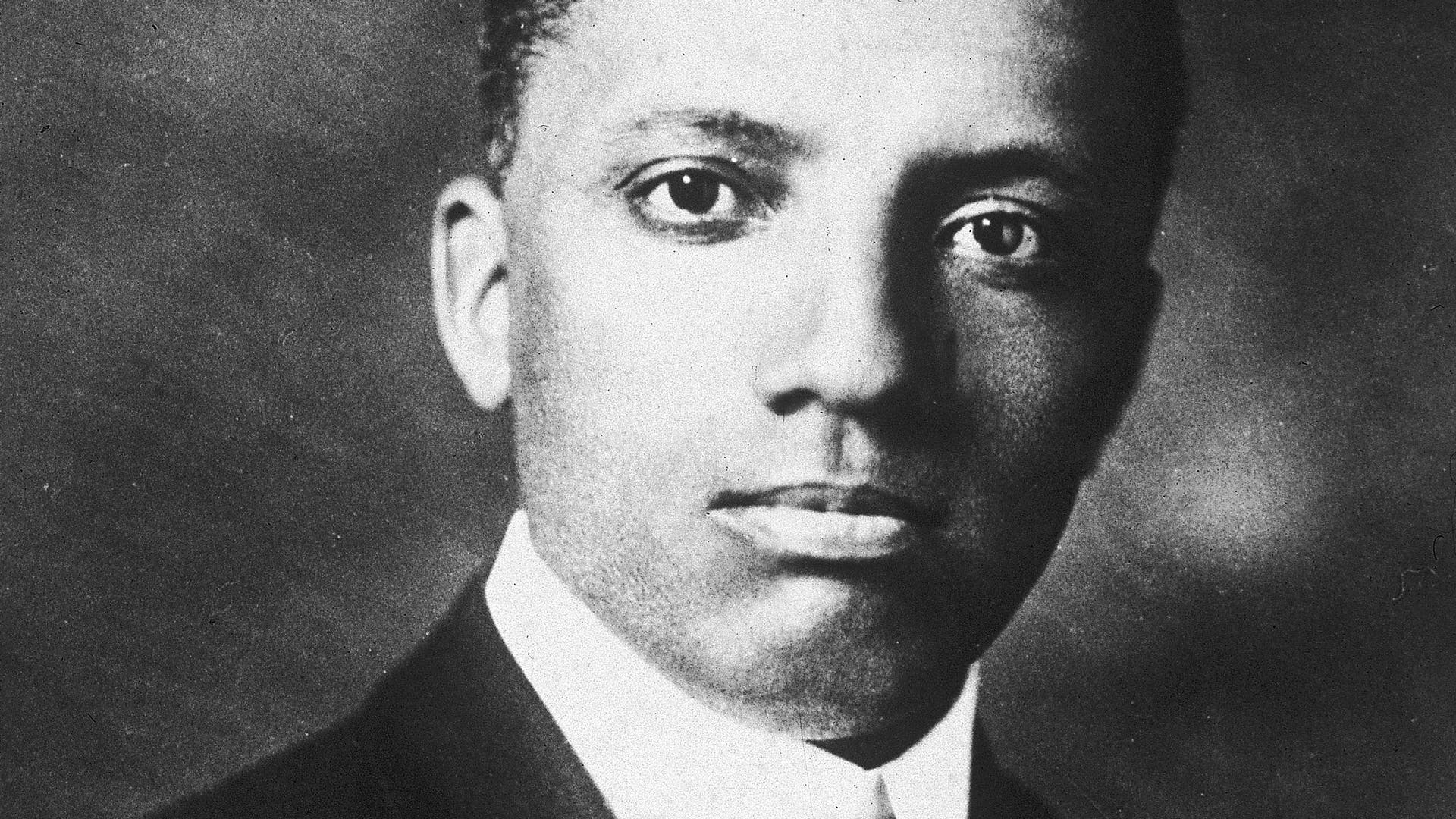
Black History Month is an annual celebration of achievements by African Americans and a time for recognizing their central role in U.S. history. Also known as African American History Month, the event grew out of “Negro History Week,” the brainchild of noted historian Carter G. Woodson and other prominent African Americans. Since 1976, every U.S. president has officially designated the month of February as Black History Month. Other countries around the world, including Canada and the United Kingdom, also devote a month to celebrating Black history.

Origins of Black History Month 

The story of Black History Month begins in 1915, half a century after the Thirteenth Amendment abolished slavery in the United States. 

That September, the Harvard-trained historian Carter G. Woodson and the prominent minister Jesse E. Moorland founded the Association for the Study of Negro Life and History (ASNLH), an organization dedicated to researching and promoting achievements by Black Americans and other peoples of African descent. 

Known today as the Association for the Study of African American Life and History (ASALH), the group sponsored a national Negro History week in 1926, choosing the second week of February to coincide with the birthdays of Abraham Lincoln and Frederick Douglass. The event inspired schools and communities nationwide to organize local celebrations, establish history clubs and host performances and lectures.

In the decades that followed, mayors of cities across the country began issuing yearly proclamations recognizing "Negro History Week." By the late 1960s, thanks in part to the civil rights movement and a growing awareness of Black identity, "Negro History Week" had evolved into Black History Month on many college campuses. 

President Gerald Ford officially recognized Black History Month in 1976, calling upon the public to “seize the opportunity to honor the too-often neglected accomplishments of Black Americans in every area of endeavor throughout our history.” 

Today, Black History Month is a time to honor the contributions and legacy of African Americans across U.S. history and society—from activists and civil rights pioneers such as Harriet TubmanSojourner TruthMarcus GarveyMartin Luther King Jr.Malcolm X and Rosa Parks to leaders in industry, politics, science, culture and more. 

Did you know? The NAACP was founded on February 12, 1909, the centennial anniversary of the birth of Abraham Lincoln.

Black History Month 2024 Theme 

Since 1976, every American president has designated February as Black History Month and endorsed a specific theme.

The Black History Month 2024 theme, “African Americans and the Arts,” explores the key influence African Americans have had in the fields of "visual and performing arts, literature, fashion, folklore, language, film, music, architecture, culinary and other forms of cultural expression."

Photo Galleries

Carter G. Woodson, the man behind Black History Month
The celebration of Black History Month began as “Negro History Week,” which was created in 1926 by Carter G. Woodson, a noted African American historian, scholar, educator and publisher. It became a month-long celebration in 1976.
NAACP, the National Association for the Advancement of Colored People
Spurred by growing racial violence in the early 20th century, and particularly by 1908 race riots in Springfield, Illinois, a group of African American leaders joined together to form a new permanent civil rights organization, the National Association for the Advancement of Colored People (NAACP).
Jack Johnson, Heavyweight Champion
Jack Johnson became the first African American man to hold the World Heavyweight Champion boxing title in 1908. He held onto the belt until 1915.
John Mercer Langston, Lawyer
John Mercer Langston was the first Black man to become a lawyer when he passed the bar in Ohio in 1854. When he was elected to the post of Town Clerk for Brownhelm, Ohio, in 1855 Langston became one of the first African Americans ever elected to public office in America.
Claudette Colvin, protestor
While Rosa Parks is credited with helping to spark the civil rights movement when she refused to give up her public bus seat to a white man in Montgomery, Alabama in 1955–inspiring the Montgomery Bus Boycott—the lesser-known Claudette Colvin was arrested nine months prior for not giving up her bus seat to white passengers.
Thurgood Marshall, Supreme Court Justice
Thurgood Marshall was the first African American ever appointed to the U.S. Supreme Court, serving from 1967 to 1991. 
George Washington Carver
George Washington Carver developed 300 derivative products from peanuts among them cheese, milk, coffee, flour, ink, dyes, plastics, wood stains, soap, linoleum, medicinal oils and cosmetics.
Senator Hiram Rhodes Revels
Hiram Rhodes Revels of Mississippi was the first African American member of the United States Senate. He took the oath of office on February 25, 1870.
Shirley Chisholm
Shirley Chisholm was the first African American woman elected to the House of Representatives. She was elected in 1968 and represented the state of New York. She broke ground again four years later in 1972 when she was the first major party African American candidate and the first female candidate for president of the United States.
Madam C.J. Walker, self made millionaire
Madam C.J. Walker was born on a cotton plantation in Louisiana and became wealthy after inventing a line of African American hair care products. She established Madame C.J. Walker Laboratories and was also known for her philanthropy.
Hattie McDaniel, actress
In 1940, Hattie McDaniel was the first African American performer to win an Academy Award—the film industry’s highest honor—for her portrayal of a loyal enslaved governess in Gone With the Wind.
Jackie Robinson, Baseball player
On April 5, 1947, Jackie Robinson became the first African American to play Major League Baseball when he joined the Brooklyn Dodgers. He led the league in stolen bases that season and was named Rookie of the Year.
Robert Johnson, Billionaire
Robert Johnson became the first African American billionaire when he sold the cable station he founded, Black Entertainment Television (BET) in 2001.
President Barack Obama
In 2008, Barack Obama became the first Black president of the United States.

1 / 14: Hulton Archive/Getty Images

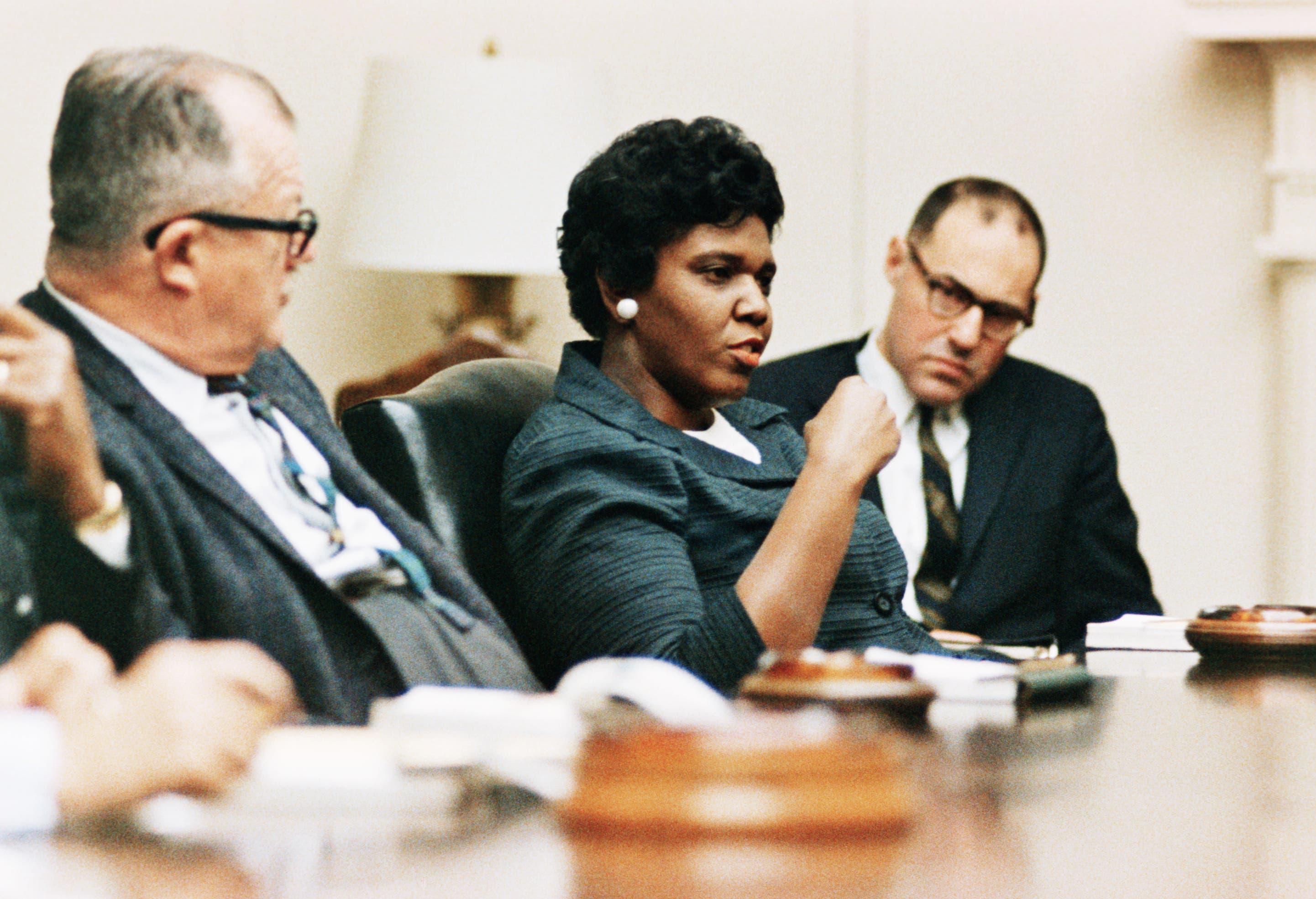
Barbara Jordan, the first female African American senator from Texas
Barbara Jordan (1936-1996) represented Texas in the U.S. House of Representatives from 1972-78 and was the first African American congresswoman from the Deep South. In 1976, she became the first African American woman to deliver a keynote address at the Democratic National Convention. 
Rosa Parks, American civil rights activist, riding on a newly integrated bus following a Supreme Court ruling ending the successful 381 day Montgomery bus boycott of segregated buses.
Rosa Parks (1913-2005) helped initiate the civil rights movement in the United States and later became one of its primary organizers when she refused to give up her seat to a white man on a Montgomery, Alabama bus in 1955. READ MORE: Before the Bus, Rosa Parks Was a Sexual Assault Investigator
Fannie Lou Hammer
Fannie Lou Hamer (1917-1977) at the 1964 Democratic National Convention. Hamer was the vice-chairperson of the Mississippi Freedom Democratic Party, as well as a leader in the Student Nonviolent Coordinating Committee (SNCC), which organized the Freedom Summer voter registration drives. 
Angela Davis
Angela Davis (1944-) is a Black feminist activist and academic, known for her affiliation with the Communist Party and connection to a politically charged murder and kidnapping case in 1970. After her acquittal, she became an educator and author. 
Shirley Chisholm
US Representative Shirley Chisholm of Brooklyn announces her entry for Democratic nomination for the presidency, at the Concord Baptist Church in Brooklyn, New York on January 25, 1972.
Carol Moseley Braun
Carol Moseley Braun (1947-) was elected in 1992 to represent Illinois in the U.S. Senate, a seat she held until 1998. She was the first African American woman elected to the Senate.
Sheila Jackson Lee
Sheila Jackson Lee (1950-), one of the longest serving African American women in Congress, has represented the 18th Congressional District of Texas since 1995. 
Susan Rice, Former United States Ambassador to the United Nations and National Security Advisor under the Obama administration
Susan Rice (1964-), appointed by Barack Obama in 2009, was the first African American woman to serve as the U.S. ambassador to the United Nations. Later she became U.S. national security advisor. In 2021, Joe Biden tapped her to run the White House Domestic Policy Council.
Kamala Harris, the First Female, First Black, First Asian-American Vice President of the United States
In January 2021, Kamala D. Harris was sworn in as the first female, first Black and first Asian American vice president of the United States.

1 / 9: Corbis/Getty Images

HISTORY.com works with a wide range of writers and editors to create accurate and informative content. All articles are regularly reviewed and updated by the HISTORY.com team. Articles with the “HISTORY.com Editors” byline have been written or edited by the HISTORY.com editors, including Amanda OnionMissy SullivanMatt Mullen and Christian Zapata.